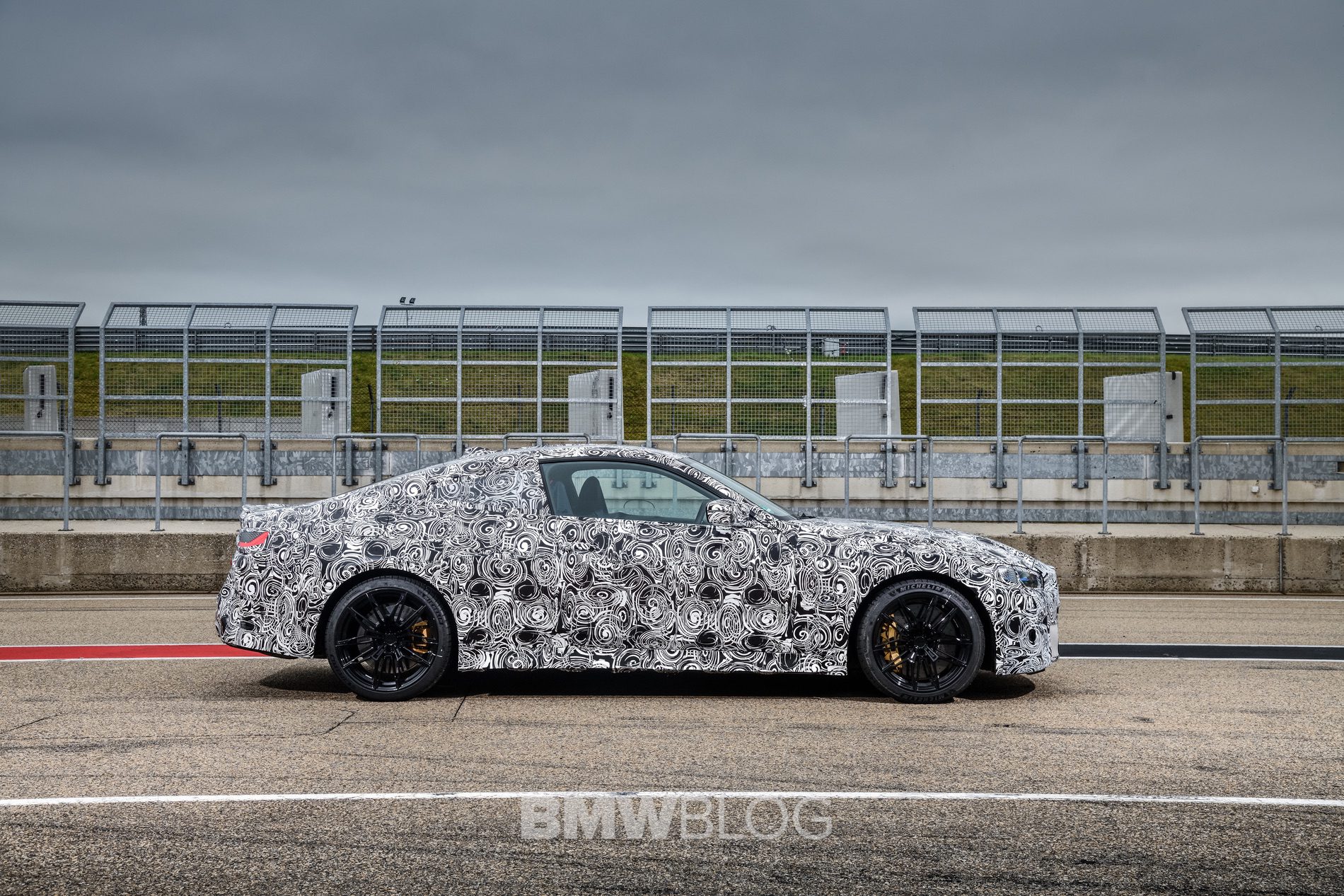
Long before a new BMW makes its official debut, the vehicle has to complete thousands of test kilometers in practice. These test drives take place on roads around the world and expose the prototypes to different climates, surfaces and driving conditions. But even in this crucial phase, one thing remains non-negotiable: the exterior design must remain secret. Protecting this design is not just a matter of secrecy; It’s part of BMW’s competitive advantage. This is where the highly specialized craft of camouflage comes into play. In an Instagram post, Adrian van Hooydonk gives us a much more intimate understanding of how design and camouflage are unexpected but also inextricably linked.
Camouflaged BMW cars: More than meets the eye
Camouflaged cars almost always attract a lot of interest when they appear. After all, there’s a whole micro-economy surrounding the mysterious mules, and eager photographers camp out everywhere, from the Nurburgring to Southern California, to catch a glimpse. But what may look like chaotic swirls, jagged shapes or distorted lines is actually a carefully crafted visual strategy, suggests van Hooydonk. BMW’s camouflage patterns are designed to disrupt the viewer’s perception of the vehicle’s shape.
German prototypes in particular are often referred to as “Erlkönig” – a reference to Goethe’s iconic poem about a supernatural figure who only sees a feverish child and is dismissed by his father. The metaphor is apt: like the mysterious nature of the poem, an Erlking is meant to be seen without being fully understood. Its purpose is to obscure innovation while the engineering and design teams finalize the vehicle’s production form. By confusing depth, breaking up surface transitions, and altering the way light interacts with the body, the patterns prevent cameras – and human observers – from seeing important proportions and design details. Every line in the camouflage is intentional and every graphic is intended to hide something important.
Perhaps it’s now obvious that the camouflage design is entirely intentional – and arguably just as important as the sheet metal hidden underneath. Another observation van Hooydonk shares: BMW’s camouflage is not only functional, but also recognizable. Enthusiasts around the world can instantly recognize an Erlkönig, even if they can’t identify the model underneath. This intentional recognizability serves two functions. It maintains the secrecy of the vehicle’s design while signaling that BMW is testing something new, increasing anticipation throughout the automotive industry. In this way, camouflage becomes both a shield and a calling card.
There is a certain irony in designing a special camouflage to camouflage a redesigned car. “It’s a paradox that we accept as designers,” says van Hooydonk. “Sometimes we have to hide our work to show it at its best.” Of course, next time you see a camouflaged BMW, take a closer look. But you probably won’t see anything you shouldn’t already see.
