
The BMW 3 Series has long been one of the most successful models in the premium mid-range. From autumn onwards it will have electric competition from its own ranks with the new BMW i3. This version has nothing in common with the carbon body experiment from 2013.
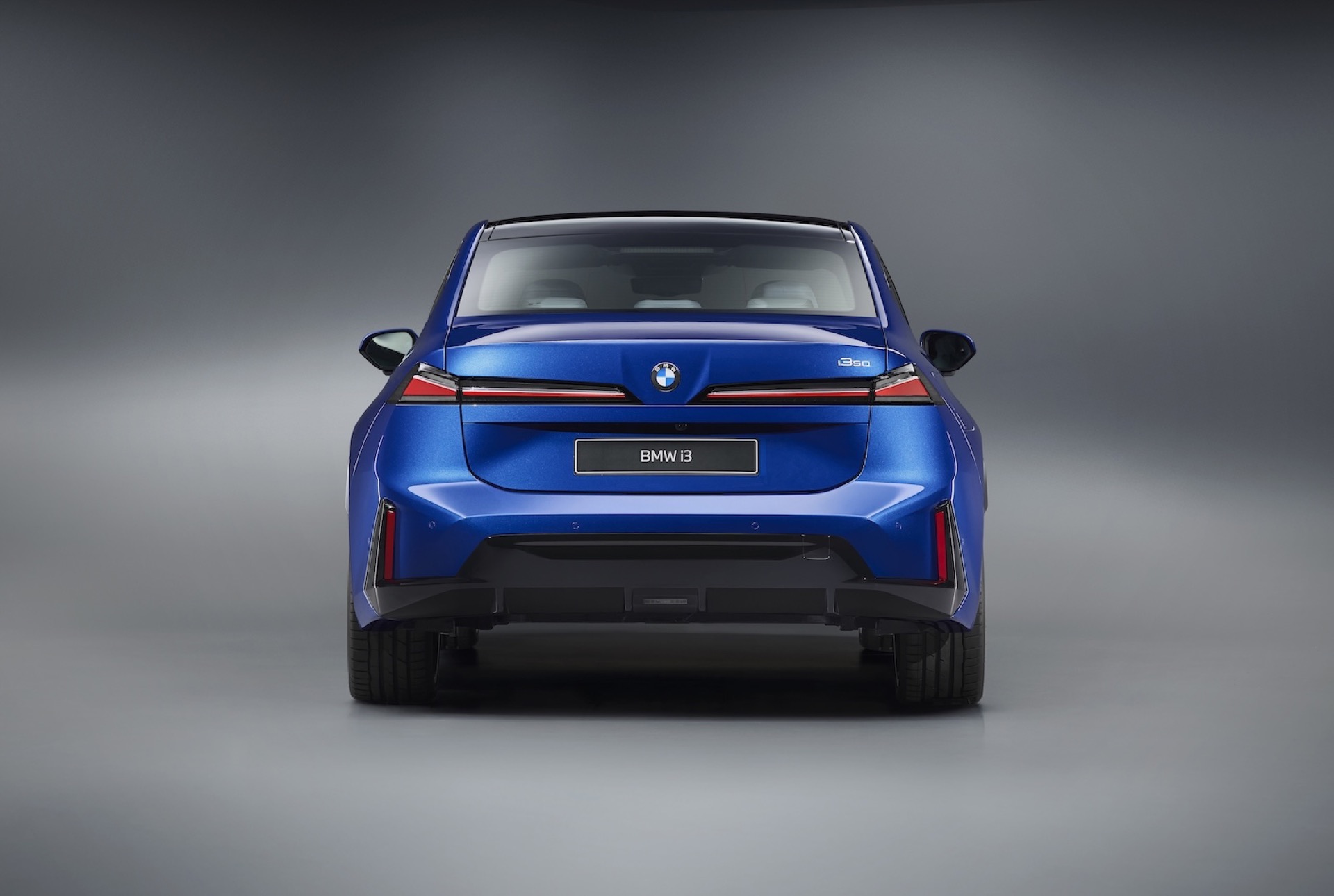
Many people still think of the name BMW i3 as an unconventional electric city car with an unconventional window line, carbon structure and ultra-narrow tires. This original model has long since disappeared. It was a bold technical experiment for BMW, but also an expensive one that ultimately did not live up to expectations. However, the new i3 takes a completely different approach. It becomes the all-electric version of the 3 Series, a deliberately sporty four-door sedan based on BMW’s Neue Klasse platform and closely related to the iX3.
The new i3 shares its architecture, technology and powertrain with the electric crossover and will reach customers in the fall. It will initially come onto the market as the BMW i3 50 xDrive. Two sixth-generation electric motors drive both axles and deliver a total output of 345 kW (469 hp) and up to 645 Nm of torque. At the rear, a separately excited synchronous motor provides propulsion, while an asynchronous motor is used on the front axle, which can be switched off completely to reduce energy consumption.
A battery with a capacity of around 109 kWh enables a maximum range of up to 900 kilometers. Charging is also impressive with DC charging speeds of up to 400 kW and AC charging speeds of up to 22 kW. When it comes to range, only the most efficient diesel variants such as the BMW 320d can keep up.
Inside, the i3 adopts the minimalist interior of the iX3. A panoramic display replaces conventional instruments, complemented by a central 17.9-inch screen. With a wheelbase of 2.90 meters, the space is generous. It is noteworthy that, in contrast to some competitors, BMW has not installed a passenger display. The steering wheel design remains a matter of taste.
The traditional key is no longer required. A smartphone serves as the digital key, which can also be shared with others if necessary.

While competitors like the electric Mercedes C-Class rely on optional air suspension and rear-axle steering, the BMW i3 relies on a double-joint spring strut front axle and a five-link rear setup, optionally with adaptive damping. Prices are expected to start at around 65,000 euros, with further variants to follow. An entry-level version with rear-wheel drive should bring the starting price closer to 60,000 euros.
