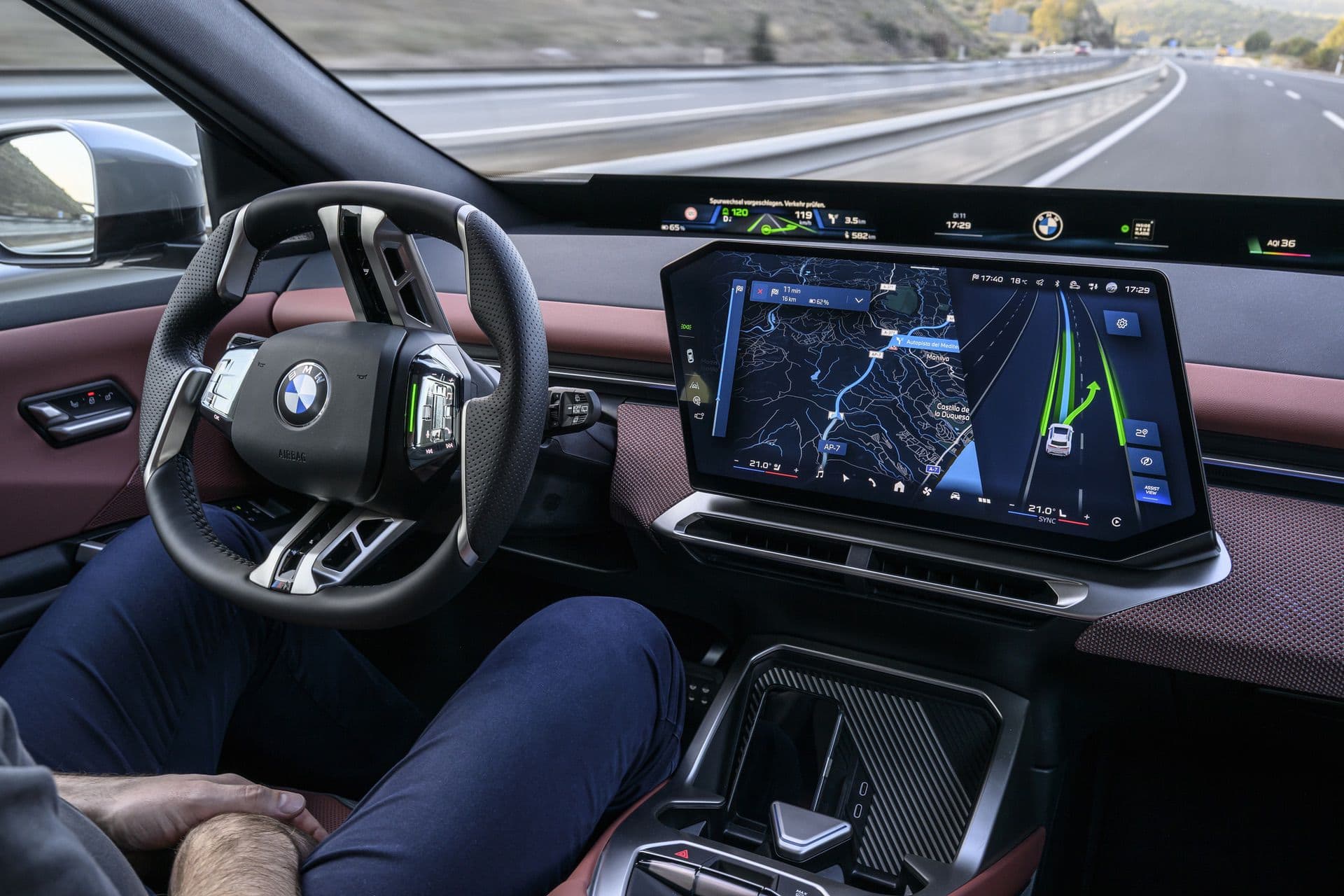
BMW has overcome an important hurdle on the way to the next generation of assisted driving. The company is now the first car manufacturer in Germany to receive international approval under UN Regulation No. 171 (DCAS – Driver Control Assistance Systems), and the first model to benefit from this is the new BMW iX3, the start of the New Class. On paper, this sounds like another regulatory box ticked. In practice, it enables a new level of hands-off Level 2 support on motorways and a much more natural relationship between driver and technology – what BMW now calls BMW Symbiotic Drive.
During a test session in Spain with the new iX3, we discussed the system in detail with one of BMW’s senior engineers. The result is a clearer picture of how this technology actually works in the real world, beyond the marketing slogans and legal acronyms.
A new baseline: DCAS and why it matters
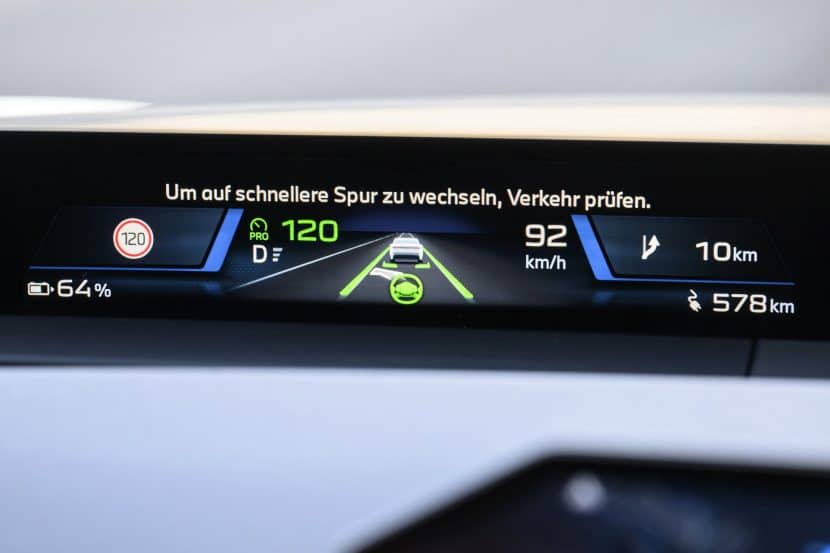
DCAS is an international regulation that specifies how advanced driver assistance systems must behave, especially when they allow the driver to take their hands off the steering wheel for long periods of time. It sets rules for driver monitoring, system boundaries, redundancy and predictability of system behavior. BMW’s UN R171 approval means the new Highway Assist has also been tested against a strict global standard and cleared for wider rollout in several markets that recognize UN ECE regulations.
The BMW engineers describe the intention behind it quite simply: The driver must remain involved, the system must remain controllable at all times and its behavior must be reproducible – no surprises, no black box behavior. The first series car built according to this set of rules is the new BMW iX3.
Stay away up to 130 km/h – but with serious redundancy
With the new highway assistant activated, the iX3 enables hands-free driving up to 130 km/h on suitable highways. The driver still has to pay attention and remain ready to intervene, but the system takes over continuous steering and cruise control.
There’s more than just a steering wheel touch sensor and a single front camera under the skin. The engineer walked us through the stack: a heated, front-facing main camera behind the glass, four surround-view cameras now used for lane validation and environmental monitoring (not just parking), high-resolution map data, and a high-precision GPS that knows exactly which street the car is on. If the environment is too complex – winding country roads, chaotic mixed traffic, high pedestrian risk – the system simply won’t activate.
The point is not to “force” automation everywhere, but rather to limit it to situations where the system can safely maintain control and where DCAS allows manual operation.
The driver’s camera moves – and sees more
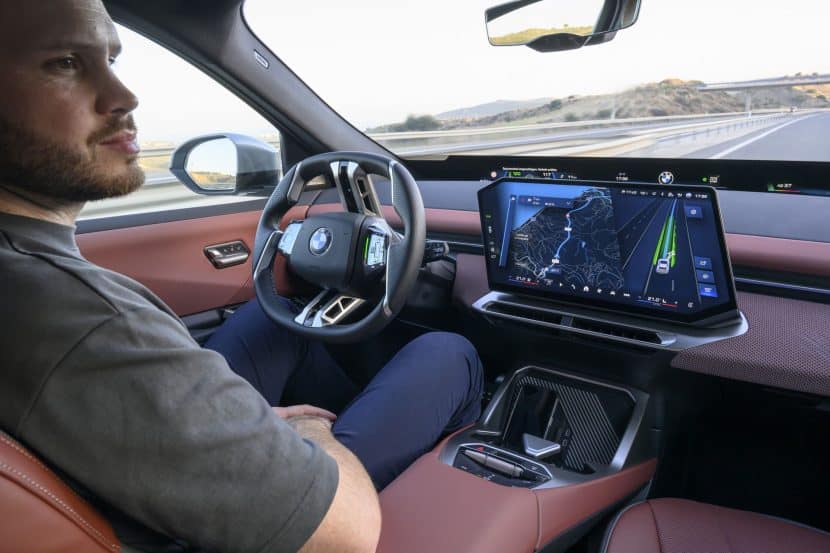
One visible change in the iX3 cabin is the driver monitoring camera. On previous BMWs it sat behind the steering wheel and was partially blocked depending on the wheel position. On the iX3 it goes directly under the rearview mirror. From there it has a much larger field of view. It can see your eyes, your head position and even your posture. And the function is clear: If you don’t look at the road for too long, the hands-off function doesn’t turn on or switches off.
This camera, together with the sensor redundancy and clearly defined system boundaries, makes DCAS approval possible.
Highway, country road, city: different names, same idea
BMW is also cleaning up the naming structure, which will vary slightly depending on the market. In Germany the system will be launched as “Motorway and City Assistant”, in the UK it will also be “Motorway and City Assistant” but adapted to local terminology, while in markets such as the US it is expected to be called “Highway and City Assistant”.
Under this umbrella there are two main levels in the iX3:
- The vehicle’s standard equipment already includes adaptive cruise control and basic lane departure warning, which BMW calls the “Plus” package. This alone enables a more relaxed journey on long journeys.
- There is also the “Highway & City Assistant” option, which costs around 1,400 euros when it launches in Germany and enables contactless operation, active lane changing and advanced city functions such as traffic light recognition and automatic driving.
What’s crucial is that every iX3 is already equipped with the complete hardware suite – all cameras, sensors and computing power are in the car from day one. If a customer later decides to activate the Highway & City Assistant, it can be activated digitally via the car’s online shop.
Symbiotic drive: what is it?
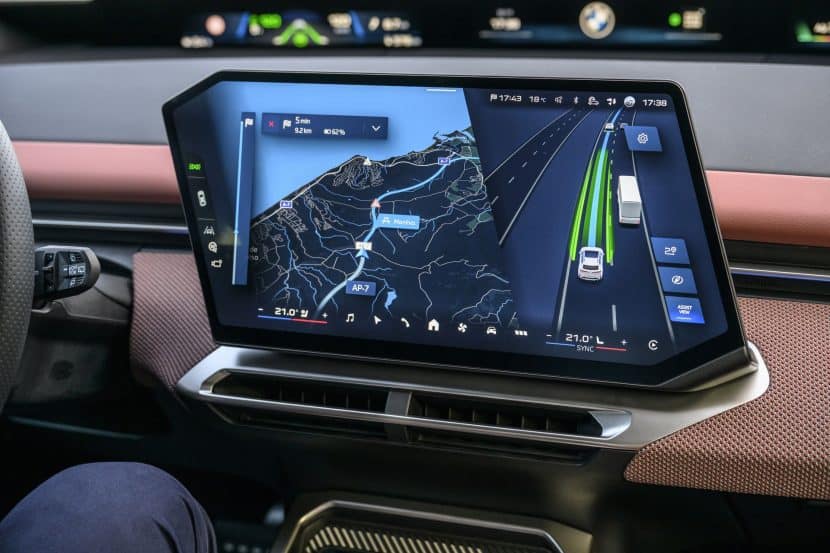
Conventional assistance systems often behave like fragile modes: press the brake or move the steering wheel and you’re back to doing everything yourself. BMW wants to move away from this. With BMW Symbiotic Drive, the iX3 allows the driver to make small steering or braking interventions without deactivating the assistance. This includes a new feature called Symbiotic Braking, which BMW says is supported by more than two dozen patents.
For example, if the following path is a little too short for you, you can increase the distance by lightly pressing the brake pedal. The system remains active and takes control as soon as you release the pedal. Only a firmer, conscious pressure switches everything off.
The same applies to the steering: minor corrections do not switch off the system, but simply override your preference over the assistance. It feels less like you’re switching between two modes and more like you’re splitting the task.
Three ways to change lanes
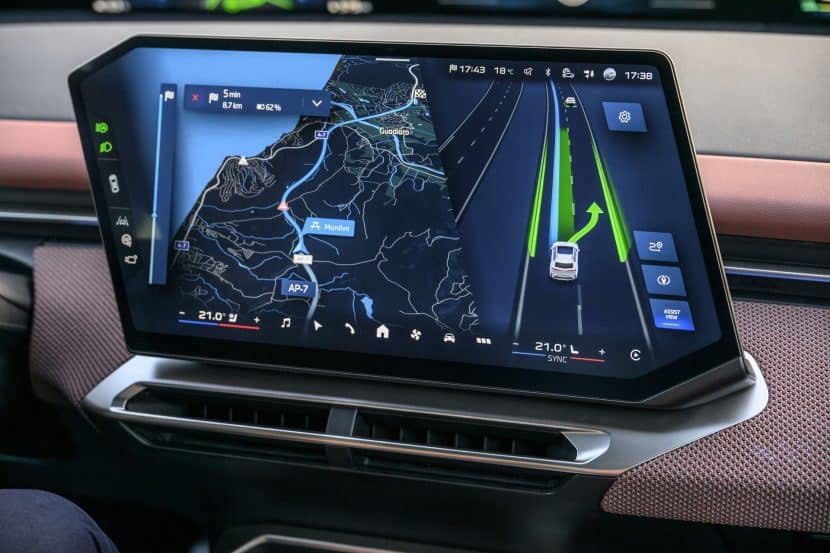
Lane changes are another area where BMW gives you the ability to combine human intent with automated execution. Once the assistant is active and the conditions are met, you can trigger a lane change in three ways.
The classic method is to use the turn signal lever as usual. The car checks its surroundings, confirms the route and carries out the maneuver.
The second method uses eye confirmation. If the system suggests changing lanes – for example at a motorway intersection or a motorway exit – simply look in the relevant exterior mirror. A look is interpreted as your consent and the car carries out the maneuver, remaining in assistance mode across the motorway junction and down the exit. 
The third method is a very subtle steering input. A small push, just a few millimeters on the steering wheel, in combination with the mirror check, is enough to trigger the lane change. The movement is almost invisible from the cabin, but the system recognizes it as intentional.
An acoustic signal confirms the maneuver. If you use the feature frequently, you can reduce or disable the sound and rely on the visual cues in the panoramic display and head-up display instead.
City Assistant and traffic lights: Stop when red, continue when green
DCAS approval is primarily about highway use, but BMW is also expanding the assistance package to urban environments under the umbrella of City Assistant. When it launches in Germany, the iX3 will be able to recognize traffic lights, stop automatically when red and start again when green – provided the driver is watching the road. When you look at your phone, the car doesn’t just start itself. Instead, it sounds a subtle alarm, waits for you to look ahead, and only then drives off.
It’s a small detail, but it shows how BMW is trying to balance automation and responsibility: the car does the boring part, but it doesn’t require you to step away from the driving task. More complex urban features will be introduced later via over-the-air updates.
Speed limits, offsets and the reality of regulations
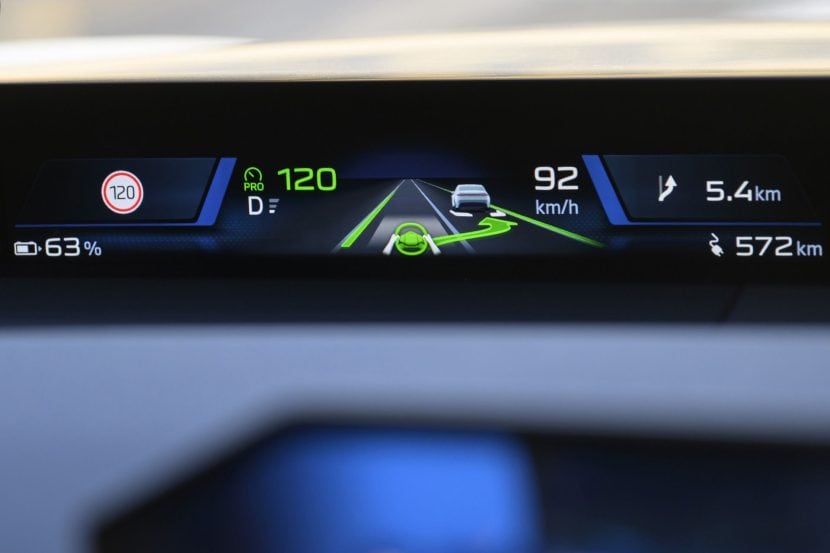
One area where regulation is clearly visible is speed management. Under DCAS, BMW does not allow the driver to permanently store a higher offset than specified when using hands-off support. So the system divides the behavior. When using Full Highway and City Assistant in hands-off mode, you can still temporarily increase the speed beyond the detected limit using the plus/minus buttons on the steering wheel, but the car doesn’t remember this offset forever. Next time we’ll push the limit again.
If you turn off the advanced assistant, you can save permanent offsets again, like previous BMWs. It is a compromise between what drivers are used to and what the regulation allows.
Go back to “Classic” with one tap
BMW knows that not every driver is prepared to be monitored by cameras or to let go of the steering wheel for long journeys. For this reason, the iX3 offers a quick way to return to a more traditional setup. There’s a single switch in the menu that turns off the advanced DCAS-related features, leaving you with a more “classic” driver assistance package: adaptive cruise control, simple lane keeping, no hands-off, no symbiotic braking, no automatic traffic lights.
Rollout and what comes next
At launch, the new Highway and City Assistant will be available in Germany, Austria, Italy, France, Belgium, the Netherlands, Luxembourg, Switzerland and Liechtenstein, with other countries and functions to follow later.
