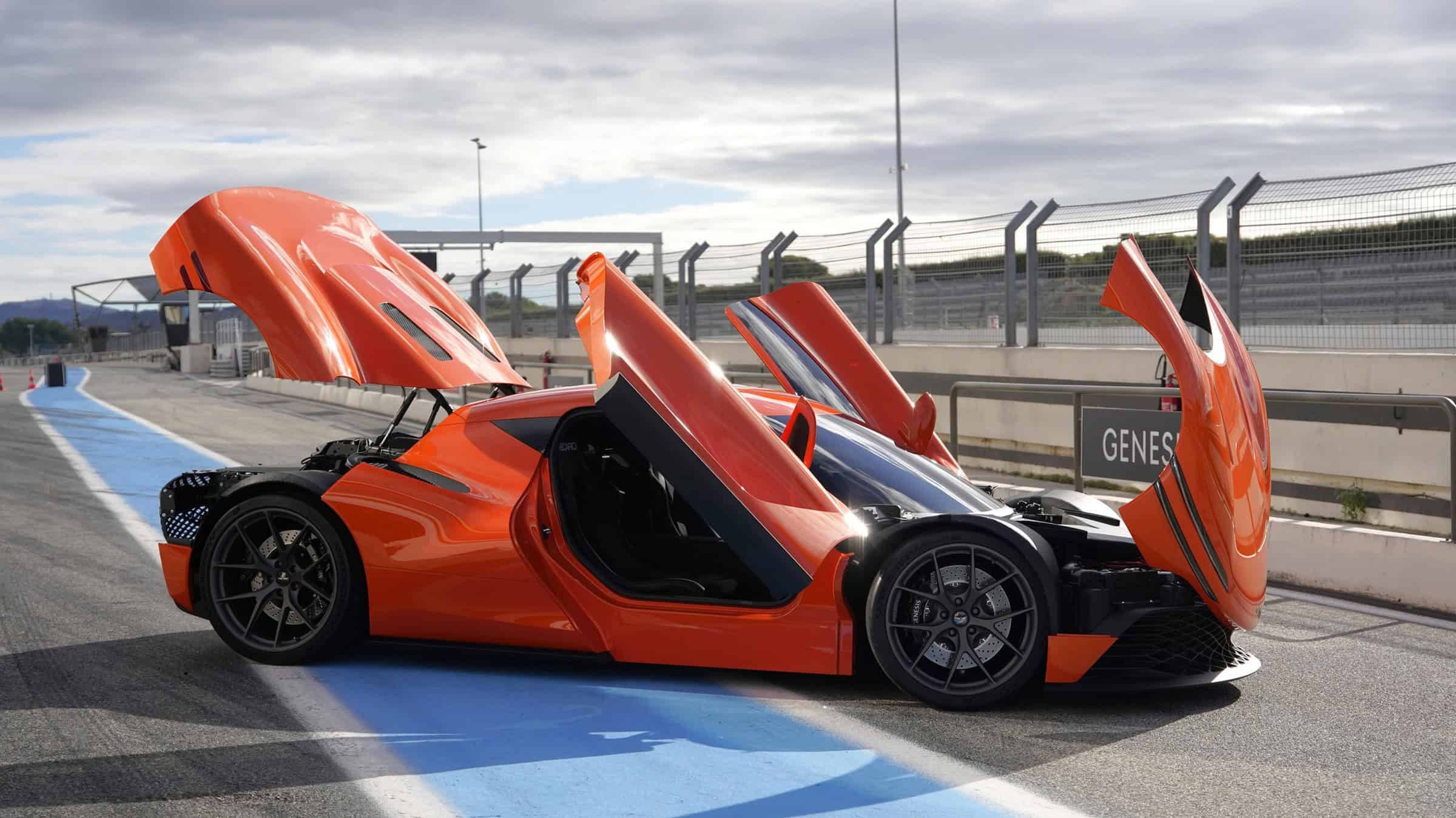
Hyundai makes a supercar that few would have expected. Technically speaking, the luxury division Genesis is moving into the performance range of the flagship with this peppy coupé called the Magma GT Concept. What is magma, you ask? It’s essentially what M is to BMW and AMG is to Mercedes, a dedicated performance sub-brand.
The Koreans remain tight-lipped about the car, only confirming that it will go into production as their halo model. While the two-light motif front and back is clearly reminiscent of Genesis, the overall shape exudes strong Koenigsegg vibes. That’s not a bad thing; Hyundai should feel flattered by the association with an exotic brand.
It is believed that the production-ready version will serve as a special homologation model for a future GT3 racing car. The Magma GT is expected to use a variant of the newly developed 3.2-liter twin-turbocharged V8 developed for the GMR-001 hypercar. It’s too early to say whether the engine mounted behind the seats will send power to just the rear wheels or to all four. Either way, a manual transmission seems unlikely.
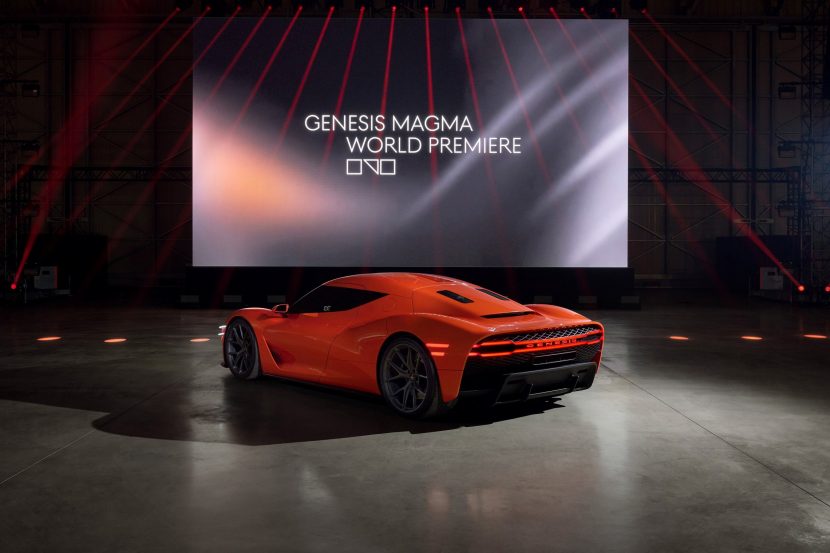
Although officially a concept, the Magma GT is close to production. Hopefully the radical two-seater will retain its scissor doors and get a clear engine cover to show off the V8. We can’t imagine that there will be any major changes to the design, especially since Genesis has already installed corresponding side mirrors.
A firm launch date hasn’t been announced, but Genesis is committed to building it. Currently, the Magma GT “represents the foundation for a future performance lineup led by a true halo car.” We expect it to be the most expensive vehicle in Hyundai history. However, it would still have to undercut the big names from Ferrari, McLaren and Co.
While Genesis has been given the green light to develop a supercar, BMW remains reluctant to launch a spiritual M1 successor. We recently learned from M CEO Frank van Meel that this is not a priority. Nevertheless, the company has not given up on the idea of a successor to the E26. Things were close at the turn of the decade, but the Vision M Next-based I16 mid-engine project was brought to a halt by the coronavirus pandemic.
