
Qualcomm Technologies and BMW have officially introduced Snapdragon Ride Pilot, a new automated driving system that marks the result of a three -year collaboration. The technology made its debut in the brand new BMW IX3 and has already been validated for use in more than 60 countries. The availability is expected to be extended to over 100 countries in 2026.
The system is based on the Snapdragon Ride system-on-chips (SOCs) from Qualcomm and the Snapdragon Ride Adsoftware-Stack, which was developed by both companies. More than 1,400 engineers and specialists in Germany, the USA, Sweden, Romania and the BMW Automated Driving Test Center in the Czech Republic contributed to their development.
Concentrate on scalability and security

Ride Pilot describes both companies as a flexible and scalable platform, which emphasizes security as a foundation. The software stack combines Qualcomm’s perception technology with the BMW expert for the drive guidelines and is structured in three main elements: 360-degree perception, context-related driving and complete compliance with global safety standards.
The 360-degree perception system uses cameras and radar in the architecture of a bird transfer, so that object recognition, lane detection, traffic signs, parking aid, driver monitoring and mapping are made possible. Qualcomm says that the radar and camera fusion is designed in such a way that it reduces latency in critical situations, especially in complex urban intersections.
According to the company, the security and regulatory compliance were of central importance for the design. Snapdragon Ride Pilot fulfills the integrity of automotive safety and functional safety standards and at the same time meets the requirements of NCAP, FMVSS127 and DCAS. It integrates the security of the intended functions as well as multi -layered cyber security, including encryption and threat detection.
Context-conscious driving are treated by a mixture of rule-based systems and AI-controlled models so that the car can predict and plan various scenarios on motorways and cities.
The “Superbrain” in the BMW IX3
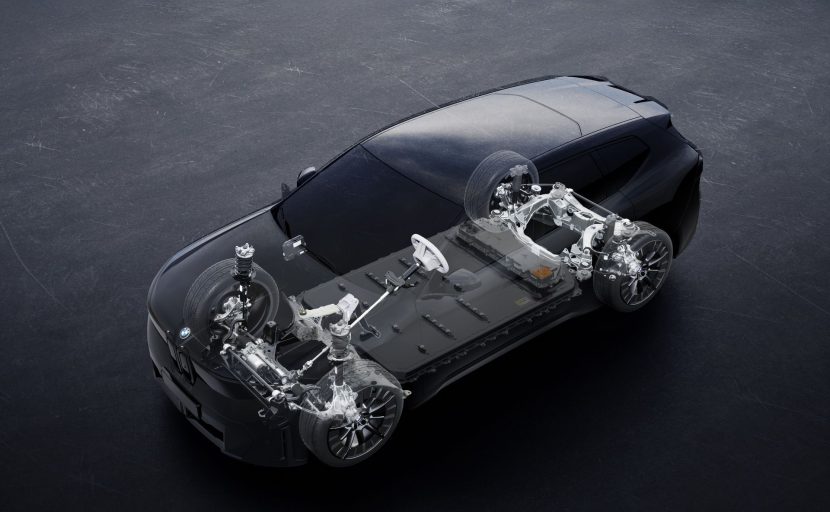
BMW described the platform as the “superbrain of automated driving” in order to underline its importance in the new class. In the IX3, the Snapdragon Ride SOCs provide 20 times the computing power of the driver’s helper systems of the previous generation of BMW and centralize all automated driving functions within a single high-performance computer.
The functions of the BMW IX3 include motorway assistant functions with hands-free drives on approved routes, automated lane change and loss of overtaking, which are triggered by subtle driver notices, and AI-supported parking with slot detection. The system is supported by a network of high-resolution cameras, radar sensors, mapping and precise GNSS positioning and offers reliable 360-degree awareness.
The IX3 is also the first BMW to use Qualcomm’s V2X 200 chipset and enables communication with vehicle-to-matter. By linking to other vehicles, street infrastructures and pedestrians, the system can recognize potential dangers over the reach of conventional sensors and improve both security and the situation awareness.
Developed to develop further
Snapdragon Ride Pilot supports the Air Achtualizations via the Qualcomm SDK, so that the software can be adapted and updated over time. Fleet data are also used to continuously refine the system and ensure that the technology can improve in the entire life cycle of the vehicle.
We had the opportunity to test the automated driving system in the new BMW IX3 in June and you can watch this video directly below:
