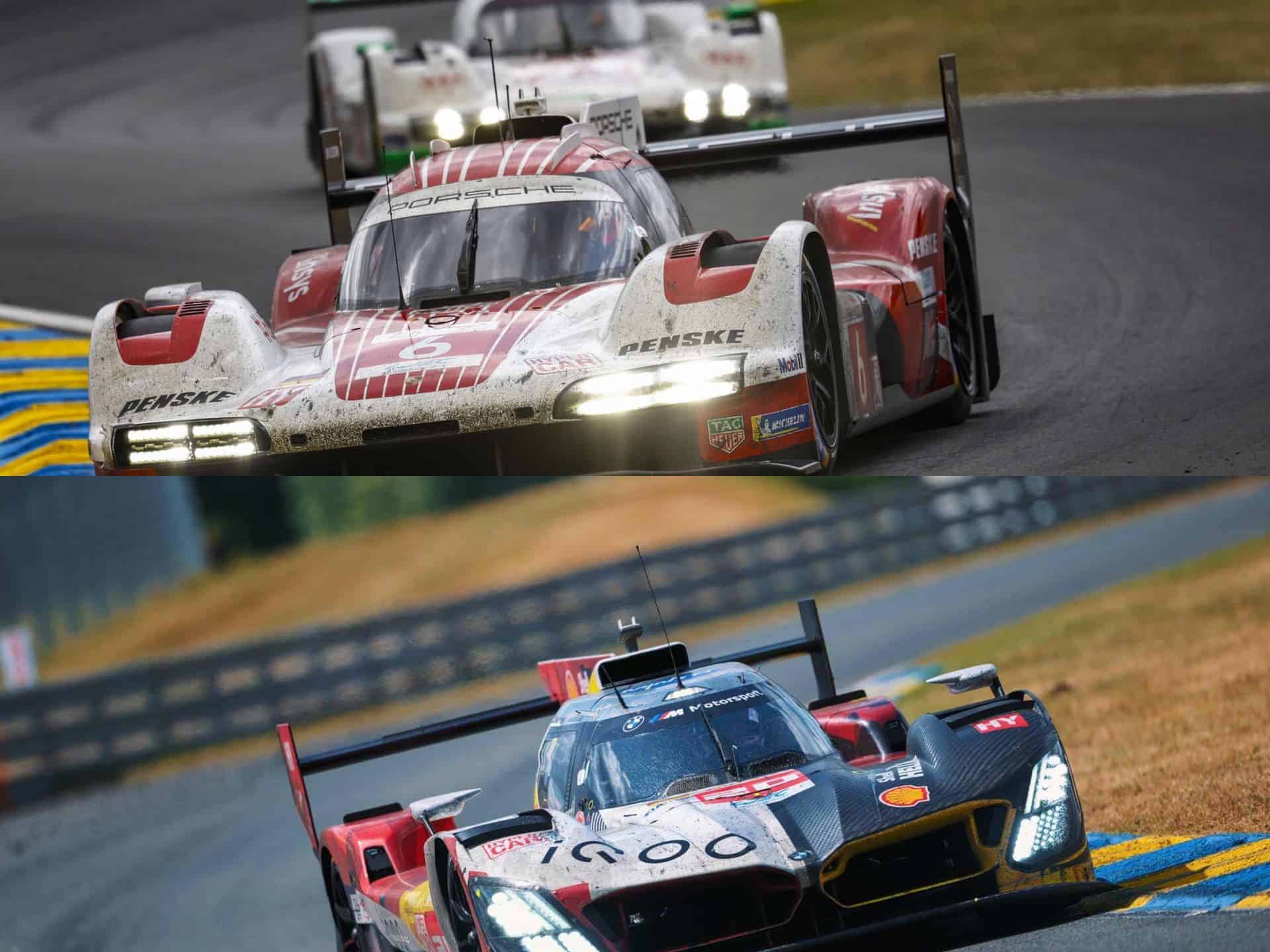
Porsche’s decision to withdraw from the FIA World Endurance Championship after the 2025 season has sent shockwaves across the racing world. After being one of the defining forces of endurance racing for years, the Stuttgart brand will no longer compete in the hypercar class. For BMW, which is preparing a major push for 2026, this news is both an opportunity and a warning.
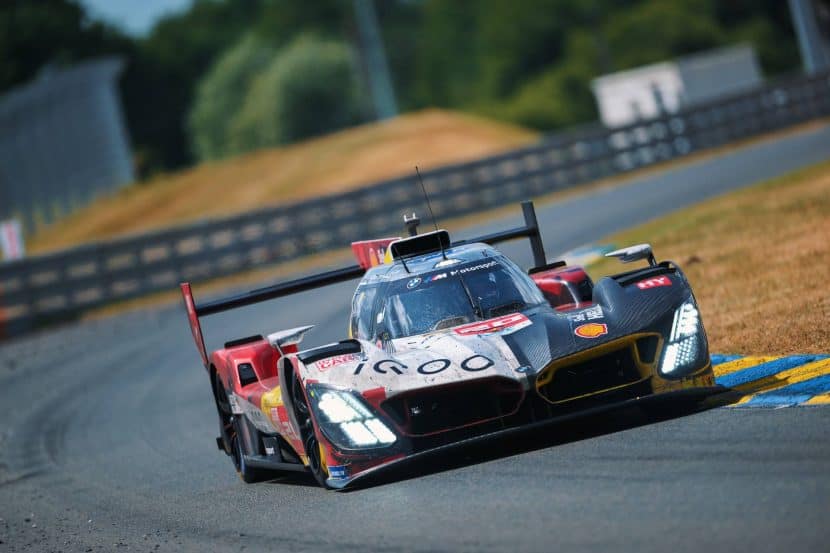
BMW M Motorsport is in the middle of developing a revised M Hybrid V8, the brand’s flagship endurance prototype. Set to compete in both the FIA WEC and IMSA series, the 2026 car introduces a number of meaningful updates aimed at improving performance in an increasingly competitive field. In addition to the slightly smaller kidney grilles – which still retain contour lighting – the M Hybrid V8 now features a redesigned front splitter and revised bodywork to improve aerodynamic efficiency and cooling performance.
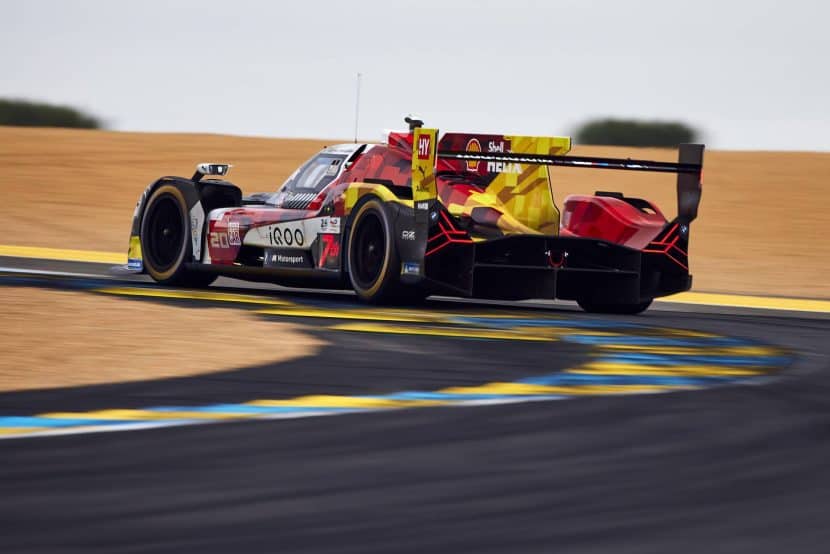
The changes are subtle but functional: airflow has been redirected for better heat management, allowing the car to maintain consistent performance over longer distances and on a wider range of routes. The headlights have also been updated and now appear more compact, while the additional camouflage hides improvements that will be officially introduced before the 2026 season opener at Daytona.
In short: BMW doesn’t stand still. The company is methodically building on the lessons learned as it returns to top endurance racing in 2024 and 2025. The next evolution of the M Hybrid V8 marks a turning point: from proving it belongs to proving it can win.
A changing landscape in endurance racing
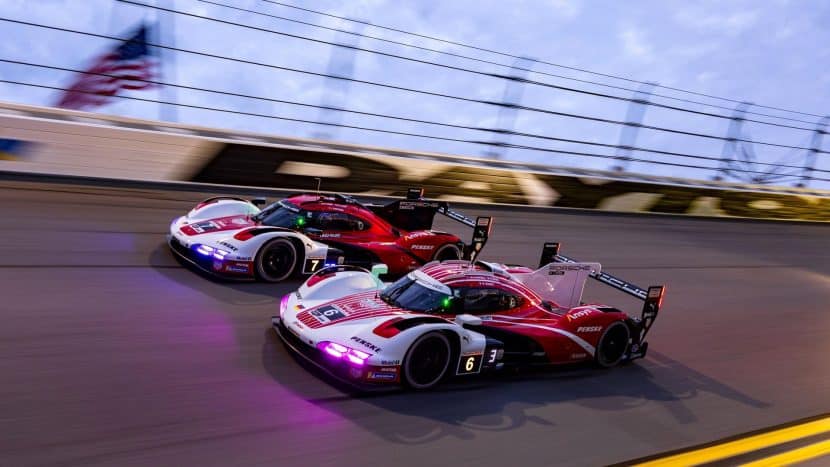
This mission just got a little more achievable. With Porsche’s withdrawal from the WEC, one of BMW’s toughest competitors is eliminated – and one of the most decorated brands in endurance racing. Few names have as much weight at Le Mans as Porsche. Their Penske-operated factory 963 hypercars were always front runners and contenders for the podium. Without them, BMW’s chances of climbing up the overall standings improve noticeably.
But Porsche’s exit is also a loss for the sport. It takes away a household name, a passionate fan base and one of the storylines that make endurance racing so compelling. Just as Formula 1 thrives on its big rivals, the WEC also benefits when the heavyweights compete against each other. Porsche versus Ferrari, Toyota, BMW – these are the encounters that give Le Mans its greatness. Without Porsche, the hypercar starting lineup feels a little more incomplete.
Still, BMW’s timing is uncanny. The brand’s season-long WEC efforts with BMW M Team WRT are increasing just as the competitive landscape begins to change. The Belgian team has already proven its capabilities in GT racing and the collaboration with BMW M Motorsport has developed into a closed factory partnership. This alliance will be central to BMW’s 2026 campaign, particularly at Le Mans – where the company has not achieved an overall victory with the V12 LMR since 1999. The duo will also compete in the 2026 IMSA Championship after BMW parted ways with long-time partner Rahal Letterman Laningan Racing.
The Le Mans 2026 events
For BMW, Le Mans remains unfinished business. The company’s last overall victory came more than two decades ago, in a time without hybrid models and debates about performance. This story gives each return emotional weight. Porsche’s departure is no guarantee of success, but it does make the path to a big result more open than it has been in years.
The 2026 race could be BMW’s best chance yet to regain endurance glory. A strong result – or a long-awaited victory – would validate years of investment and justify keeping the program alive despite growing cost pressures. But it is also a season that will test BMW’s long-term resolve. The company recently issued more cautious financial guidance, citing market uncertainty and potential headwinds in China. In such a climate, even a brand as committed to motorsport tradition as BMW must carefully consider every investment. Motorsport is part of its DNA, but it is not immune to boardroom control.
A window full of possibilities – and responsibility
BMW engineers and executives now face a rare moment. With Porsche’s departure, the brand’s M-Hybrid V8 program has a clearer definition – but also a greater responsibility to hold up the torch in manufacturer-backed competition. Not only must it deliver performance, but it must also maintain the prestige of the category itself.
At the same time, new players enter the field. Genesis is expected to join the WEC next year, adding another manufacturer. Toyota, Ferrari and Cadillac continue to refine their prototypes, while Alpine moves forward with renewed factory support. BMW will face stiff resistance, but for once it won’t be fighting from behind.
The future after 2026
It is unclear how long BMW will stick to its LMDh program beyond 2026. Officially, the company has reaffirmed its long-term commitment, even if it departs from its long-standing partnership with Rahal Letterman Lanigan Racing in IMSA. What is certain is that 2026 will be a crucial season. The updated M Hybrid V8 represents a more mature and refined race car, supported by a team that is gaining experience and confidence. Porsche’s exit gives BMW a bigger stage – and perhaps a clearer path to the top step of the podium. But it also raises expectations. If BMW can deliver at Le Mans, it won’t just be a symbolic victory; It will be proof that the company can succeed at the highest levels of endurance racing in a new era.
And if so, perhaps the story of Le Mans 2026 will not be about who left, but about who finally arrived. [Porsche photos provided by Porsche Newsroom for editorial use]
