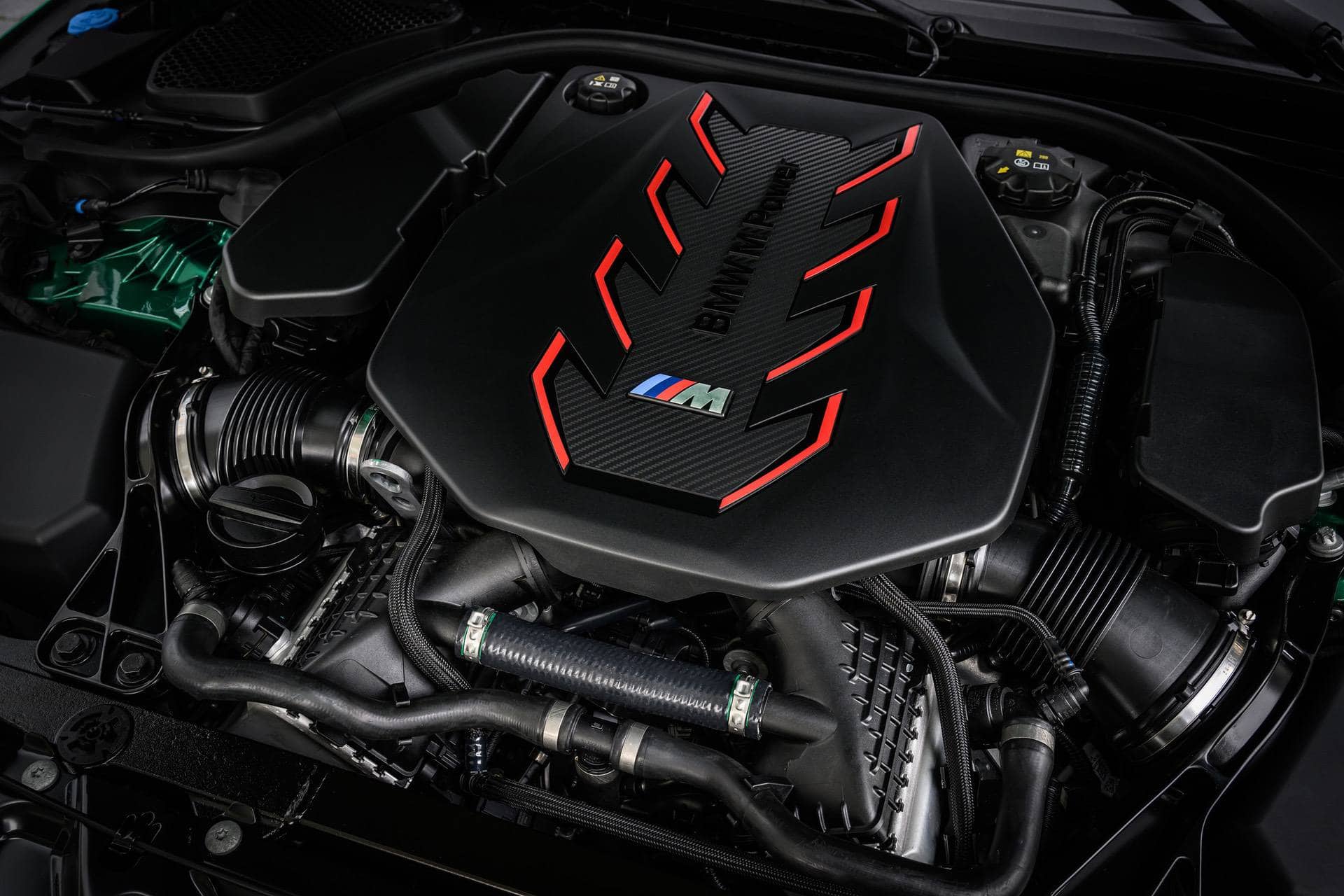
BMW secured the future of the V8 years ago when it announced plans to adapt the “S68” to Euro 7 regulations. In the US, where emissions standards are less stringent than in the EU, the 4.4-liter twin-turbo engine could have an even longer lifespan. In the meantime, Americans continue to show their love for large-displacement engines.
A BMW spokesman said this Automotive News Europe that demand for V8 models in the USA remains “above average”. In addition, the company representative believes that eight-cylinder engines will remain a popular commodity among Americans in the near future. To this end, production of certain engine components in Munich will continue beyond the previously announced deadline.
The historic site was originally scheduled to become a factory exclusively for electric vehicles by the end of 2027. However, cylinder heads, crankcases and crankshafts for V8 and V12 engines will continue to be produced there beyond next year. Meanwhile, series production of the i3 electric sedan is scheduled to begin in the second half of the year.
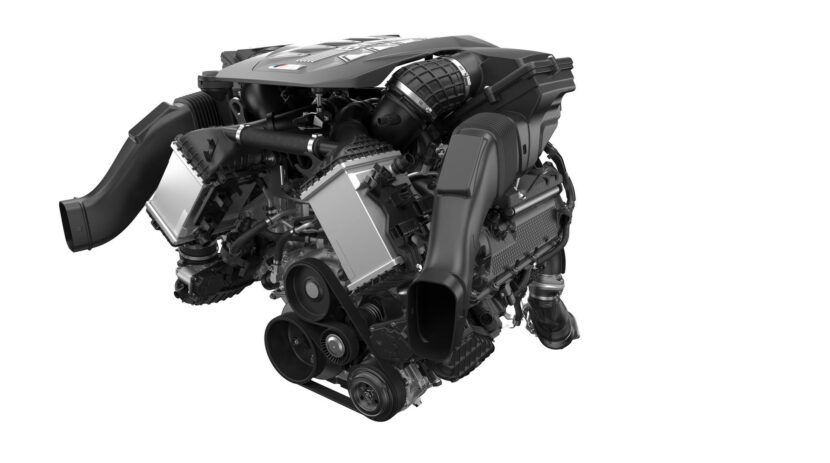
America’s strong appetite for V8 engines will be reflected in future products. The next-generation X5 and 7 Series facelift planned in the coming months will retain all eight cylinders. The X7 next year and the X6 due out in 2028 will also continue to offer V8 power in their top versions. It would make sense if the “Rugged” SUV, rumored to be released in 2029, also had the S68 engine.
At the same time, the BMW ALPINA sub-brand will offer V8 engines for the 7 Series LCI and the second generation X7. The stately sedan could come onto the market later this year as the G72, but won’t go on sale until 2027. The latter, codenamed G69, isn’t expected to hit the market until 2028, as the BMW-badged model isn’t expected to hit the market until next year.
Elsewhere, the previously spotted M5 LCI will retain V8 power in both sedan and wagon versions. In a perfect world, BMW would release a dedicated eight-cylinder supercar, but that ship appears to have sailed. The M Vision Next concept, which came very close to getting the green light, was powered by an inline-six.
Speaking of smaller powertrains, BMW has also committed to keeping six-cylinder engines alive. The latest B58 will be used in the upcoming M350 sports sedan, while the full-fat M3 is expected to use a mild hybrid S58. Both high-performance 3 Series variants are expected to be offered exclusively with all-wheel drive and an automatic transmission, analogous to the larger M Performance and full M models.
BMW’s commitment to its largest engines, including Rolls-Royce’s V12, comes at a time when electric vehicles have reached a record share of total deliveries. In 2025, electric vehicles accounted for 18% of sales. If you add plug-in hybrids, electrified vehicles reach 26% of the total volume. Serving both the ICE and EV crowds is clearly paying off as BMW finished another year ahead of rivals Mercedes and Audi.
Source: Automotive News Europe
