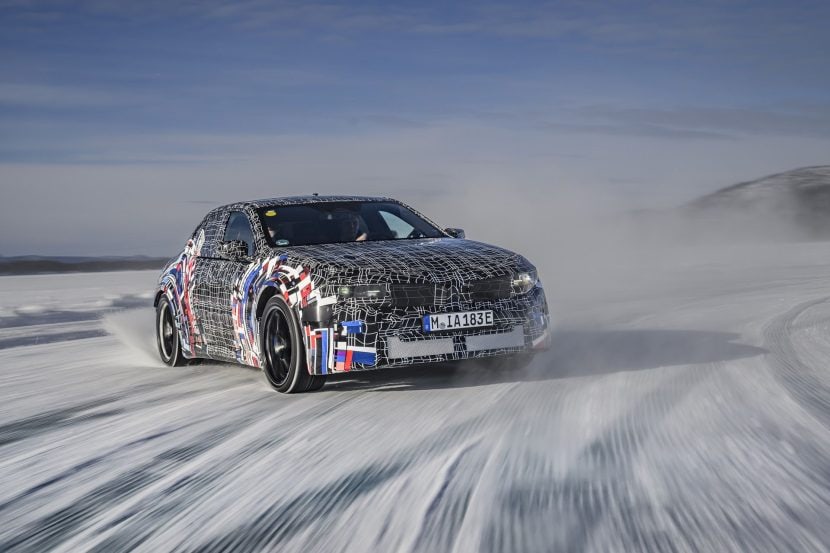
Earlier this month, BMW sparked controversy among purists when it announced that electric M cars would use “a newly developed soundscape.” Such a vague statement leaves room for interpretation, but the question on everyone’s lips was: False engine noise? Well, yes and no. Although next year’s M3 ZA0 won’t have a gasoline engine, the sounds it will make will come from a real engine.
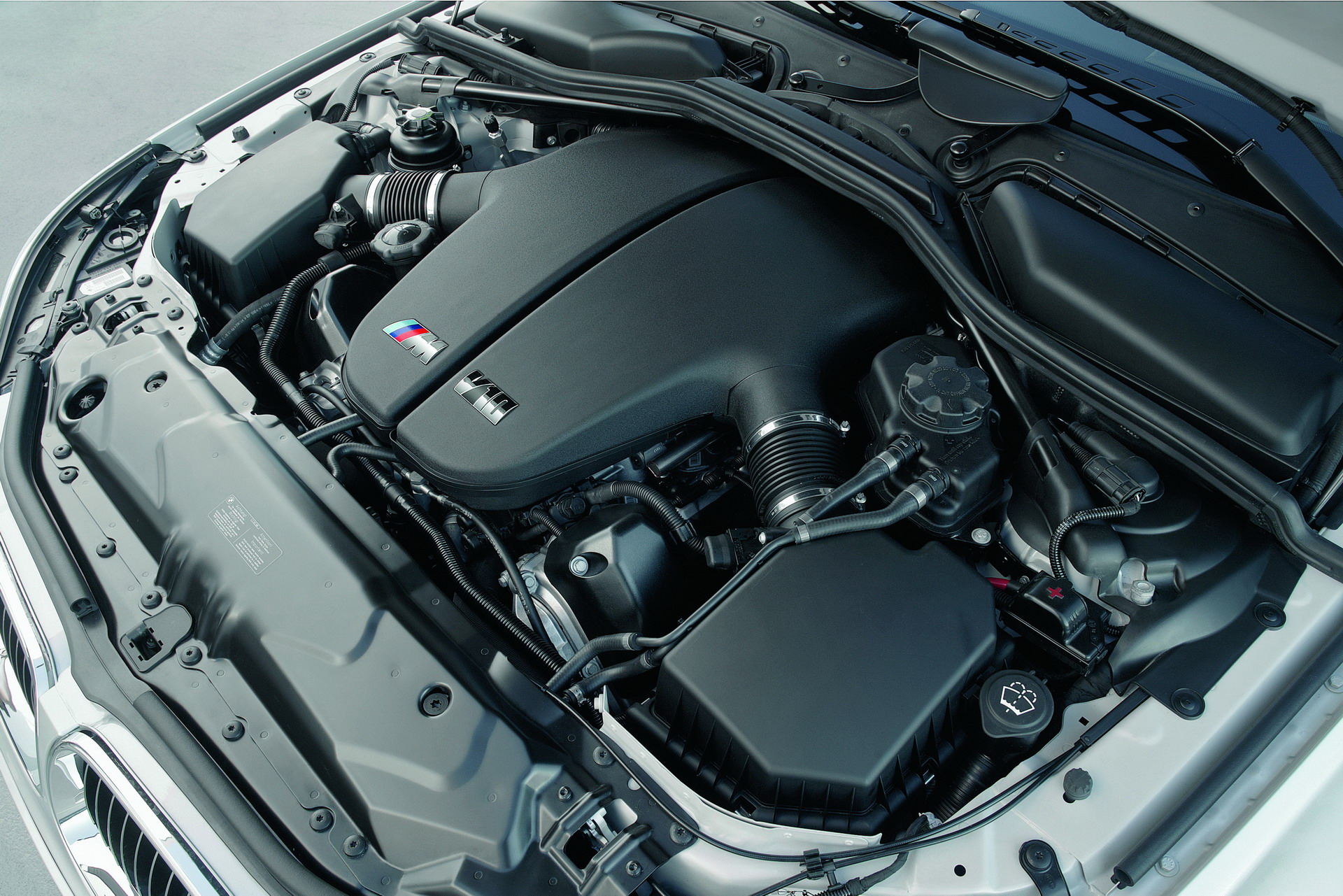
At the bottom of the page you can see a new video, recorded in an anechoic chamber, showing three M cars with engines with different numbers of cylinders. From left to right, the M3 GTS (E92) hides a 4.4 liter naturally aspirated V8 engine (S65) under its fire orange hood. Front and center sits an M6 E64 with its legendary 5.0-liter V10 (S85). The two naturally aspirated engines are joined by the M4 GTS, which is powered by a 3.0-liter inline six-cylinder with two turbochargers (S55).
BMW installed microphones to accurately capture the sounds of the engine. All it took was a few engine revolutions to partially melt the microphone’s fluffy windshield. In the electric M3 you won’t hear these ICE notes as they are. Instead, the engine music is mixed with the whirring of the electric motor to create the aforementioned soundscape.
We’re sure this will be an opinion-dividing feature. Some will dismiss it as just a gimmick. Others will see this as an improvement to the driving experience. As long as there is a way to turn it off, it shouldn’t be a problem. Regardless of which side you’re on, BMW deserves credit for using real M cars to capture authentic engine sounds. One could have relied entirely on artificial sounds.
The rest of the video focuses on the M3 ZA0’s hardware. However, BMW points out that the prototypes were equipped with early technology at the time of filming. The company notes that significant progress has been made since then, ahead of the production model’s launch next year. We also take a look at the front and rear axles, each with one electric motor per wheel. Side note: For a pure RWD setup, drivers can turn off the front motors.
There is also an insight into the battery pack, which was developed specifically for M electric vehicles with more than 100 kWh of usable energy. For reference, the related New Class iX3, with its sixth-generation round cell battery technology, has a net capacity of 108.7 kWh. In the M3, BMW will bolt the battery to the front axle and serve as a structural component to stiffen the vehicle.
The M3 ZA0 will launch after the regular i3 NA0, essentially an electric 3 Series, set to premiere later this year. Also in 2026, the sports sedan with a combustion engine will switch to the next generation (G50), followed in 2028 by a spicy in-line six-cylinder M3 (G84).
