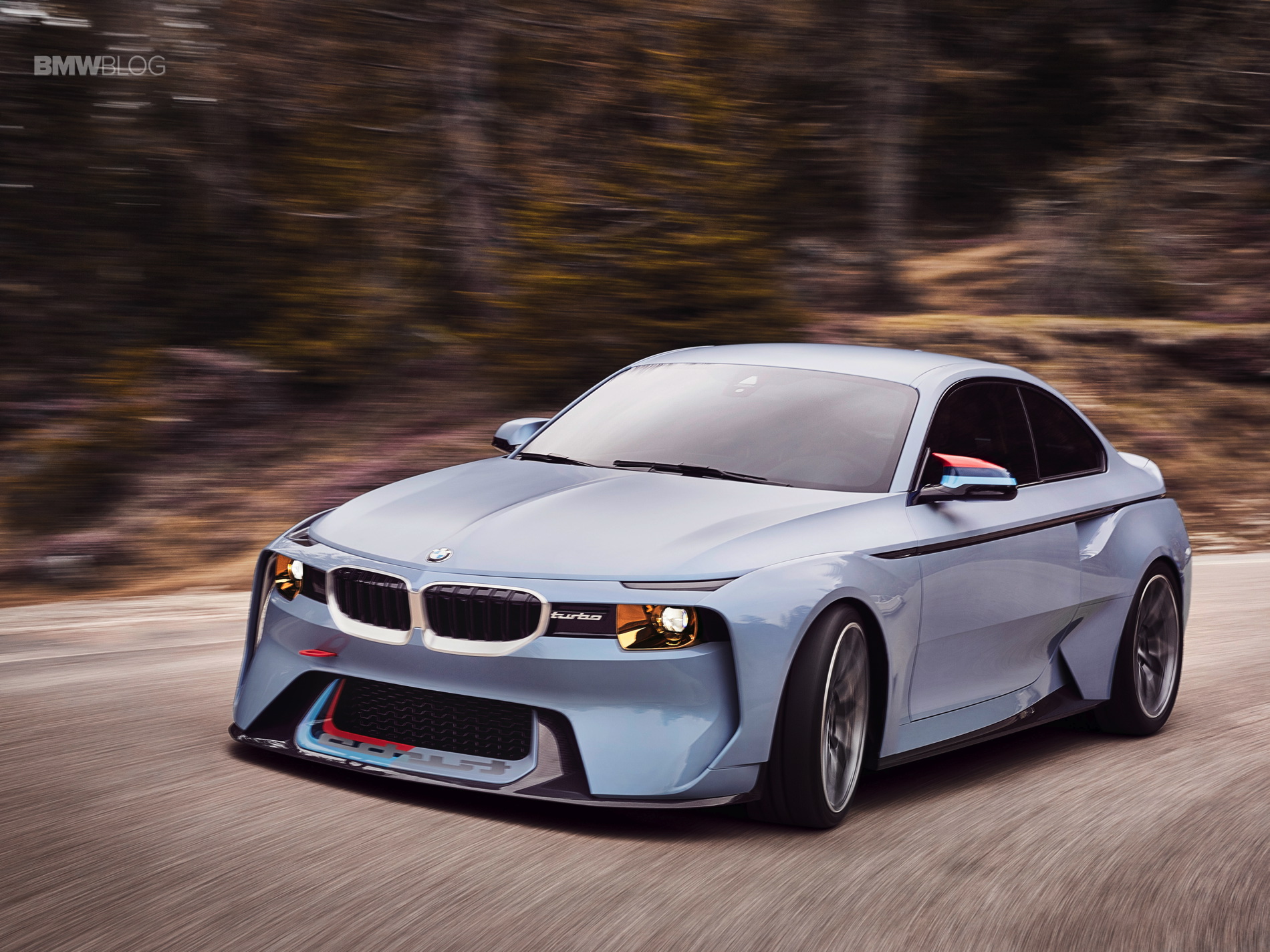
The BMW 2002 Turbo Homage made headlines when it hit the stage at Villa d’Esta in 2016. Although it was well received almost universally, there were countless little details about the car that went largely unreported. Well, thanks to BMW By Design, As one of Steve Saxty’s excellent BMW books, we have an unprecedented insight into every aspect of the homage. It’s just a small sample of what you can expect from this truly worthwhile read. From the hardware to the custom paint, there are at least five things you probably didn’t know about this epic concept car.
Redefining a “parts bin car”
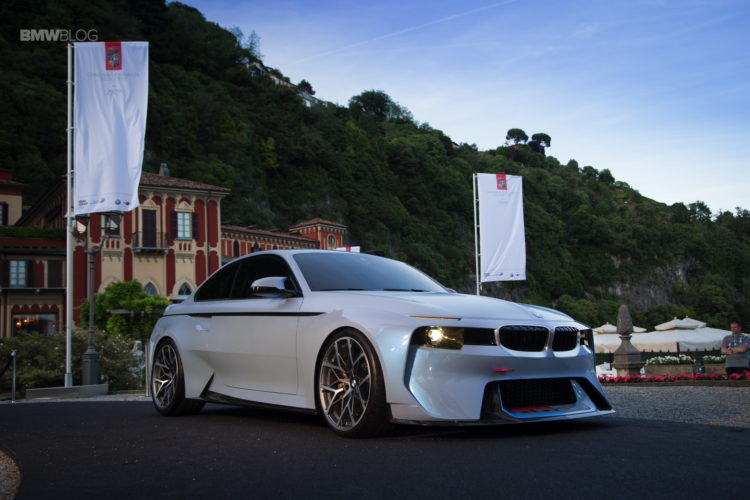
Why make something from scratch when you have things that already work? BMW took a number of components directly from existing vehicles to bring the 2002 Turbo Homage to life. “We used a BMW i8 door handle,” a designer told Saxty, “which allows this area to rotate behind it to form a flared rear fender.” He talks about the stripes that run down the side of the car and the “pocket” between the handle and the rear fender flare. Apparently this design choice also allowed the Homage to have no external door handles. Basically, of course, the Homage is just an F87 M2. In fact, the concept was quite drivable, especially because BMW changed so little compared to the production vehicle. The homage even made a contribution to the spare parts warehouse. The Style 759M wheels on which the concept is based finally entered production.
Bring the light
In keeping with the car’s “parts bin” focus, the car borrowed its exterior lighting entirely from existing vehicles. But of course you couldn’t really tell by looking at it. “There were BMW i3 taillights behind the tinted lenses,” a designer tells Saxty. Up front, the 2002 Homage’s gold-painted lamps looked like nothing else on the road. However, they were actually derived from the contemporary MINI. The yellow color pays homage to the Le Mans racing cars.
Challenged in a pioneering way
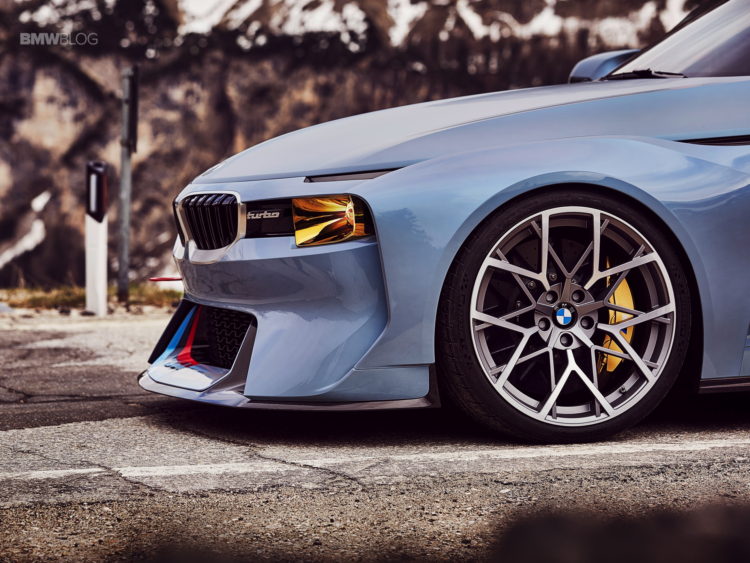
Speaking of lights, a cursory glance at the 2002 Homage may not immediately make it clear where the car’s turn signals are located. They are mounted above the two round headlights and “follow the concept of the 2002 original,” a designer tells Saxty. “These fit well with our design language of ‘precision and poetry’.” Interestingly, this design language debuted on the G11 7 Series – only for the next generation G70 7 Series to take it to the next level and completely share the headlights. In a way, it was the 2002 homage first.
Asymmetry is beautiful
There is one area where the original silver/blue 2002 Homage is obviously asymmetrical. The “Turbo” logo in the front fascia is placed asymmetrically, just like the original 2002 Turbo. But there’s another smaller detail you may have missed. The exterior mirrors are asymmetrical, with one side sporting M colors and the other side featuring exposed traditional carbon fiber and paint.
Racy color
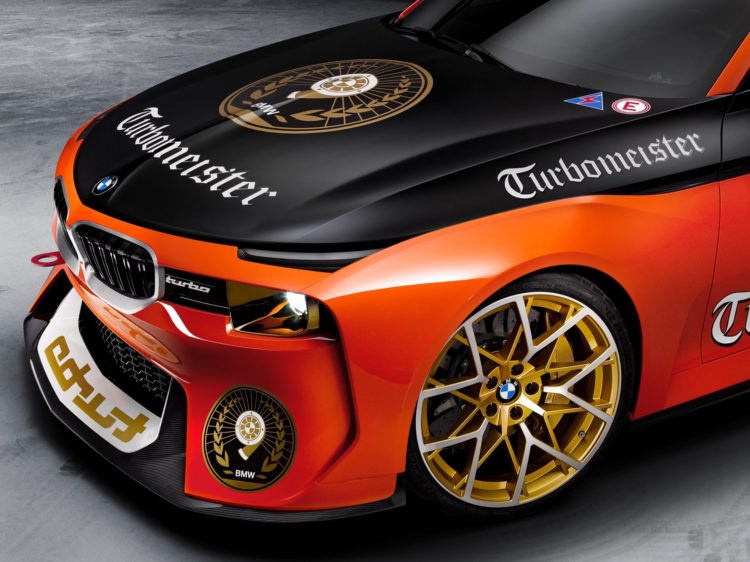
The color of the original 2002 Turbo Homage was called “Space Race,” a light blue metallic color. “I wanted a more milky gray,” says Alexey Kezha. “But the blue represented a feeling like the custom end of the Porsche and BMW scenes.” Kezha designed the homage that actually made it to the concept production floor. You may also remember an orange “Turbomeister” car; this paint job came later. In between, at Goodwood in 2015, BMW added an M tricolor stripe to the paint and a cool “Turbo” logo on the side.
