
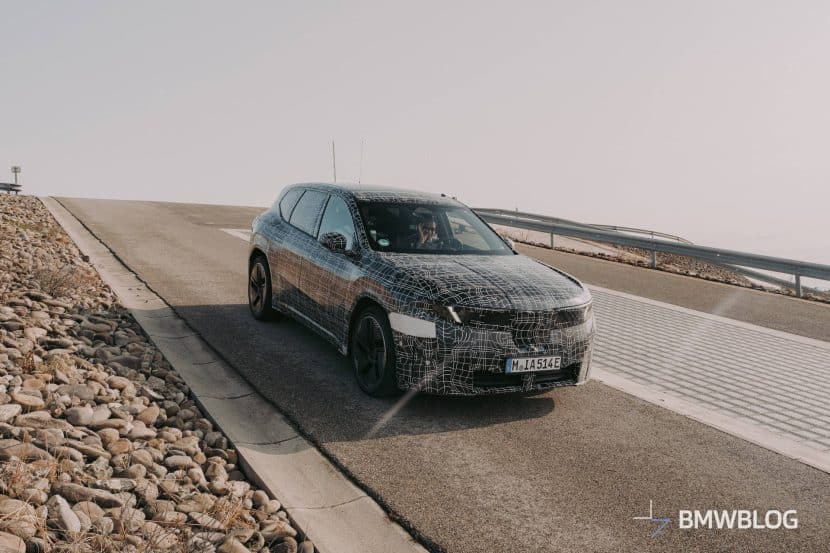
BMW held a series of technical sessions on the Neue Klasse and used the iX3 to explain how the new control system works. Most of the time was devoted to braking logic, torque flow and the way the car handles energy and grip. It was a dense presentation, but once you put it together you can see how different the underlying decision making is compared to current models.
History of BMW driving dynamics
The first part was mostly history. BMW explained how, for decades, vehicle dynamics systems worked independently of each other – ABS, stability control, traction management – each doing its own job and only occasionally communicating with each other. Later models linked these systems more closely together, but they still made decisions separately. With the New Class, BMW has combined everything in a single controller called Heart of Joy, which takes care of drive, braking, recuperation, torque distribution and slip control in one place. No handovers. No priority battles. Just a decision maker.
The heart of joy – how it works

The easiest way to understand it is the curve example we were shown. In the simulation, the car approaches a corner and slows down using rear engine recuperation instead of friction braking. This prevents the front end from being loaded too early and the steering works naturally. When the vehicle turns, the control monitors the yaw movement and switches the recuperation forward if necessary, not as a correction, but to calm the vehicle in the middle of the curve. When the driver demands more deceleration than recuperation can provide, the friction brakes quietly increase the effort – you don’t feel a switch; You just keep spinning.
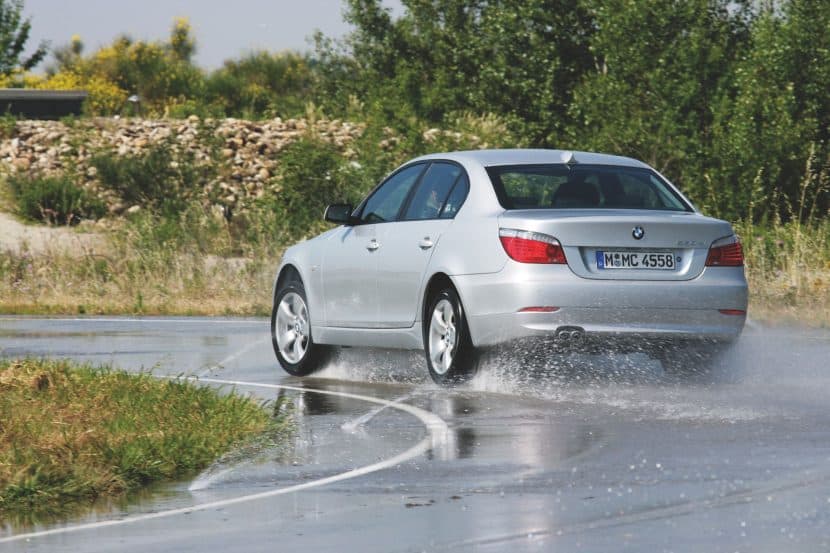
In the second demonstration, the scenario was repeated, but on a wintery surface with less grip. The movements were the same – rear recovery first, then front preload, and then a controlled blend of friction where necessary. As the car straightened, the torque went back to the rear and the maneuver ended cleanly. There was never a moment when the vehicle needed to be “saved.” It simply never got to the point where savings were needed. One of the engineers made a point that stuck with me: most drivers would think they had handled the movement well themselves, when in reality the car was doing most of the work in the background.
Brake regeneration on steroids
The braking behavior works according to a similar logic. Even during ABS events, the regeneration remains active longer at standstill than in most electric vehicles. Only when the engines fully utilize their recuperation capacity is there friction, which BMW puts at around three tenths AG depending on temperature and tire condition. If the battery is fully charged or too cold to absorb energy, friction occurs sooner. Otherwise, the system will continue to recover energy instead of aborting regeneration at the first sign of increased braking demand.
That’s why the car stops gently. There’s no noticeable transition at low speeds, no jerking or shifting as the final miles per hour fade away. In flat conditions, recuperation brings the car to zero, with friction only keeping the vehicle stationary or on an incline. BMW said the easiest way to notice it is to close your eyes – most people can’t tell when the car comes to a stop.

All of this requires a chassis that behaves predictably, and the engineers have claimed otherwise. The battery sits low and centrally, contributing to structural rigidity rather than acting like a block of mass. Unsprung mass is controlled by wheel size, the wheelbase is long enough for stability at high speeds and the rear suspension features a uniball camber link for more direct lateral response. These decisions may not make headlines, but they provide the foundation for keeping the software running smoothly. If the platform responded inconsistently, no amount of control logic would hide it.
It’s also worth noting that the Neue Klasse doesn’t provide a consistent driving experience. Other new class models will be tuned differently than the iX3. It’s not about standardizing behavior. It’s about giving BMW a control system that can support different personalities without having to rewrite the basics every time. We will find out more about this in spring 2026.
More supercomputers

A second control unit handles driver assistance and environment interpretation separately from the dynamic controller. A brain moves the car; the other understands what is happening around him. They run in parallel, reducing latency and enabling rapid decision making without multiple modules having to negotiate priorities. BMW didn’t elaborate on this part, but the architecture suggests that they’re working towards more powerful driving assistance without redesigning the way motion is controlled.
Ultimately, it wasn’t about how much power the iX3 produces or how quickly it charges. This way the car decides what to do with traction, braking and torque before anyone has to react. In the end, you won’t notice the code behind it. You’ll just notice how smooth the car feels and how much fun it can be, even on the track.
