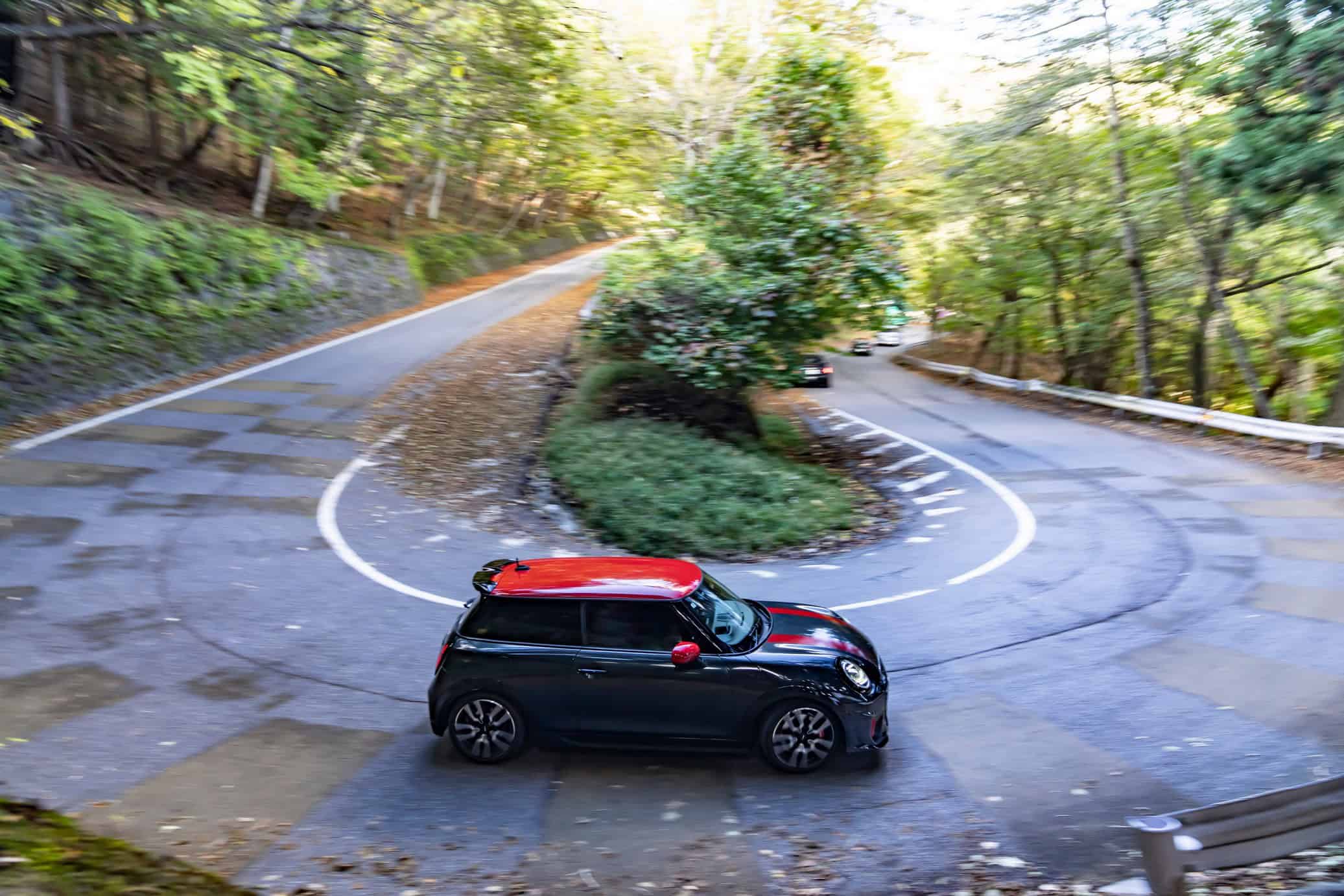
MINI built its reputation on attitude, not excess – a rugged small-car idea that turned ordinary commutes into mini-adventures. But the bigger the brand gets, the bigger the question becomes: What does “driving fun” look like for a MINI in 2025 and beyond? The brand’s “go-kart” dynamic was once a charming balance of usability, packaging and commitment. However, as the size of MINI vehicles has increased, we have to wonder if it’s time to change things up a bit. And we think rear-wheel drive is the perfect way to do it.
The MINI “Go Kart”: Gone but not forgotten?
For nearly half a century, the MINI’s biggest selling point – and arguably its biggest praise – was its “go-kart-like handling”. That was quite acceptable praise, considering that the early Austin Cooper and Rover Mini models weighed around 1,500 pounds (680 kg) in their heaviest configuration. Today the MINI Cooper weighs over 1,360 kg. But this is far from the most blatant departure from the “go-kart” philosophy. After all, in addition to the MINI Countryman, a small SUV, the brand now also sells an even heavier electrified version of the Cooper. And in some markets, there’s an electric SUV called the Aceman underneath the Countryman.
While each of these models could, on their own, represent a reliable imitation of a 1970s mini go-kart model, size and weight are just the obvious reasons why the cars don’t retain the same charm. In order to offer drivers sufficient speed, the horsepower figures had to increase in addition to the dimensions and weight. Unfortunately, even the best-tuned, most powerful front-wheel-drive vehicles have quite a bit of torque steer. The MINI Cooper is no exception. This can easily be counteracted by adding all-wheel drive, but that’s not quite in keeping with the go-kart ethos either. With BMW’s New Class vehicles now entering production, we think it’s time for MINI to make a big change and switch to rear-wheel drive.
Rear-wheel drive and MINI: an obvious match
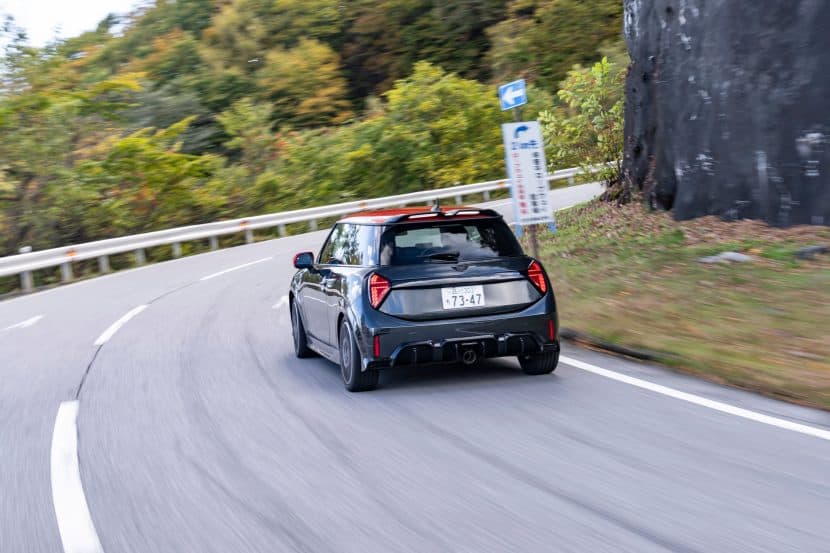
Even though MINI was probably a little late to the electrification party – actually only because the brand was such an obvious fit – it could be forgiven with some solid rear-wheel drive models. The basis of the Neue Klasse would allow the larger MINI models to drive and feel just as dynamic as their larger BMW-badged brothers. It would also allow for rear-wheel drive and all-wheel drive, which is a necessary concession and makes the MINI brand fun again in a whole new way. We would be happy if gas models followed this example. After all, BMW will still have CLAR in 2025. CLAR supports smaller cars like the 2 Series Coupé. The recipe has all the makings of some of the best hot hatches of all time.
There are some uncertainties. We are not 100% sure that CLAR would scale directly; After all, the 2 Coupe is still almost 17 inches (43 cm) longer than the contemporary Cooper. There is also the “legacy” aspect that may be difficult to overcome; After all, MINI has always been FWD. But at some point, MINI has to choose between this very specific and literal piece of heritage and the brand’s ethos, which has always been to deliver extremely pleasant driving dynamics in a city car-sized package.
MINI RWD: Could it really happen?
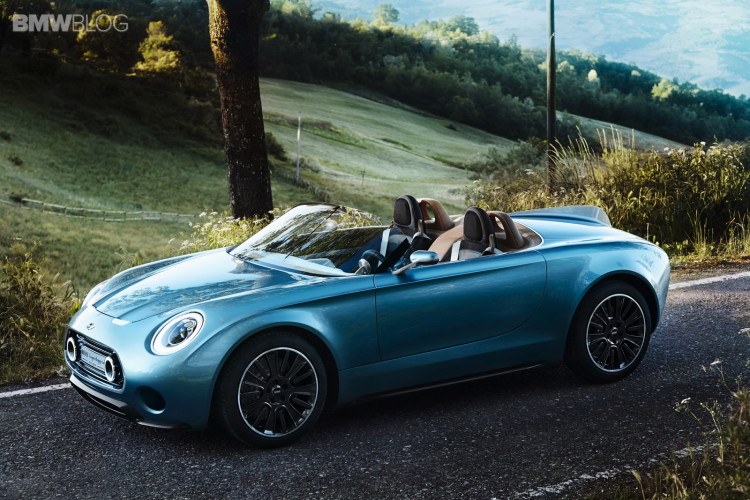
While projects like the MINI Superleggera have flirted with the idea of a different kind of MINI, there’s nothing to suggest that a RWD MINI project could be on the way. With the electric MINI Cooper already on the market, it’s unlikely we’ll see a rear-wheel drive MINI this decade. That assumes the brand is even interested in working on it. But we have to imagine that it crossed the minds of at least some people in the company. After all, it’s not as if even a low-performance, rear-wheel-drive MINI would turn off current customers; And imagine the appeal of the performance features. The hot hatch climate is arguably livelier than ever, with solid new entrants like the Golf R, GR Corolla and (though not in the US) the Audi RS3. There’s no time like this, MINI – get involved!
