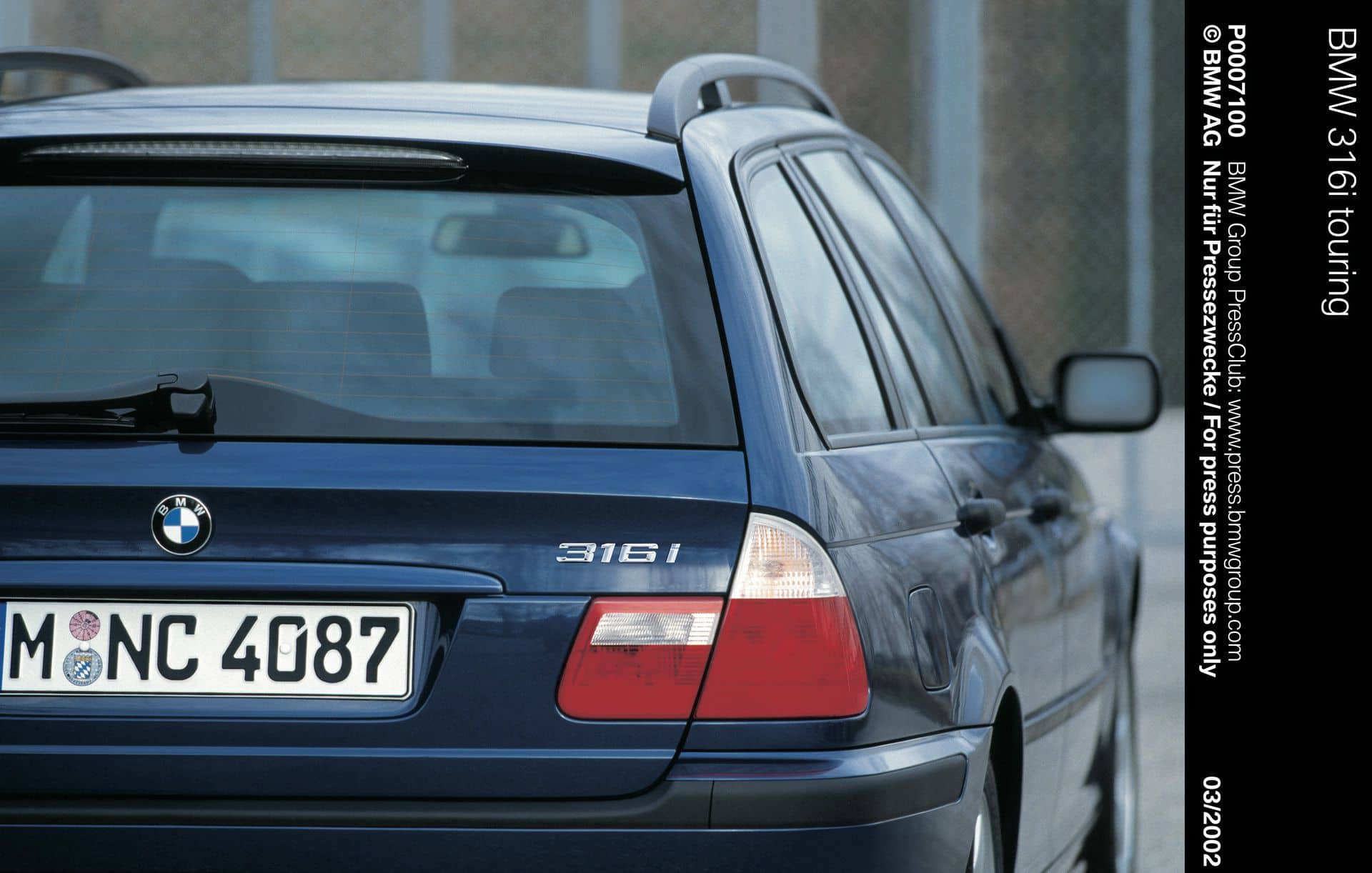
When the E46 3 Series first came out, its four-cylinder petrol engines were based on the aging M43 – a simple eight-valve design that made the 316i and 318i feel underpowered compared to the six-cylinder models. That changed in 2001 with the introduction of the BMW N42, a modern 16-valve engine available in 1.8 and 2.0 liter versions. Power increased by more than 20 hp compared to the M43, torque increased significantly and the transformation for everyday E46 models was immediately noticeable. For the first time in years, a four-cylinder 3 Series felt truly alive.
The N42 remained in production until 2004 and was used exclusively in the E46 and powered the 316i, 318i, 318Ci and 318ti Compact. In addition, Valvetronic, one of BMW’s most important modern technologies, was introduced, which still characterizes BMW engines today. But as with many crossover designs, innovation came with compromises.
Engine overview
The N42 represented a major advance in BMW’s four-cylinder development. Its aluminum block, 16-valve cylinder head, double VANOS control and DISA system with variable intake duct made it significantly more advanced than its predecessor. BMW said it improved part-throttle efficiency by about 10 percent, largely thanks to Valvetronic’s ability to regulate intake air without a traditional throttle.
Two versions were offered:
N42B18
- 113 hp at 5,500 rpm
- 129 lb-ft at 3,750 rpm
- Bore × Stroke: 84.0 × 81.0 mm
N42B20
- 140 hp at 6,000 rpm
- 147 lb-ft at 3,750 rpm
- Bore × Stroke: 84.0 × 90.0 mm
Both variants used chain-driven camshafts, weighed around 100 kg and featured BMW’s Bosch ME9.2 engine management system to coordinate Valvetronic, VANOS, DISA, ignition and fuel delivery. This was one of the most powerful ECUs BMW had ever used at the time.
Design and technology
Valvetronic is the defining feature of the N42. Instead of controlling airflow with a throttle, the system varies the lift of the intake valves using an additional eccentric shaft mounted above the intake camshaft. An electric stepper motor rotates this shaft via a worm gear, changes the position of the rocker arms and thus continuously adjusts the valve lift from almost zero to fully open.
This approach reduces pumping losses and improves throttle response. Under most conditions, the conventional throttle body remains fully open and is only used to create initial vacuum during cold starting or as an emergency backup if the Valvetronic engine fails.
Valvetronic works together with double VANOS and the DISA valve suction pipe. Together, the systems optimize airflow, cam timing and intake path length across the entire speed range. The trade-off is complexity: a vacuum pump must be added because the intake manifold no longer provides a natural vacuum, and the additional hardware increases engine weight compared to simpler predecessors.
BMW eventually equipped almost all naturally aspirated engines with Valvetronic, but the introduction in high-revving ///M models was delayed due to limitations in stroke control at very high speeds. Interestingly, around the same time, BMW briefly experimented with camless solenoid valves, but the technology failed to achieve an acceptable redline.
reliability
The N42 can be reliable with careful maintenance, but it is also one of BMW’s more maintenance-sensitive four-cylinder engines. Its problems are well documented, starting with the timing chain system. Early engines used a tension piston that was too short, resulting in excessive chain play and accelerated wear on the chain, guides and sprockets. BMW later released a revised, longer tensioner that was intended to be installed in any engine still running the original part. A rattling noise when starting cold is a classic early warning sign. If the problem is not corrected, the chain can jump over the teeth and cause serious damage to the engine.
Oil leaks are also common. Spark plug tube seals, VANOS seals and the vacuum pump can begin to leak as they age. These problems rarely result in immediate failure, but do contribute to oil loss and pollution.
Even more serious is the crankcase ventilation (CCV) system, which can become clogged – especially in cold climates or in vehicles that are frequently used for short trips. Symptoms include rough idling, high oil consumption, difficult cold starts, stalling, and poor performance at low speeds. BMW offers an insulated CCV for cold regions, but replacement still requires removing the intake manifold, which is labor intensive.
Valvetronic leads to further sources of error. The eccentric shaft sensor and the Valvetronic motor can cause erratic behavior if they deteriorate. While replacement will restore normal function, access can be difficult and diagnosis is not always easy.
Despite all this, many well-maintained N42 engines achieve a mileage of more than 200,000 km. The key is proactive service – regular oil changes, timely CCV replacement, cooling system maintenance and early resolution of timing chain symptoms.
Efficiency
The N42 delivered one of the largest efficiency gains of any BMW engine change in the early 2000s. Thanks to Valvetronic, pumping losses were significantly reduced, allowing the engine to work more efficiently at partial load. The 10 percent improvement claimed by BMW was realistic in everyday use.
On the motorway the N42 is really efficient and often delivers results in the mid-range 6 to 7 l/100 km. In the city or when exercising, consumption increases quickly. The best efficiency is achieved in stationary travel mode, where the variable valve lift system works most effectively.
vote
The N42 is not a tuning-friendly engine and expectations should remain realistic. Remapping the ECU provides small increases in power – typically around 5 to 10 horsepower – and improves throttle response. Supporting modifications such as a higher flow exhaust or intake can sharpen character but add little to peak performance.
The engine’s architecture makes more aggressive modifications impractical. Valvetronic makes camshaft upgrades difficult, and forced induction projects quickly become too costly compared to simply starting with a six-cylinder BMW. The most significant improvements are not related to performance at all, but rather to handling improvements, such as a lighter flywheel or a shorter differential ratio.
In short: Tuning can improve the driving experience, but cannot change the engine.
pros and cons
Advantages
The N42 introduced modern BMW technologies that continue to shape the brand’s engine philosophy today. It significantly improved the performance of the entry-level E46 models and delivered good efficiency for its time. Its lighter weight compared to six-cylinder engines improves front-end agility and N42-powered E46 models remain an accessible entry point to classic BMW ownership.
Disadvantages
Due to its complexity, the engine is more sophisticated than many of its contemporaries. Timing chain problems, CCV failures, oil leaks, and Valvetronic-related problems can be costly if neglected. The tuning potential is extremely limited and replacing certain components – particularly the CCV – requires significant work. Many examples on the market today suffer from deferred maintenance.
A good engine?
The BMW N42 represents a significant shift in BMW’s four-cylinder philosophy. It brought advanced technologies such as Valvetronic to mainstream models and significantly improved the performance and efficiency of the E46 316i and 318i. But it also highlighted the challenges associated with introducing complex engines that require commuter use and limited maintenance.
For buyers who understand their needs and value a responsive, efficient and lightweight four-cylinder BMW, the N42 remains a compelling engine – provided it has a good service history and receives ongoing attention. If treated properly, it can be a rewarding and exciting part of early 2000s BMW ownership. Neglected, it becomes one of the more sophisticated engines of its time.
