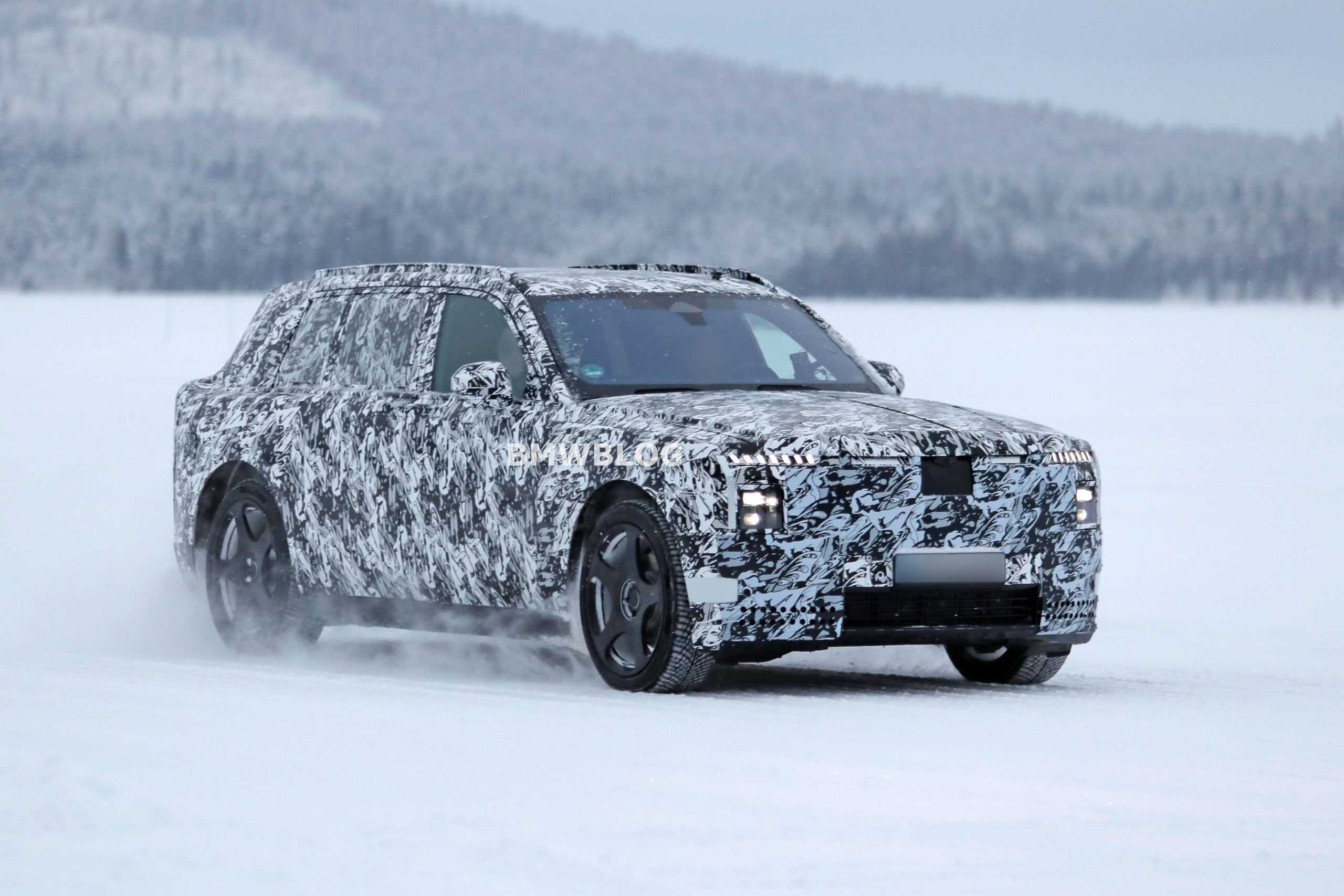
A Rolls-Royce electric SUV was recently tested in cold weather on the frozen lakes of Arjeplog, Sweden – the BMW Group’s traditional winter testing ground. The crucial detail: This is not the Cullinan’s electric replacement. It is a completely new model. Sources confirm that it is a standalone model range that could also coexist with a V12-powered Cullinan. The strategy makes sense: Some customers still demand the theater of a twelve-cylinder engine, others value state-of-the-art electrical technology. Rolls-Royce could offer both.
The timing is important. In the next two to three years, Rolls-Royce’s electric SUV, Bentley’s upcoming electric vehicle and Range Rover’s electric models will be launched almost simultaneously. This is the first comprehensive market test of whether ultra-luxury customers will accept electrification at the highest levels.
The advantage and the challenge of the BMW Group

There is a pragmatic reality here: Rolls-Royce uses the BMW Group’s significantly larger development budget. Whatever battery chemistry and engine configuration BMW engineers have developed for the Neue Klasse, it could form the basis for Rolls-Royce’s electric vehicles. For a brand that produces fewer than 6,000 vehicles per year, this makes perfect economic sense. And of course this also becomes a market advantage. But Rolls-Royce faces the same challenge it always has: delivering a unique engineering experience that keeps the brand on its own high-end luxury lane.
As always, the answer lies in the execution – the obsessive sound engineering, chassis tuning and attention to detail that separates a good EV from a great one. With the Specter, the brand has already proven that it is capable. Perhaps the biggest challenge is aesthetic: designing a traditional-looking Rolls-Royce without sacrificing too much efficiency compared to BMWs with the same battery architecture. The Specter achieved a drag coefficient of 0.25 and still looked unmistakably like a Rolls-Royce. The SUV faces an even more difficult task.
Looks bigger than the Cullinan
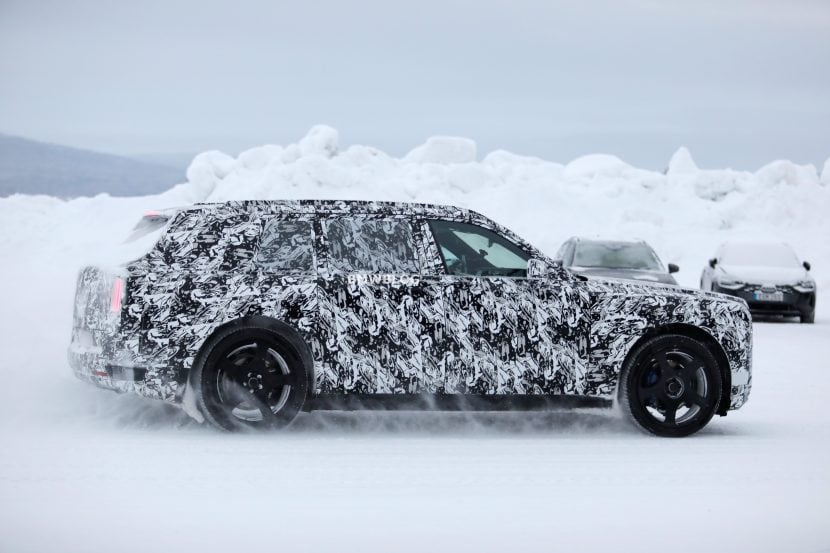
Although this electric SUV appears lower and slimmer in spy shots, it appears to be longer than the Cullinan at 5,341mm long, putting it between the Ghost and Phantom sedans. That’s longer than a long wheelbase S-Class. The proportions differ from the Cullinan. While this SUV stands tall and imposing, this model appears lower with more station wagon-like proportions and flatter windows.
The main Rolls-Royce design features remain: the long hood, the upright nose, the short front and long rear overhangs. The characteristic rear-opening car doors remain. The lighting at the rear appears to be inspired by the Specter’s compact taillights rather than the Cullinan’s larger vertical units.
Up front, while the Pantheon grille assumes its traditional centerpiece position, the LED lighting strips at the interface of the hood and bumper taper from oblique to vertical as they approach the center. Below sit vertically arranged spotlights – a departure from traditional horizontal lamps that create a distinctive new visual signature.
What you can expect from a driving perspective
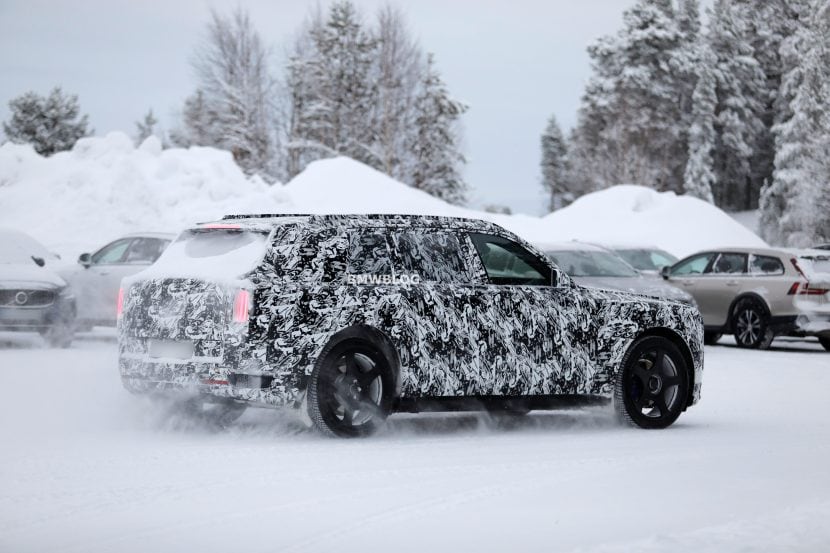
The combination of electric motors, extensive sound deadening and Rolls-Royce’s obsessive NVH insulation is likely to create a level of interior serenity that redefines the segment. The suspension – likely an evolution of the Planar system – could bring the famous “magic carpet ride” to new levels of comfort, enhanced by the instantaneous response of the electric motors and the low center of gravity of the batteries.
The technological basis is said to come from the sixth generation BMW architecture, but no further details are currently available. The 800-volt architecture allows for faster charging – potentially reaching over 400kW of power – although most owners charge at home. The range is easily at least 400 miles (EPA). This is more than sufficient for typical Rolls-Royce usage habits. We’re also expecting at least 600 horsepower, with future Black Badge variants offering even more.
Production expected in 2027
Production is rumored to begin at Goodwood in early 2027. Prices should start at around $400,000 to $450,000, above the Cullinan but below the Phantom. The most direct competitor will be Bentley’s 2027 electric SUV, although Range Rover’s electric models will also compete.
