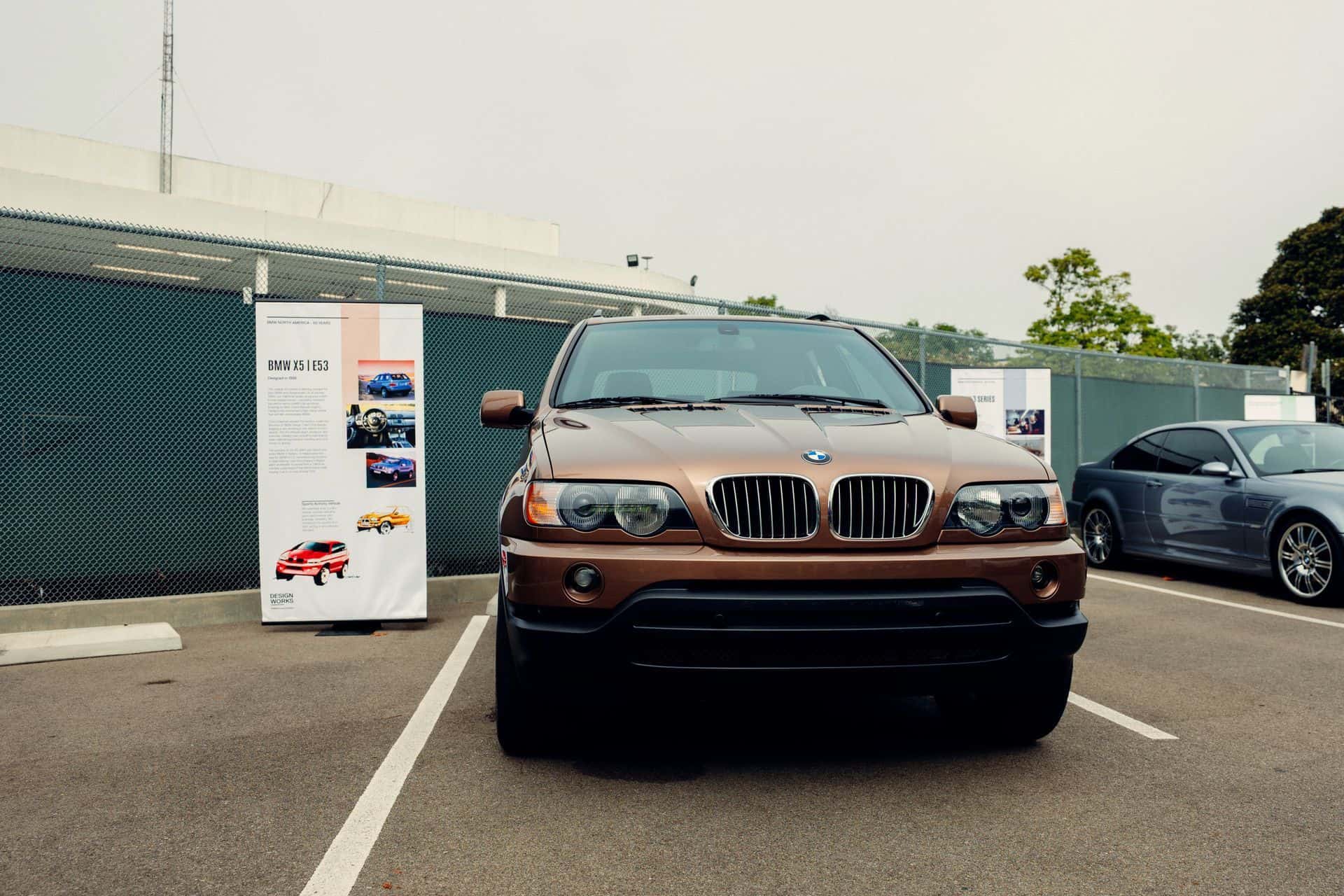
When you enter BMW’s Designworks studio in California, you immediately sense why this place has shaped so many important BMW products. The studio is more like a workshop than a corporate design office – clay models in various stages of development, quick physical models scattered across tables, and 3D printers constantly running. Nothing stays digital for long. Ideas become objects here, and Designworks often sees what BMW needs to do long before Munich does.
A recent look behind the scenes at the studio brought the origins of one of BMW’s most important vehicles into focus. As the team revisited early projects, the common thread became unmistakable: The BMW X5 wasn’t just formed in California – it exists because of California.
Adrian van Hooydonk, Head of Design at the BMW Group, and Hussain Al-Attar, Creative Director at Designworks, made the connection clear. “The launch of the Today the X5 is a cornerstone of the portfolio and, according to Van Hooydonk, often even outperforms the X3. But in the early 1990s, the idea of a BMW SUV was not well received by the company. BMW was also late to the party. Jeep had already changed the market in 1992 with the Grand Cherokee. When the first generation of the X5 came onto the market in 1999, BMW had some catching up to do.
How the takeover of Land Rover led to the BMW X5
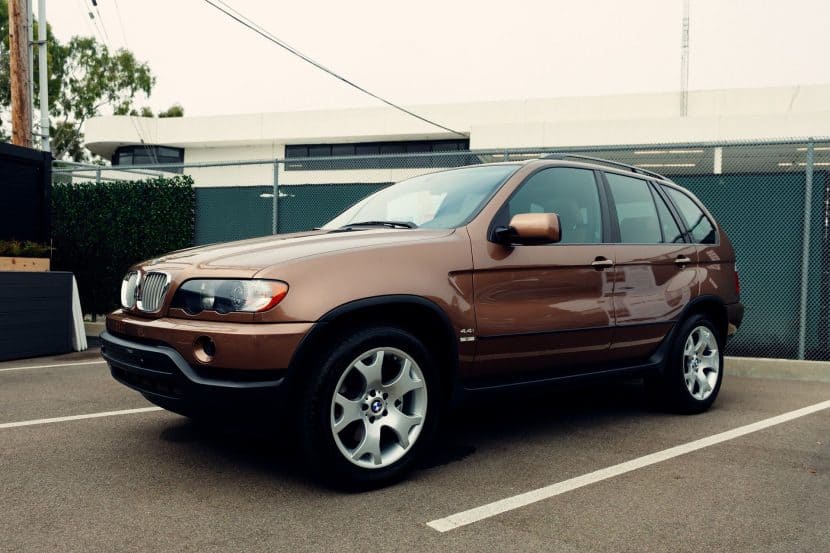
The turning point can be traced back to 1994 – a year in which two major events quietly set the X5 in motion. BMW acquired Land Rover, which immediately forced the company to consider how an off-road capable vehicle could coexist with BMW’s traditional emphasis on on-road driving dynamics. That same year, BMW also completed its acquisition of Designworks. What Munich won wasn’t just another design studio; During the biggest SUV boom the country had ever seen, it gained a cultural antenna pointed squarely at the West Coast of the United States.
BMW hired Designworks to research what a BMW SUV might look like, and the results came quickly. The studio’s early sketches for the later E53 project came surprisingly close to the production car. The very first drawing – including a sharp-angled Hofmeister kink – already captured the proportions and stance that would define the X5. The job then moved to Munich, where designer Chris Chapman, who had joined Designworks after several years at Isuzu, began designing the X5’s shape alongside Chris Breif.
Chapman’s influence was crucial. His background in the SUV and truck world gave him a perspective that BMW designers in Germany didn’t have. Back then, some at BMW still thought their SUV could be small – something closer to a Kia Sportage. Chapman fought hard. If BMW wanted to be successful in America, he argued, the proportions would have to be closer to a Jeep Grand Cherokee. A BMW SUV that looked too compact simply wouldn’t appeal to U.S. buyers.
The design process

This insistence led to a series of physical tests, many of which were conducted or initiated at Designworks. Hussein Al-Attar, creative director at Designworks LA, recalled how early proportion studies were sometimes constructed from improvised materials. “We use some very sophisticated, high-tech methods,” he joked, “to put cars on blocks and put fake wheels on them…just to see what a smaller X5 or something sportier might look like. Those were experiments.”
These experiments were not limited to ride height or track width. In some early models, the E53 under development was placed next to a full-size GMC pickup so that Munich executives could understand how big American SUVs really were. Other prototypes exaggerated the size or stance of the wheels just to force conversations about size. It wasn’t about creating a caricature, but about ensuring BMW understood the realities of the US market, realities that are far removed from the streets of Munich.
Van Hooydonk explained why these physical comparisons were so important. “Sometimes we just need to create a model,” he said, “put it next to existing cars … and then people can start to understand it.” California didn’t just provide sketches; It forced the company to see proportions in real space.
In 1996, BMW approved the design direction and froze the design – an unusually early halt that came almost three years before production began. The final exterior was refined under Frank Stephenson, but Chapman’s early vision remained largely intact. Design patents followed in 1998, laying the foundation for a debut in 1999.
Other X models were designed in California

Over the years, Designworks’ influence continued to grow. Al-Attar noted, “With few exceptions, most X vehicles were developed here in California… first X5, first generation X3, second generation X3, first generation X1, current X5, current X7.” The studio didn’t just contribute to the X lineup; it became his driving force.
As the conversation expanded at Designworks, van Hooydonk offered insight into why California ended up shaping so many of BMW’s X-cars. All BMW designs, he explained, are developed through internal competitions between studios in Munich, Shanghai and California. But the X vehicles kept coming from California. “In most cases the X vehicles were won by the California studio,” he said. “Maybe because they understand this lifestyle. They live it.”
This understanding led to measurable impact. “A lot has happened since the very first X5,” he said, “and this was a Designworks initiative.”
Designworks plays an important role in the BMW design process

He then described Designworks’ unique role within BMW’s design structure. While the studio participates in all major vehicle programs, it also has the freedom – and responsibility – to identify “white spaces” in BMW’s product range. The original X5 was one. The XM was different. Some of these proposals come too soon, he acknowledged, but timing is part of the process. “Sometimes it’s too early,” he said. “It doesn’t matter. Sometimes you drive at the right moment. The XM took a little longer than the team probably would have liked, but we got it done in the end.”
Then came his most revealing sentence, which explains the studio’s ethos more clearly than any organizational chart: “I always tell the team that we have to have more ideas than the company can build, because the opposite would be very bad.”
Looking back, the launch of the “Then right after that came X3,” said van Hooydonk, “then came a whole series of Xs.” The
X5 – one of the most successful BMW products

Viewed from this perspective, the X5 was more than a successful product. It was a demonstration of what happens when BMW listens to its California studio – a studio that develops ideas early, tests them physically, reads American roads with instinct and pushes the company into segments it might otherwise miss.
Today, the X5 is considered one of BMW’s defining vehicles, a global bestseller that redesigned Spartanburg, expanded BMW’s identity and changed the company’s trajectory. Yet its origins remain unmistakably Californian – born in a studio full of clay, foam, improvised wheels and designers who saw the future of the SUV long before Munich.
And as van Hooydonk reminded the team, that’s exactly what Designworks is for.
[Photos: Ryan Postas]
