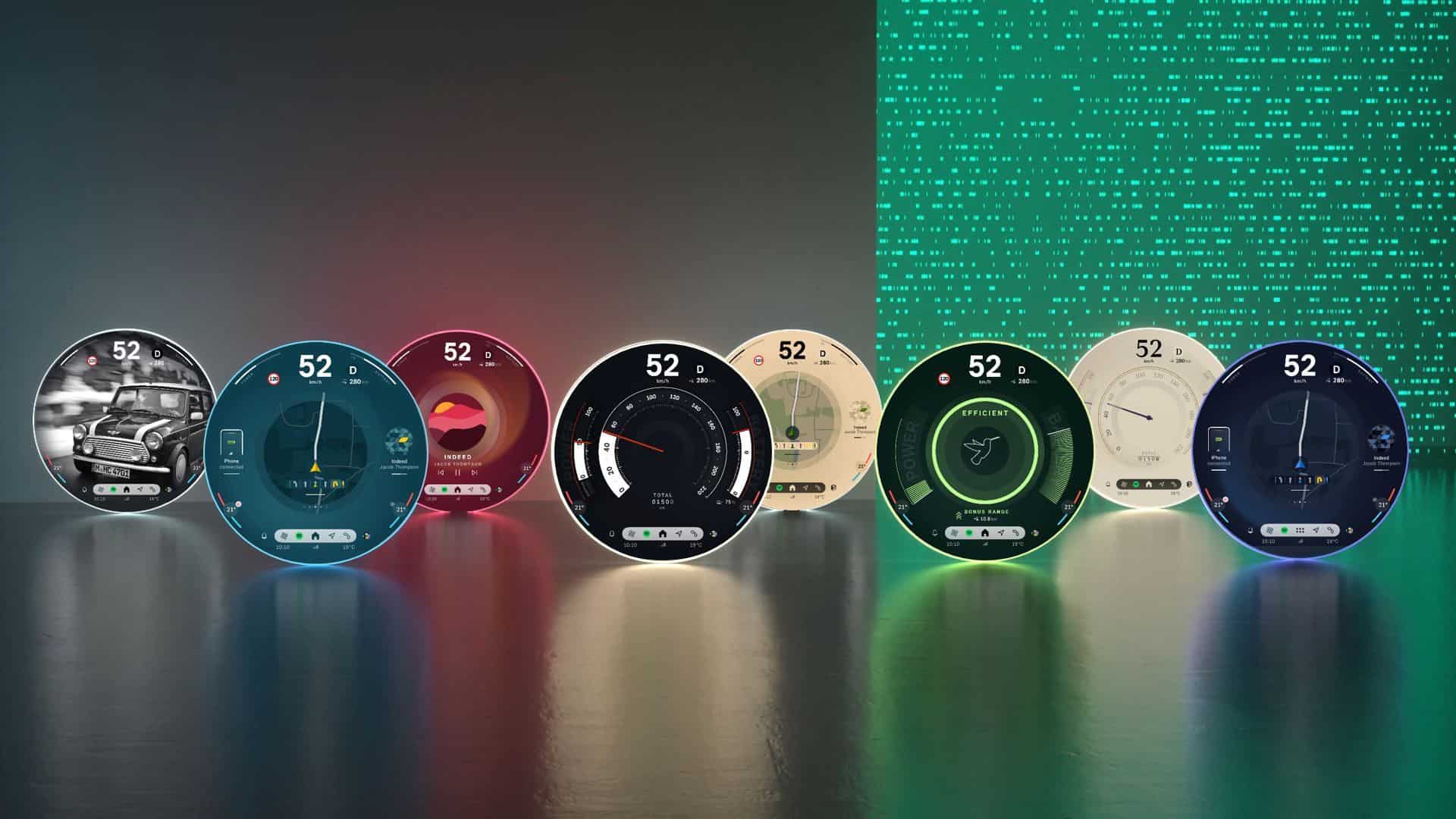
When it comes to brand heritage, MINI is a brand with a lot to lose. Almost everything about the original car looks downright “iconic,” whether it’s the car’s friendly front apron or the truly spartan interior with its eye-catching circular instruments. It’s the latter that we’ll focus on today – particularly how the early design influenced where the brand is today. In fact, the circular OLED display found in modern MINIs is arguably the best homage to the original yet. But such simplicity is apparently difficult to implement. Matthew Potter, Director of Interaction Design at Designworks, and Adrian van Hooydonk from BMW walked us through the process of how Designworks got it right.
MINI personality is an integral part of the design
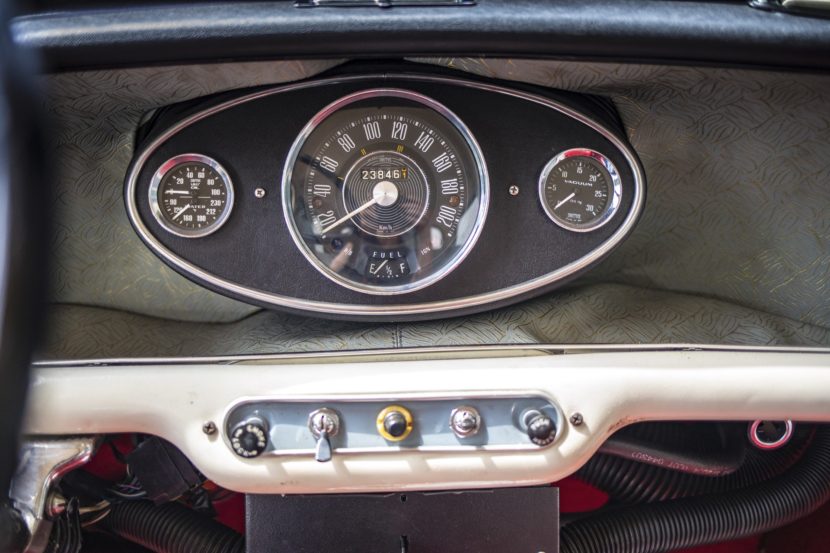
In the early stages of developing the MINI user interface (UI) for the round display, Designworks went “full speed,” according to Potter. Tons of three-dimensional shapes, tons of ribbons, and other embellishments made for a presentation that was “a lot of fun,” but perhaps didn’t provide the best user experience. “We really nailed the emotions there. But we have to balance those emotions with the usability,” Potter said. It was clear that the circular representation was perhaps interesting enough – now it was time to simplify it. “We really tried to simplify and reduce the amount of information presented to users at once,” Potter continued. “Just think of the original meaning. Think of the little round dial in the middle,” he said, of course referring to the original MINI interior.
Adrian van Hooydonk also had insight. “This happened at the time when BMW was working on the curved display that you know in all our cars today. We wanted to combine all the displays we needed behind the steering wheel and in the central area,” he said. “For MINI we wanted something round in the middle area.” Over time, the complications were further toned down, primarily in an effort to get closer and closer to the original MINI. This is, as van Hooydonk astutely observes, “incredibly difficult to achieve”. Especially today!
Hardware meets software
Once the shape and layout were decided, things moved quickly. “We were able to start producing a circular OLED and can simplify it even further,” says Potter. Then iDrive was switched to an Android base, which opened up more room for customization. One hurdle was app integration. “Users want their apps, right?” says Potter. He correctly notes that “no one makes a round phone,” making smooth UI integration a potential obstacle. Additionally, even after successful integration, MINI needs to ensure that it still feels “MINI” even when another company’s app is displayed on the screen.
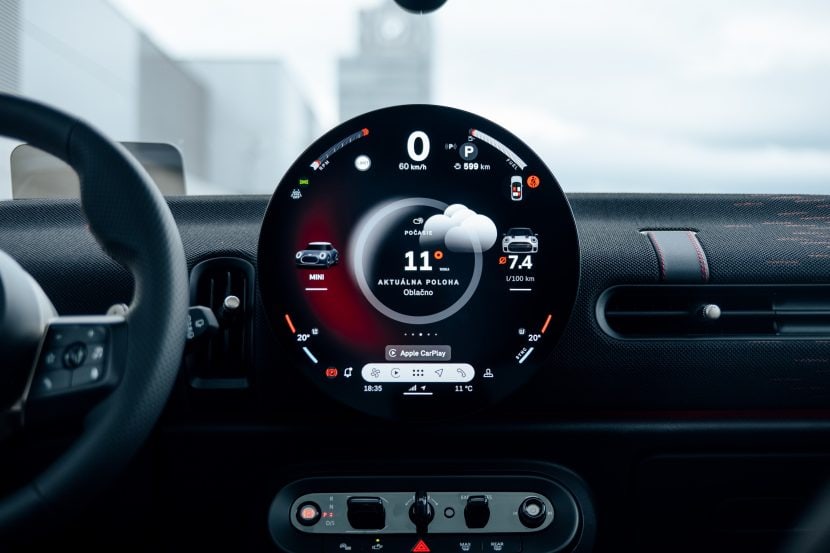
Ultimately, the MINI OLED display is an example of how Designworks “makes the impossible possible,” says Potter. It’s not just a marketing metaphor; After all, MINI is the only brand with such a display. Whether it would fit the character of another car manufacturer or not is, of course, debatable. Regardless, it’s cool to get a little insight into the development of the circular OLED. And, perhaps more importantly, all the decisions that guide an automaker on some aspect of car design.
