
Those familiar with BMW are probably familiar with some of the wild concepts the brand has brought to life over the years. But MINI has been with BMW for some time and occasionally some of the newness spills over. One of the best examples? The wild “MINI Ferrari”, or as you may know it, the MINI Superleggera. The open two-seater looks like no other from the brand – and almost made it to series production. Thanks to Steve Saxty’s BMW books, we have more insight than ever into what it took to bring the Roadster from paper to reality.
Origins of the MINI Superleggera

In 2006, Anders Warming, then creative director of the BMW Group, had a flash of inspiration. Well, a few years after the BMW Z8 came out, he thought it would be a good idea to show the smaller brand some love and release a car with similar halo power and a MINI badge. It didn’t happen until almost a decade later, but the “MINI Ferrari” as Anders had envisioned it would finally see the light of day. Oddly enough, in some ways it would share more with BMW’s electric offerings than the Z8.
For Ville d’Este 2014, Adrian van Hooydonk turned to Touring Superleggera. BMW has worked with the Milanese coachbuilder in the past to develop the 328 Touring Coupé. It wasn’t difficult to convince van Hooydonk to undertake the MINI Ferrari project. “We’re doing the Minarri – imagine that with all the Dusenbergs,” Warning said. Since “Ville d’Este” was all about telling unique automotive stories, van Hooydonk decided to do it. It was the perfect opportunity to create a separate project, currently called i4. It wasn’t exactly the electrified 4 Series we know today, but it was an electric vehicle – without a roof and with sporty roadster lines. Why the “i4” emblem? The design of the car was originally intended to reflect the relationship between the Porsche 911 and the Boxster. However, in this case the i8 replaces the 911.
Ultimately, the MINI Superleggera leaned heavily on the existing MINI design language. MINI and Touring Superleggera developed the concept together while retaining trademarks such as the hexagonal radiator grille. F56 headlights and Union Jack taillights were even used, the latter later appearing on production MINIs. Amazingly, it even retained the electric powertrain that its predecessor touted.
Why the MINI Superleggera never made it
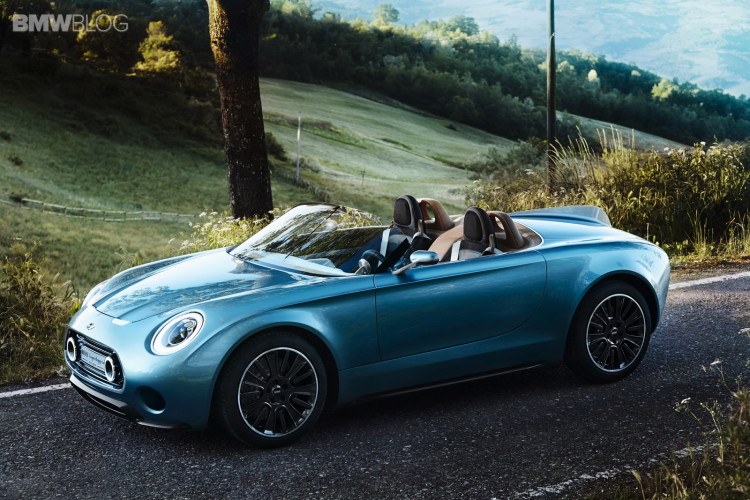
MINI originally planned to build the Superleggera. BMW had even built a second car, assuming everything had the green light. But it never happened. But BMW was serious about the car and even tested motorcycle manufacturers to see if small-scale production was possible. Unfortunately, everything fell by the wayside. Today, BMW’s electric offerings are much sleeker – there was almost no electrification when the Superleggera was introduced – which was reportedly one of the reasons the MINI Superleggera never came to market. Since the range was overcrowded with too many models, there was no room for the Superleggera. So…maybe we have a better chance today?
Quotes and some information about this story come from BMW by designWe always recommend picking it up. Inside you’ll find stories like this in more detail. Even better, you’ll enjoy images you won’t find anywhere else. Get yours!
