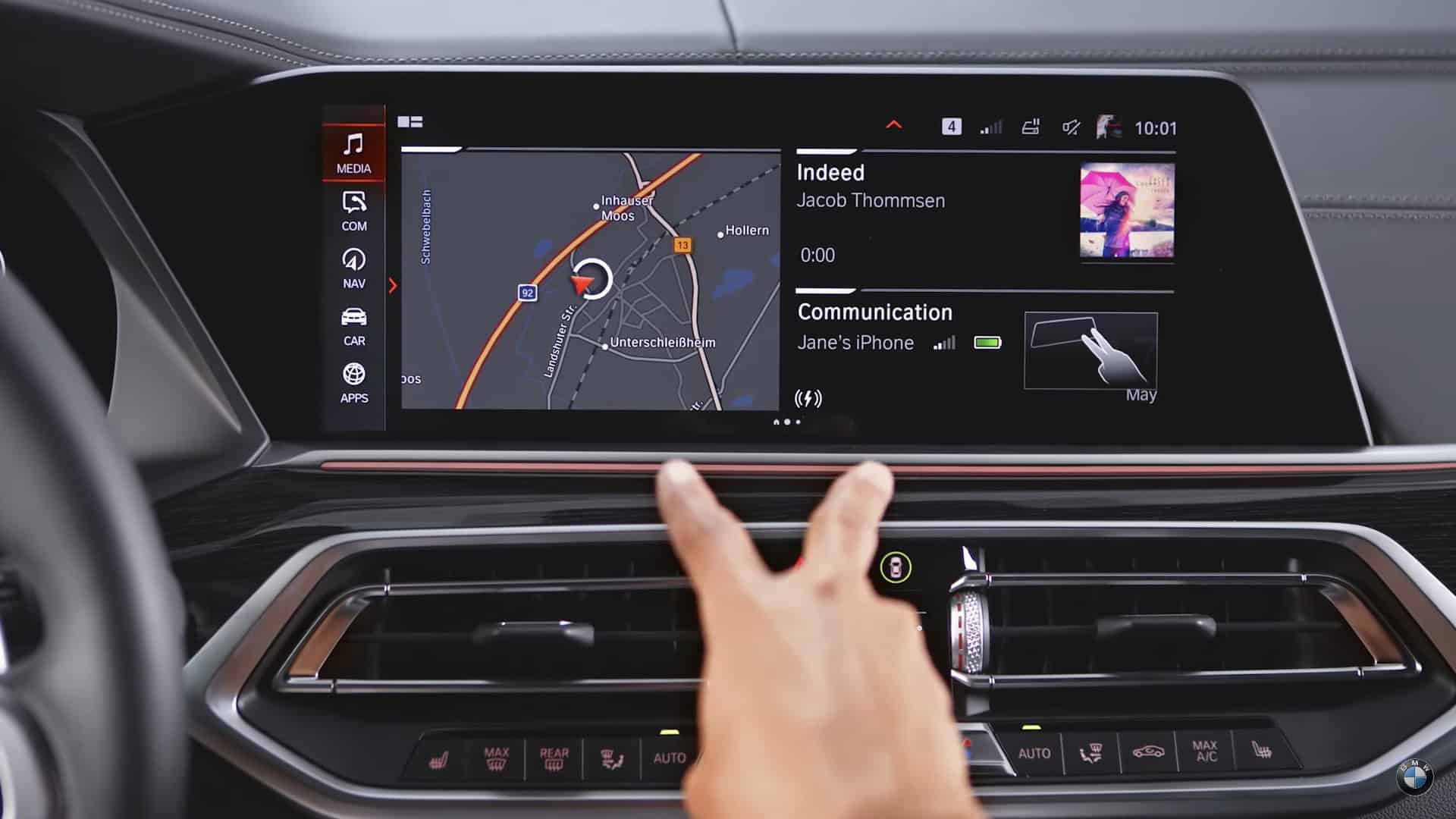
The gesture control never came on quietly. BMW introduced it in 2015 on the then-new 7 Series G11, calling it the next step in keeping the driver’s eyes on the road and keeping their hands free from additional movement. On paper, this logic made sense: Instead of reaching for a button or searching for a dial, you made a simple wave of your hand in the air and the car responded. It sounded okay. When I first tried it, it even felt futuristic. And the kids loved it.
But as the novelty wore off, something else became apparent: most drivers stopped using it. And after almost ten years, BMW’s internal studies finally confirmed the same, which is why gesture control is quietly disappearing with the introduction of iDrive X.
The idea didn’t fail because drivers don’t like technology. BMW owners embrace technology – often more eagerly than buyers of any other premium brand. Gesture controls failed because the system never became easier, faster, or more natural than the controls that already existed. And in a moving car, the “natural” always wins.
Step 1: Understand what you can actually do with gesture controls
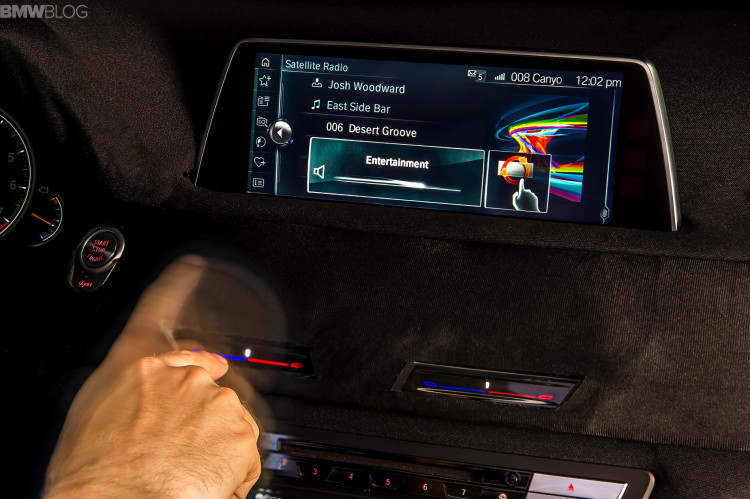
The system started with a small set of specific movements, and although BMW expanded these slightly over the years, the vocabulary never grew beyond a narrow set of tasks.
There was the familiar circular volume gesture: the finger was extended and a slow loop was drawn in the air until the system picked it up. Clockwise increased volume; counterclockwise lowered it. A full revolution was usually required, and the system worked best when you used your whole hand and not just a floating fingertip.
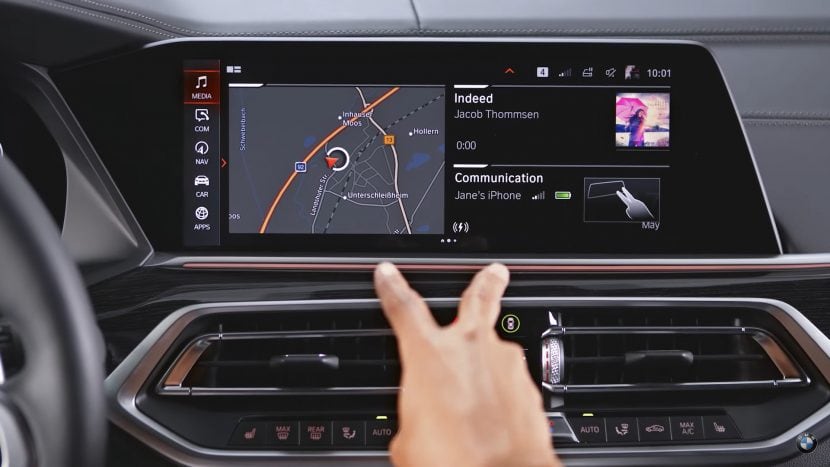
You can answer a call by pointing at the screen and then withdrawing your hand. You can reject a call – or close pop-ups – by swiping sideways. The same movements could also cancel voice commands.
There were two skip gestures: thumb extended left or right to skip tracks or bike stations. Useful on paper, but easy to trigger accidentally when talking with your hands.
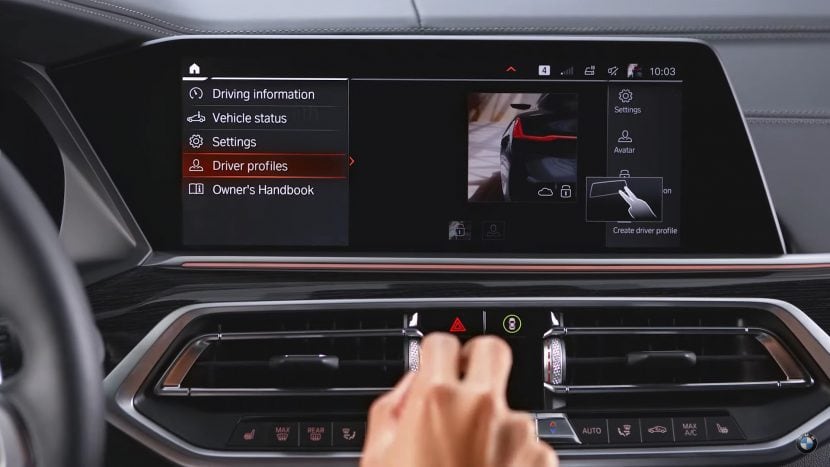
Using the pinch and pull motion with your thumb and index finger, you can rotate the surround view camera from side to side. It looked great in a demo, but only worked when parked, making it feel more like a showroom trick than a core tool.
And then came the configurable gestures.
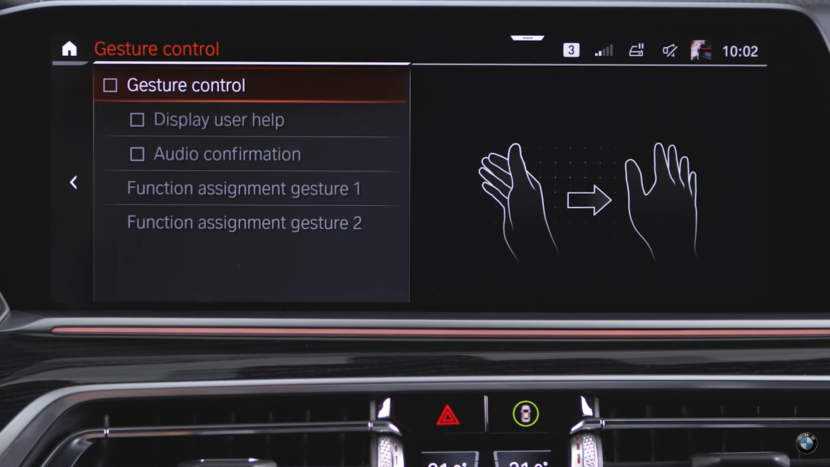
This was the only part of the feature that hinted at its promise. You could use a quick “open-close-up” hand gesture or a two-finger dot to trigger something you’ve programmed – muting the sound, switching the display, or even starting navigation to your home address. These custom gestures had real potential, and for the small percentage of people who took the time to set them up, they were really practical.
But the system always required a bit of choreography and a bit of patience. And that’s where the tension began.
Step 2: Look at the interaction itself – it wasn’t effortless
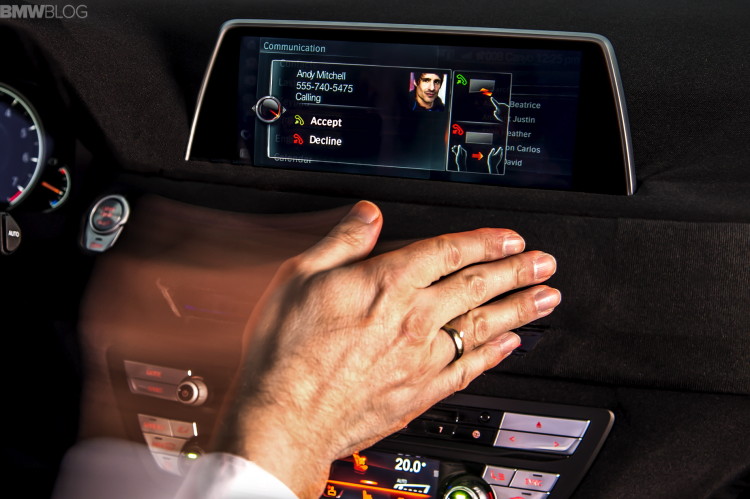
Gesture control wanted your hand to be in a certain invisible box in the air. BMW itself explained it well years ago: Imagine two vertical lines, one from the gear lever (or from the lower dashboard on vehicles without a traditional gear lever) and another from the top of the vents. This intersection – the space between these lines – was your “gesture zone.” Too high or too low and nothing happened. Too fast and nothing happened. Too subtle and nothing happened.
Even if you find the right position, the sensor needs a clear measurement of your entire hand. Gloves, jewelry, e-cigarettes, a pendant hanging from the mirror – none of it worked well with the overhead camera. At times the system felt confident. Sometimes it felt like it didn’t see you at all.
When a user interface inserts question marks where a button or key never does, people start abandoning it.
Step 3: Compare it to the controls it was intended to replace
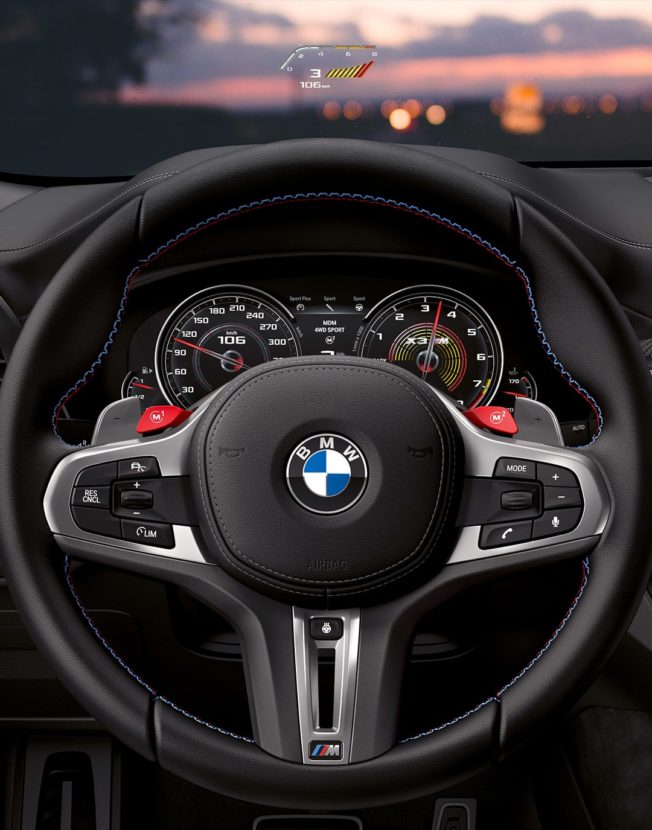
Here the gesture control had the most problems. Rotating your finger in circles to change the volume might sound fancy and cool, but in motion it’s slower and more cumbersome than running your thumb over the steering wheel roller. This scooter is small, tactile and instantly reliable. There is feedback. It never guesses.
Even pointing at the screen to answer a call has lost the battle. The steering wheel button sits directly under your thumb. You don’t have to find anything; Your thumb has been pressing the same button for years.
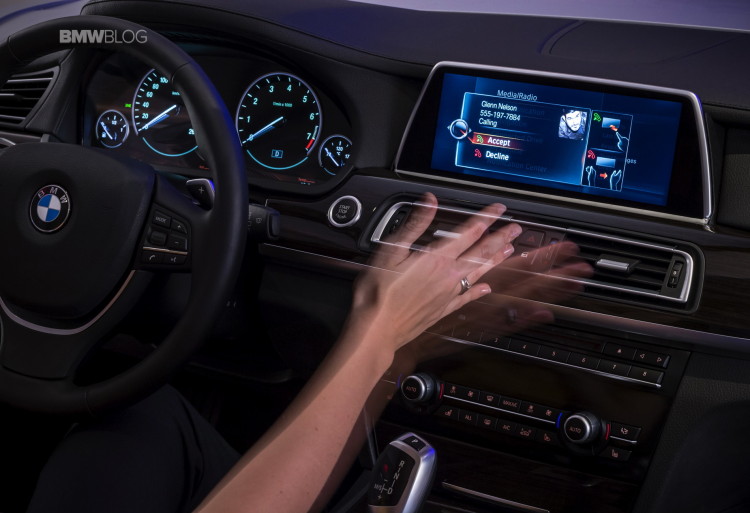
Even the “funnier” gestures — the jumping gestures, the custom hand-open-hand-close sequences — were juxtaposed with simple taps and swipes that people already understood.
Gesture control always had to prove that it was better than its predecessors, and it never succeeded.
Step 4: People felt uncomfortable while using it
This is the part that doesn’t show up in technical reviews but is the most important. Waving your hand in the air in a certain, almost theatrical way – especially when someone else is in the car – can feel a little ridiculous.
Many drivers use their hands to express themselves when speaking, but these movements are instinctive. It wasn’t gesture control. You had to appear in front of the camera. And when something asks you to perform, you become insecure.
That alone stopped a lot of people from checking out the feature again after the initial novelty wore off.
Step 5: The system never outgrew its debut
Over time, BMW refined the hardware and software, sharpened the camera logic and expanded iDrive in all directions. But the gesture control almost stopped. It has never extended to climate adaptation. No navigation input was ever processed. There were never any more in-depth infotainment controls. There was always a small breakthrough in the entire interface.
Meanwhile, BMW’s voice assistant has evolved into something far more powerful. The steering wheel controls remained consistent, at least for the most part. Touchscreen usage has also increased. And iDrive This design direction leaves less room – and less need – for airborne hand gestures.
So it’s no wonder that the gesture control in iDrive
