Many things will be remembered about this year’s Rolex 24 at Daytona, but not all of them are set in stone. Yes, it delivered the usual opening drama that characterizes IMSA’s global all-star race, but it was also marked by something far less predictable. Thick fog enveloped Daytona International Speedway overnight, trapping the field behind the safety car for six hours and 33 minutes, a time so long it felt surreal. Even for endurance racing it was exceptional.
But neither the weather nor the waiting time were enough to derail the competitive situation at the top. Porsche Penske Motorsport emerged victorious once again, with the #7 Porsche 963 of Julien Andlauer, Laurin Heinrich and Felipe Nasr securing the team’s third Daytona victory in a row. And more importantly, the conditions did not dampen the enthusiasm at the track. If anything, they reinforced it. Organizers confirmed record attendance over the weekend, a reminder that Daytona’s appeal goes far beyond non-stop green flag running.
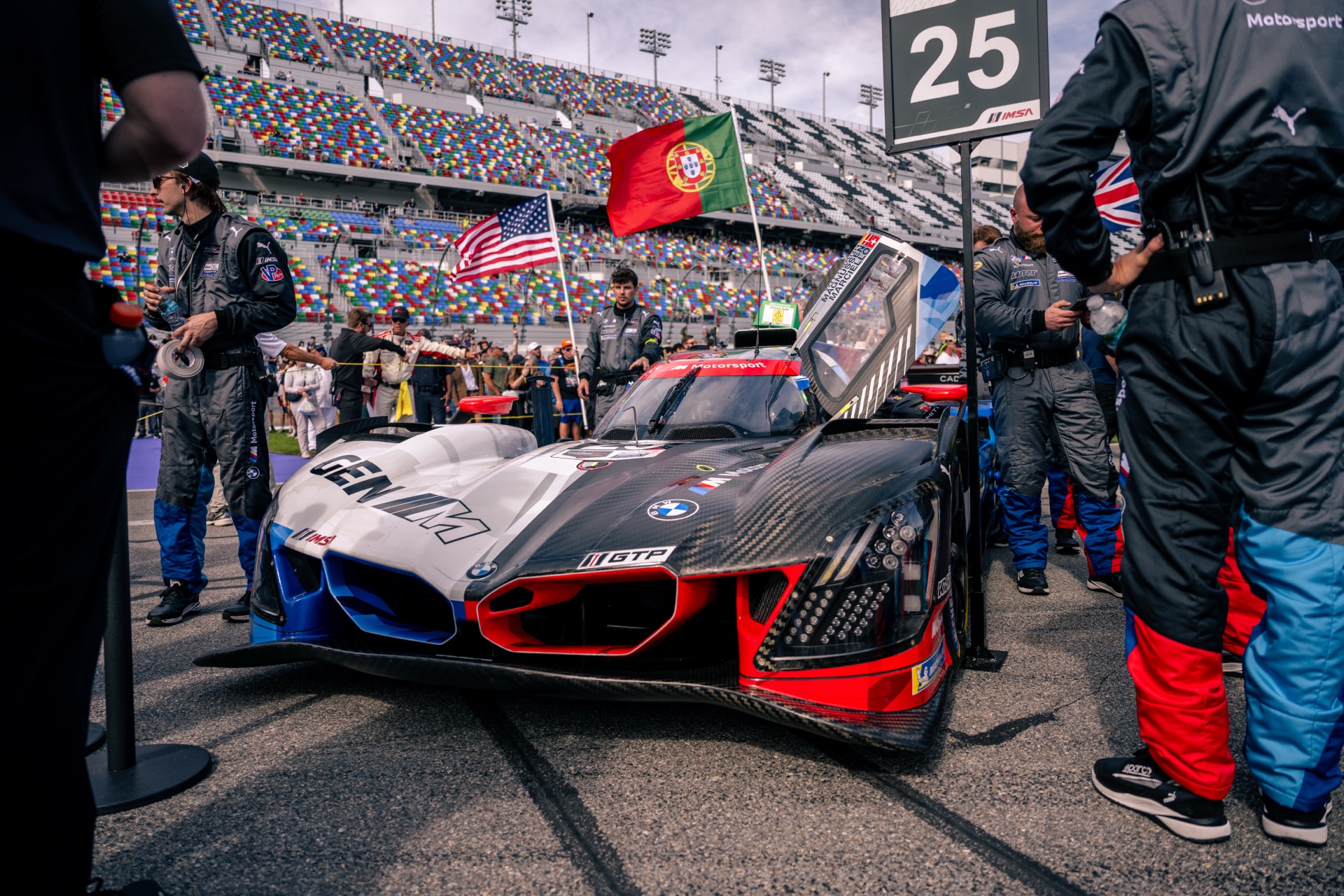
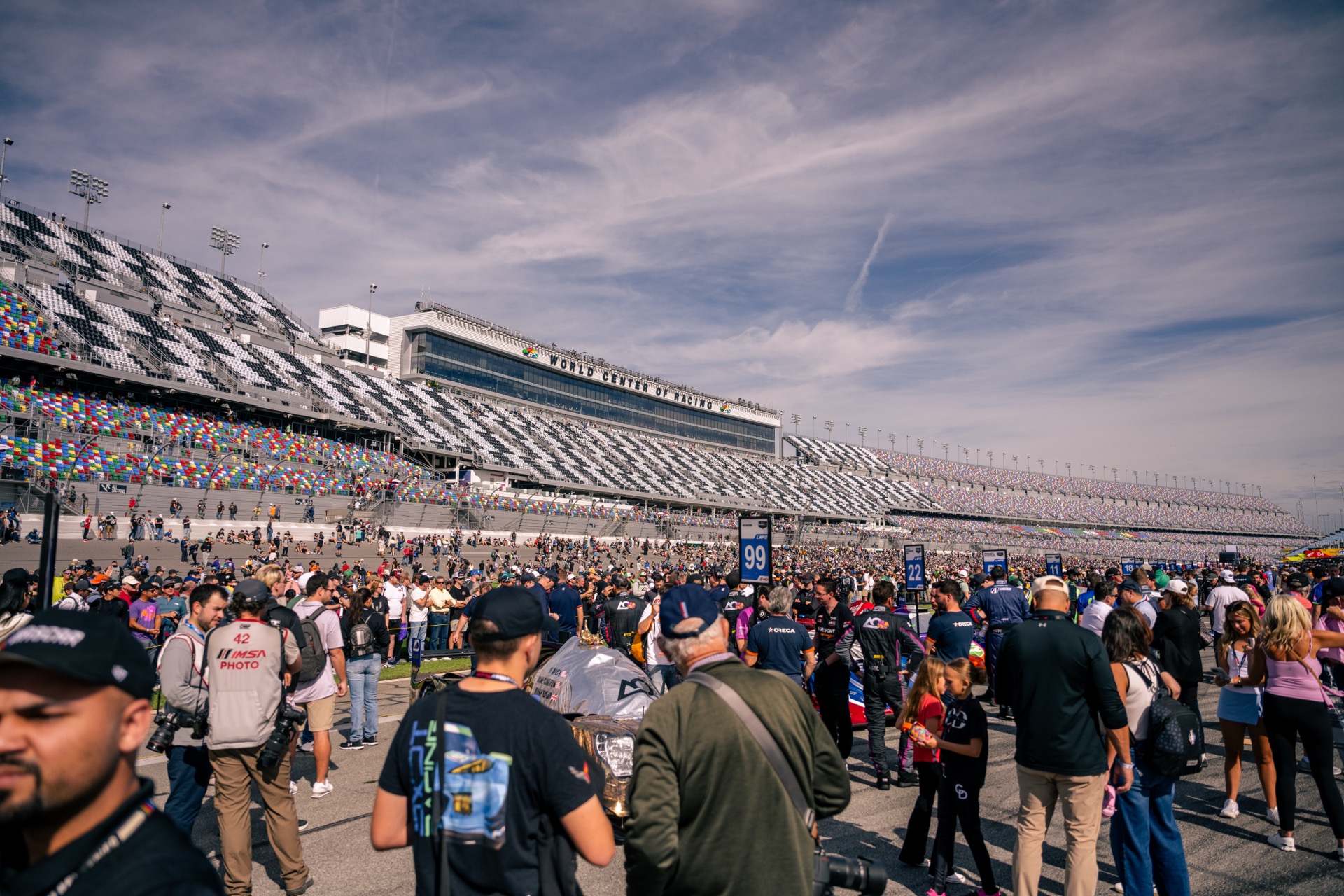
I was at Daytona with BMW M Motorsport and experienced what was undoubtedly the most impressive hospitality in the paddock. The BMW Champions Club was located on prime grounds across from the start-finish line, directly opposite the huge, unmistakable “World Center of Racing” sign that towers over the main grandstand. Wrapped in M branding, it offered the best rooftop seating in the house, an open bar and an American buffet of heroic proportions. There was even excellent coffee, easily the best for ten miles in any direction, although perhaps not enough to bother a European barista.
It was spectacular, generous and deeply gratifying. But the truth is that the magic of the Rolex 24 never really lived in the fancy seats, the free-flowing champagne, or the industrial quantities of mac and cheese. The real story of Daytona always happened somewhere else.
By afternoon, the infield was starting to feel less like part of a race track and more like a temporary settlement. Children sat high on their parents’ shoulders, oversized earmuffs strapped to tiny heads, eyes fixed on the cloud of color and sound just a few feet away. Strollers stood next to coolers. Dogs slept under folding chairs. This was not an endurance race as a spectacle, but as a family outing.
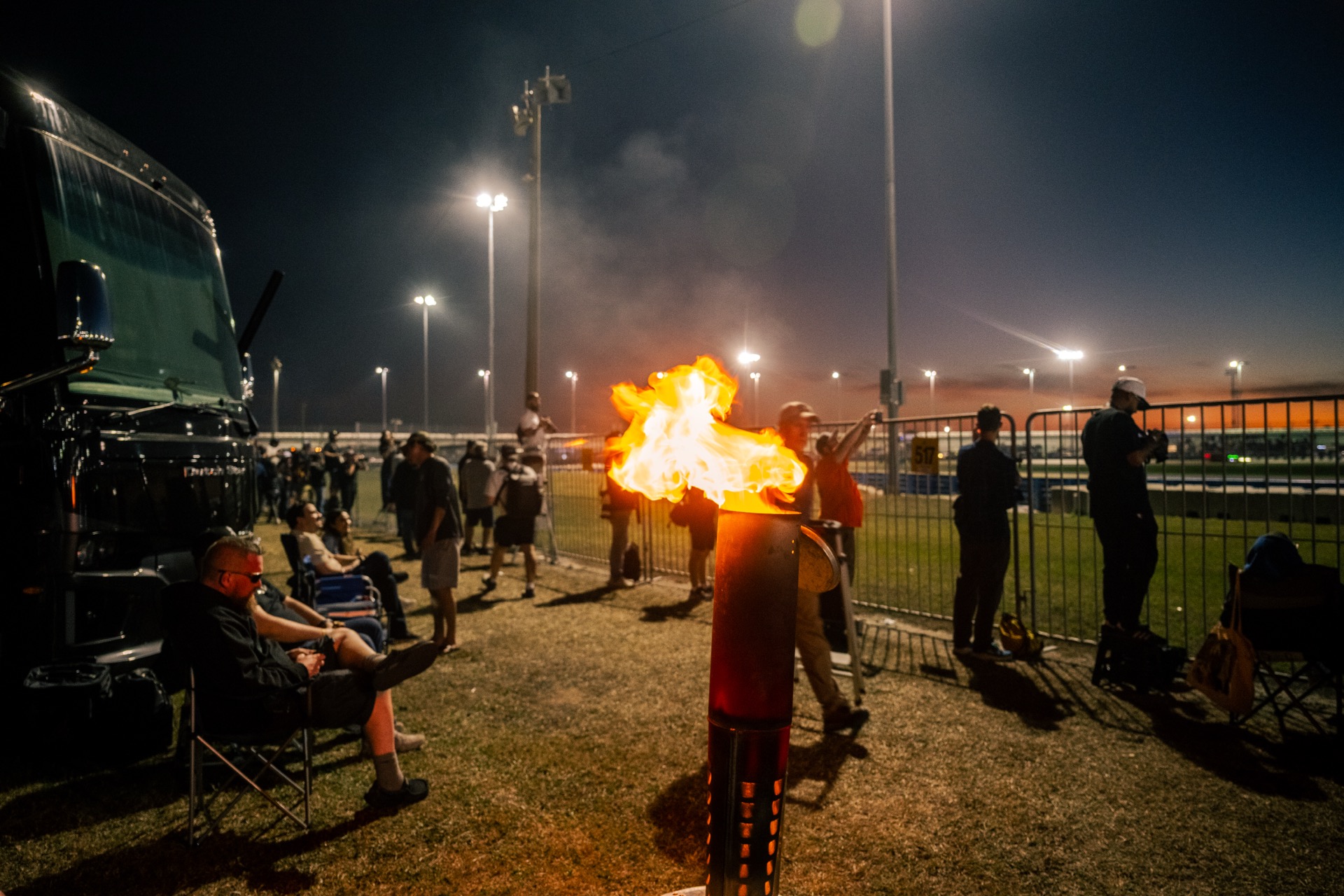
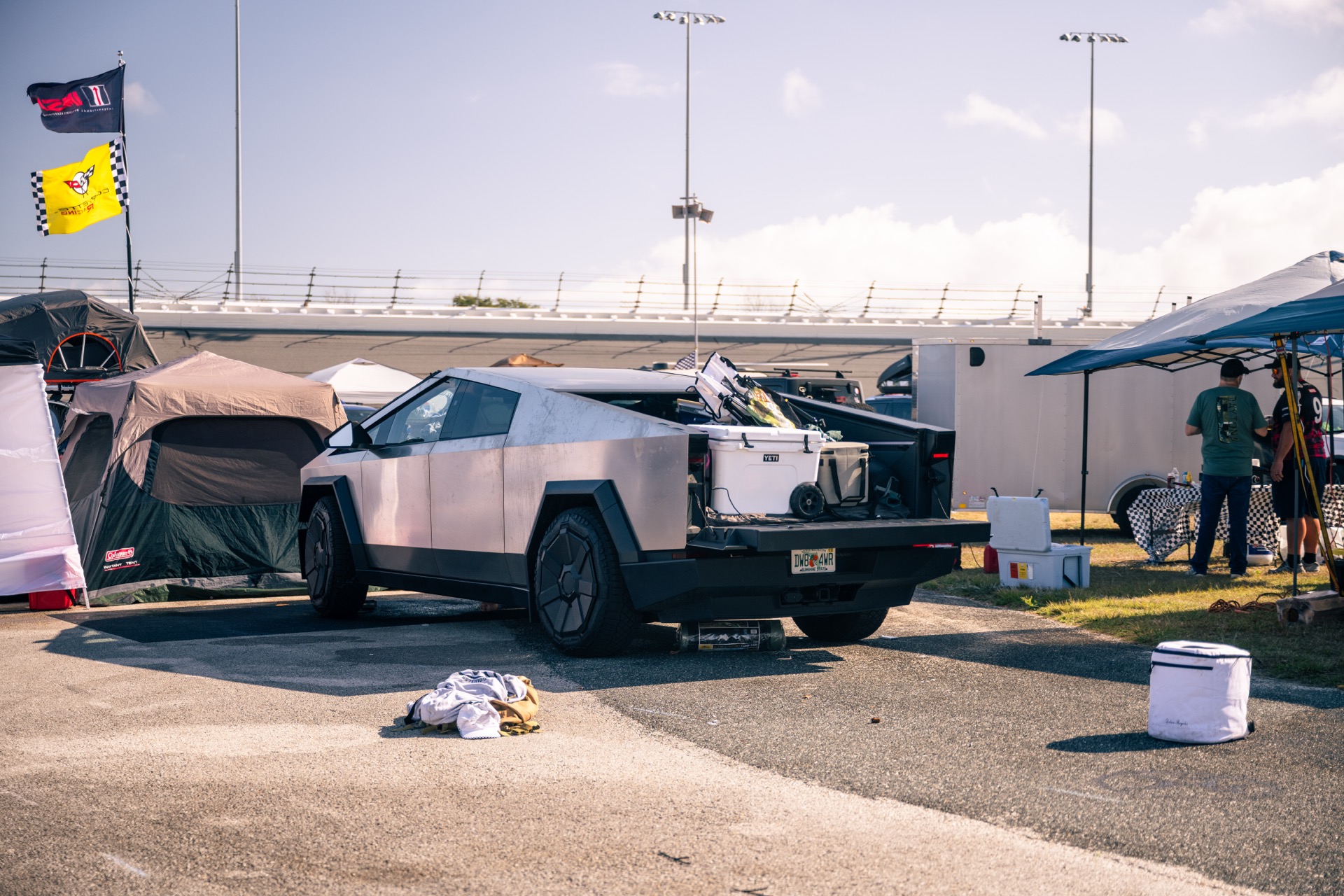
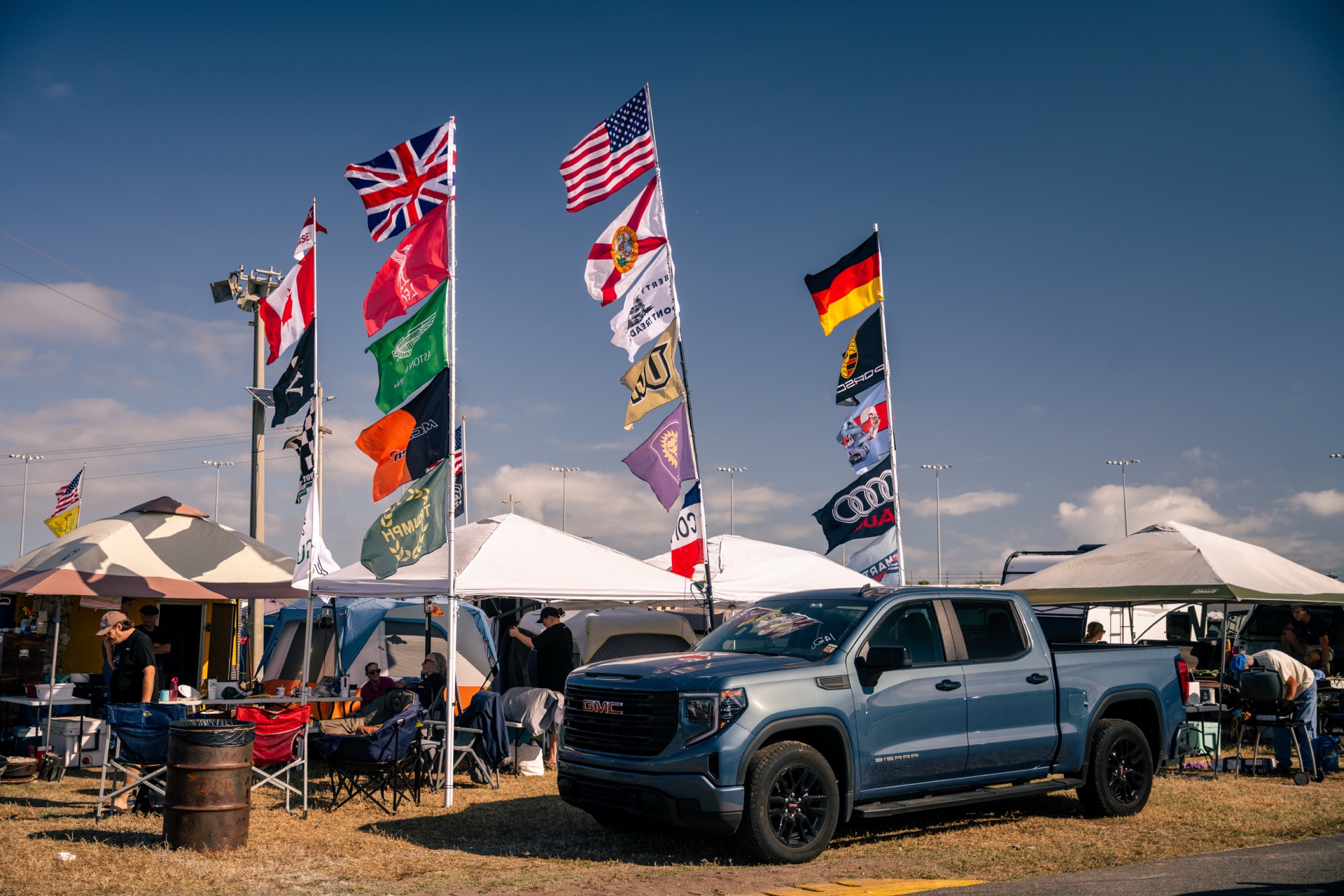
The contrast was wonderfully American. Tesla Cybertrucks sat next to Rolls-Royces, both parked next to huge RVs that looked like they could cross continents. Tents were set up around them, connected by extension cords, fairy lights and tarps. Campfires crackled between pitches, grills smoked, and makeshift wooden structures had been assembled to create viewing points that no ticket could buy. Some were crude, others impressively constructed, all were occupied.
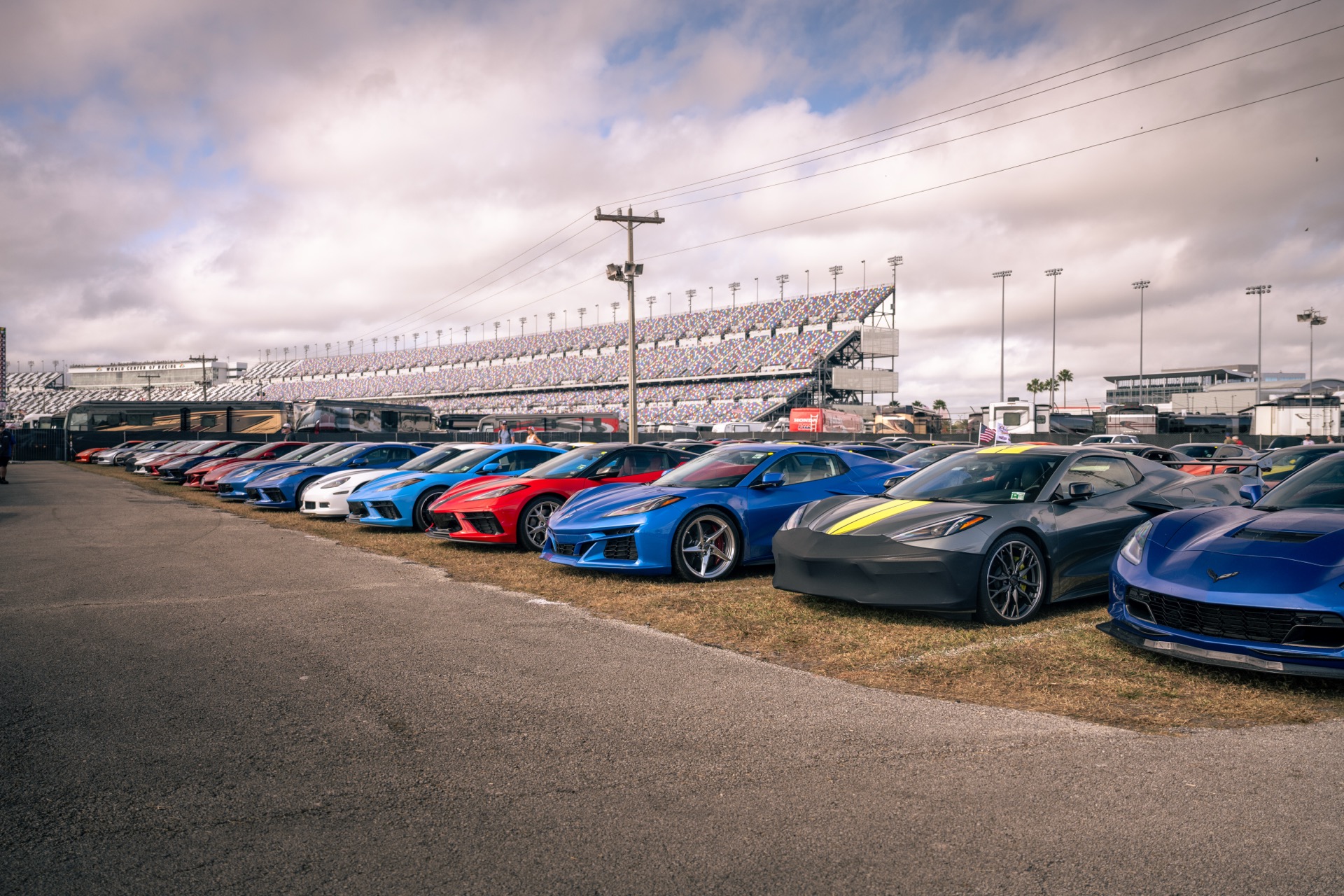
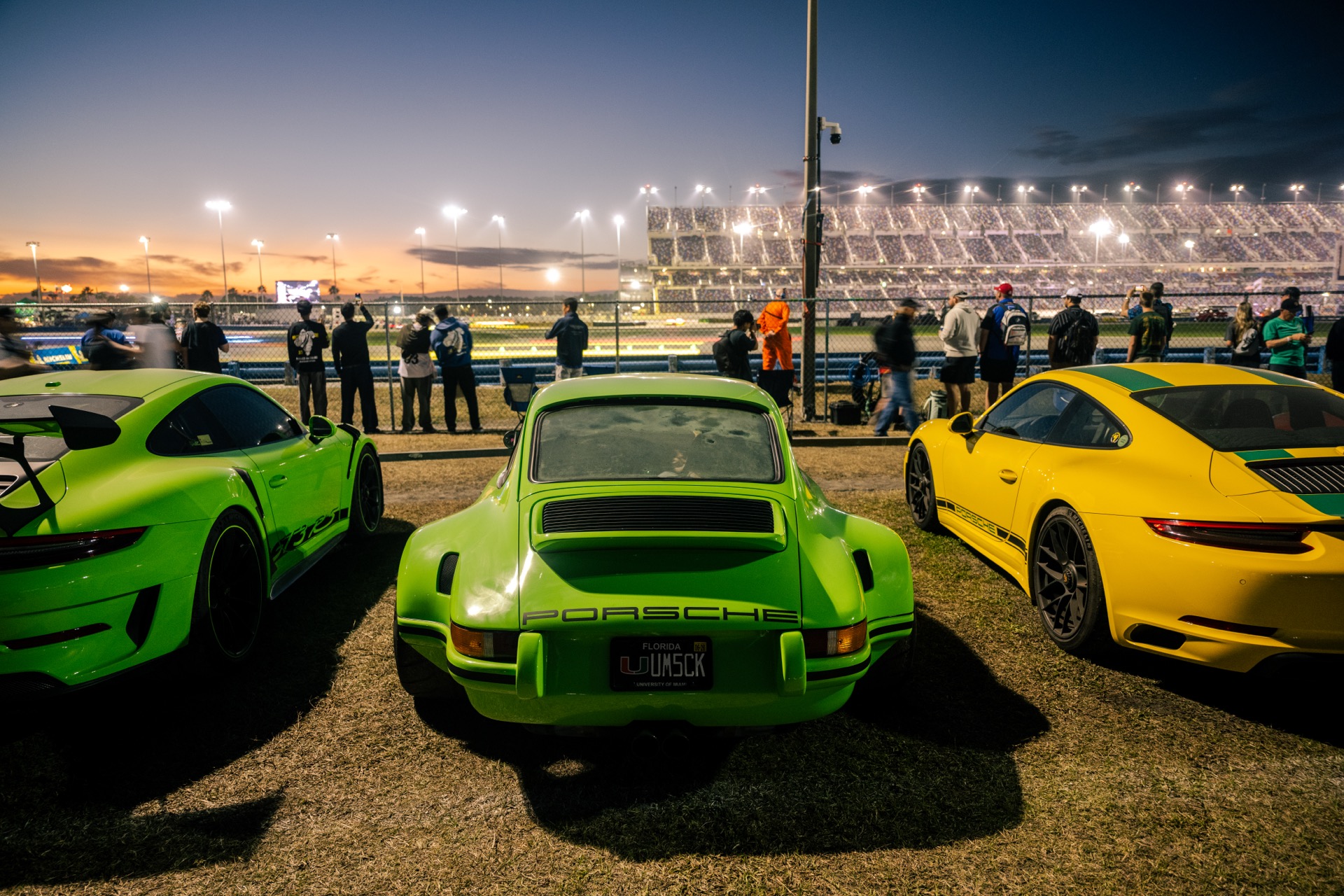
This sense of belonging was ever-present when you started looking for it. The owners’ clubs marched in en masse, staking out their own corners of the infield and stands. Groups from the Porsche Club of America mingled easily with groups of Mazda Miata owners, while Corvettes showed up in overwhelming numbers, proudly representing America’s sports car in its spiritual home. BMW M was also well represented, from modern cars to older icons, reinforcing the feeling that Daytona is as much a gathering of enthusiasts as it is a racing weekend. It all felt organic rather than curated, brand loyalty expressed through conversations, shared meals and shared vantage points rather than elegant presentations.
You were never anonymous for long when you walked through it. People asked where I was from, what brought me to Daytona and if I enjoyed it. When I told them it was my first Rolex 24, the reaction was always the same. Smiling, shaking hands, genuine excitement at someone new seeing it for the first time. There was no cynicism, no gatekeeping, just pride. It felt welcoming in a way that few major motorsport events manage.
As sunset approached, the atmosphere changed again. Every inside grandstand was filled. Families, couples, groups of friends of all ages and backgrounds, side by side as the light softened and cars began to glow under the fading sky. Daytona has a way of captivating everyone at that moment. The race finds its rhythm and the crowd gets closer.
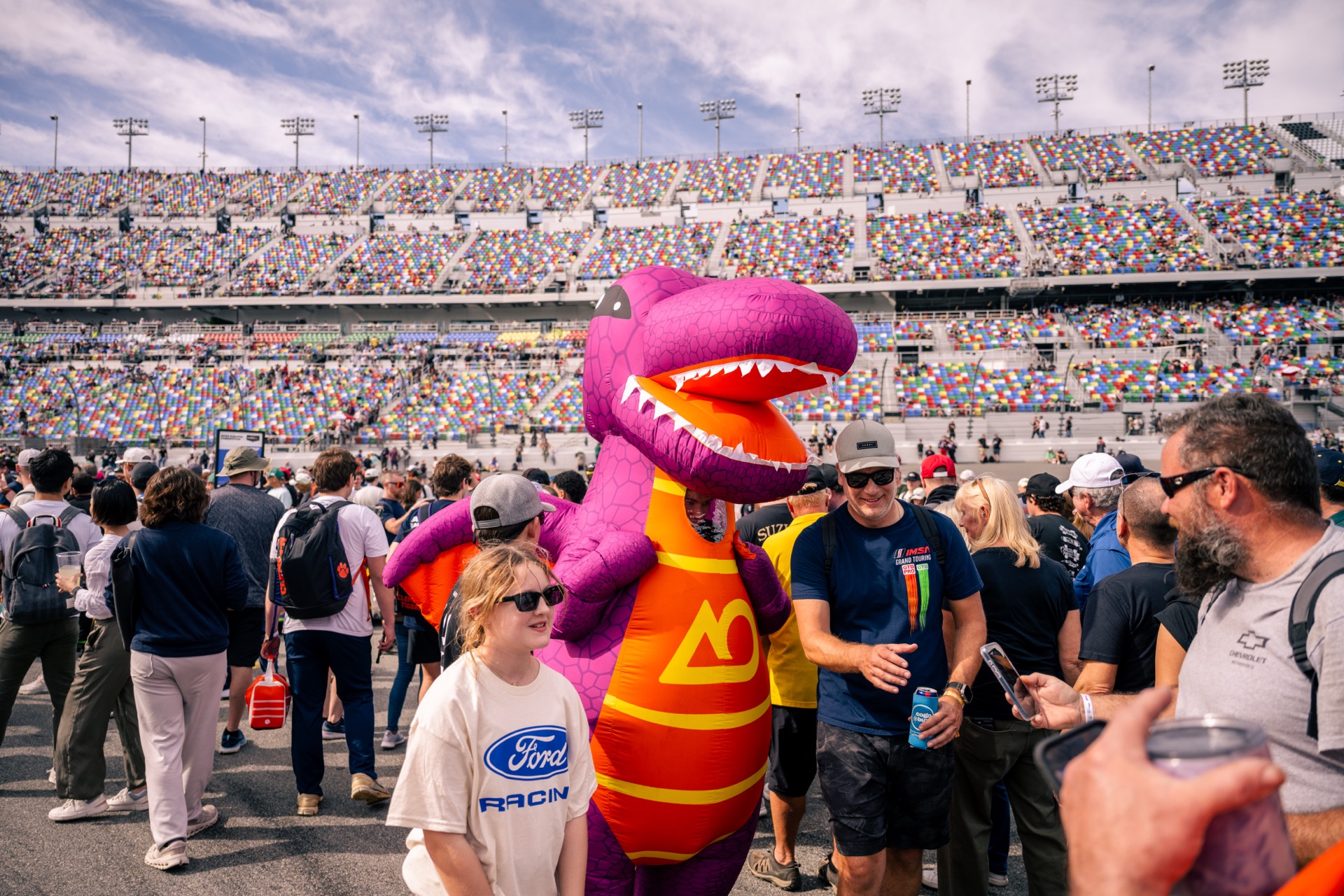
This sense of connection extends to the cars themselves. The Daytona crowd has favorites and wears that loyalty with pride. In GTD Pro, the main attraction was AO Racing’s bright green Porsche 911, commonly known as “Rexy”. Kids spotted it long before it arrived, adults smiled every time it roared by, and its merchandise was everywhere — hats, hoodies, flags — as if it were a beloved character and not a race car. The theater continued in the paddock and fan areas, where mascots in dinosaur costumes indulged in the banter, posing for photos and delighting people of all ages.
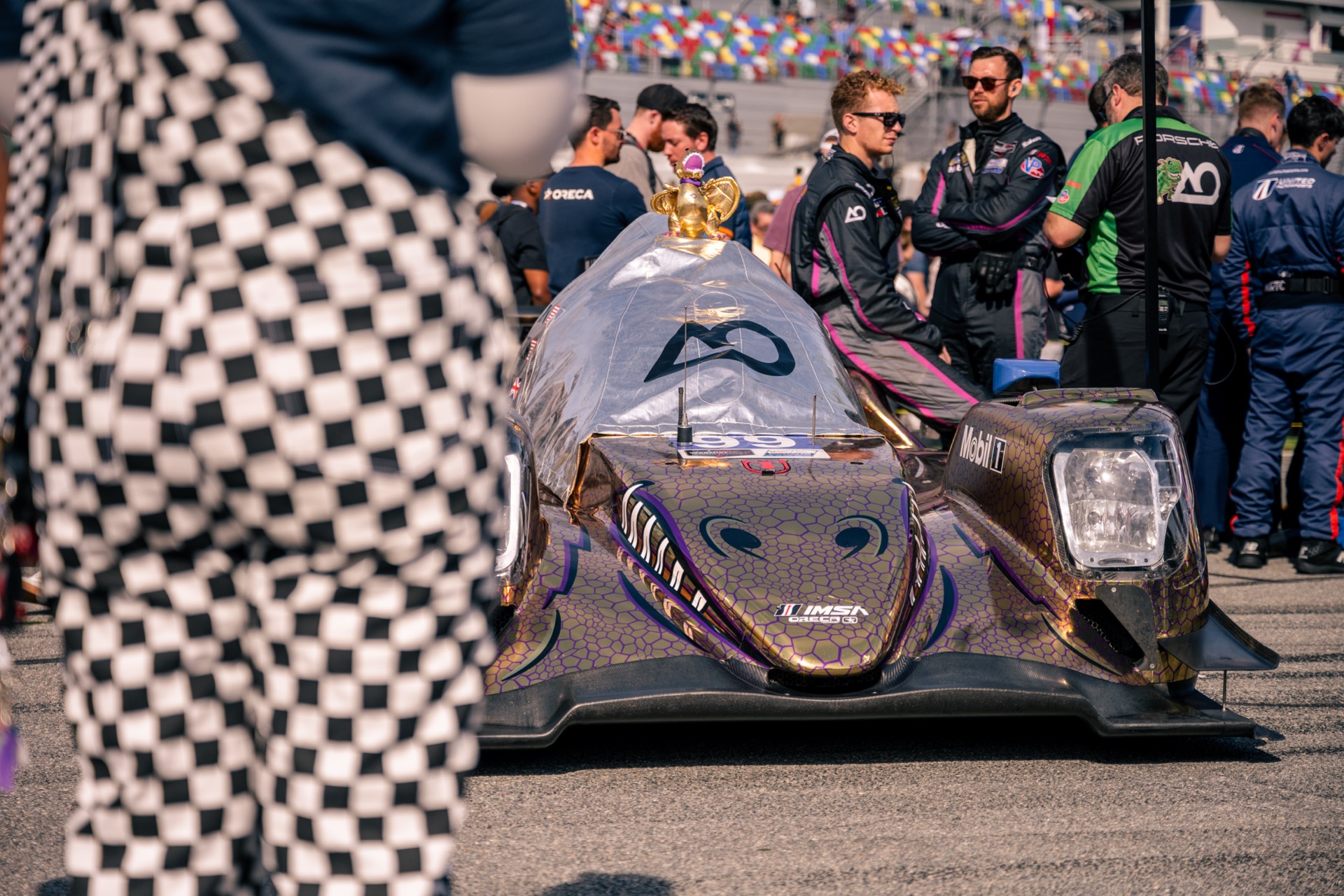
This personality also extended beyond GT racing. In the LMP2 class, AO Racing’s gold-colored Oreca 07 with starting number 99 “Spike” carried its own following into the Rolex 24 and raced in celebratory colors after securing the 2025 championship. Together, Rexy and Spike gave the infield heroes the opportunity to establish themselves across classes, proving that endurance racing at Daytona is as much about character and connection as it is about outright speed.
One moment stayed with me more than any other. It felt almost surreal standing in those huge 31 degree banked corners as the cars raced by. The scale of Daytona doesn’t really make sense until you’re down there and looking up at the concrete walls that seem to be leaning on you. I drove around them in a BMW M3 on Friday afternoon, and even then it was intimidating. At about 140 mph, just inches from the white wall, it felt precarious and a little absurd, the lean angle taxing you in a way that a flat track never does.
Watching the race later from the same perspective, you couldn’t help but be amazed at what the drivers had to contend with. Driving at these speeds, first in the dark and then in the fog, with the headlights flashing and the occasional sun breaking directly into a bug-strewn windshield, borders on madness. It’s one thing to understand Daytona on paper, quite another to stand in it and feel the speed, the noise and the exposure. This perspective changed my view of the following night.
By 10 p.m., every possible vantage point was swarming with people. Bleachers, grass benches, RV roofs, those makeshift platforms built earlier in the day. Conversation paused as the engines echoed through the dusk, and then, as if on cue, fireworks lit up the sky. For a few minutes the race became the backdrop. The people cheered. Children pointed to the sky. Music came from a dozen directions at once.
Then the fog rolled in.
Shortly before midnight the cloud cover thickened over the race track. At first it felt manageable, another Daytona quirk, but conditions steadily deteriorated. The safety car was deployed at 12:15 a.m. and was not supposed to be deployed again until sunrise. More than six and a half hours later, 121 consecutive laps had been completed at reduced speeds, the longest continuous yellow period in the event’s history. The cars never stopped circulating.
“I’ve never been so bored behind the wheel,” admitted Connor Zilisch, who drove the No. 31 Cadillac behind the safety car for four hours.
And yet the mood hardly wavered. Fires burned longer. People wrapped themselves in blankets. The conversations went nowhere. Some were sleeping, others were wandering around, at three or four in the morning they were drawn back to the fence, coffee in hand, eyes tired but spirits intact. The race was still there, gleaming faintly through the fog, a constant presence rather than the sole focus.
When the fog cleared, Daytona did what Daytona always does. The crowds flocked back and officials confirmed a record attendance before the final hour. True to tradition, the race ended with a result that underlined how competitive modern IMSA has become. All four classes remained in the race until the final laps, with gaps measured in seconds rather than minutes after a full day and night of racing.
It also felt like a snapshot of a broader moment in motorsports in the United States. IMSA is booming, and Daytona makes it impossible to ignore. Manufacturer participation is more intense than it has been in years, the starting positions are full and the rush no longer feels like a new headline, but rather like an expectation. The series now has a confidence that feels global yet grounded, serious yet accessible. Endurance racing, once niche, is once again ingrained in American sports culture, and IMSA is right in the middle of it.
This depth was perfectly reflected in the GTD Pro class, where BMW achieved a remarkable victory against all odds. Northern Ireland’s Dan Harper, along with Max Hesse, Neil Verhagen and Connor De Phillippi, took victory in the #1 Paul Miller Racing BMW M4 after starting from the back following a disqualification in qualifying for a tire violation. It was a drive characterized by patience, recovery and faith.
When racing resumed after the fog delay, the race effectively turned into a six-hour sprint. A perfectly timed final pit stop with just over an hour to go put Harper in the lead, a position he refused to relinquish. After 24 hours, the lead over the #75 Mercedes was just 2.223 seconds.
“I can’t believe what a race,” Harper wrote afterwards. “It was a big challenge to win from the back of the grid, but the entire #1 crew performed perfectly and we never stopped believing we could do it.
But these are the details that can be read everywhere.
What remains with you is everything else. The children sleep on the shoulders while the engines roar. The supercars and luxury sedans were parked next to RVs and tents. The campfires, the barbecues, the fireworks, the strangers who become neighbors for a weekend. The feeling that the race belongs to both the people around him and the drivers in the cars.
That’s why the Rolex 24 endures. Not just as a race, but as a place.