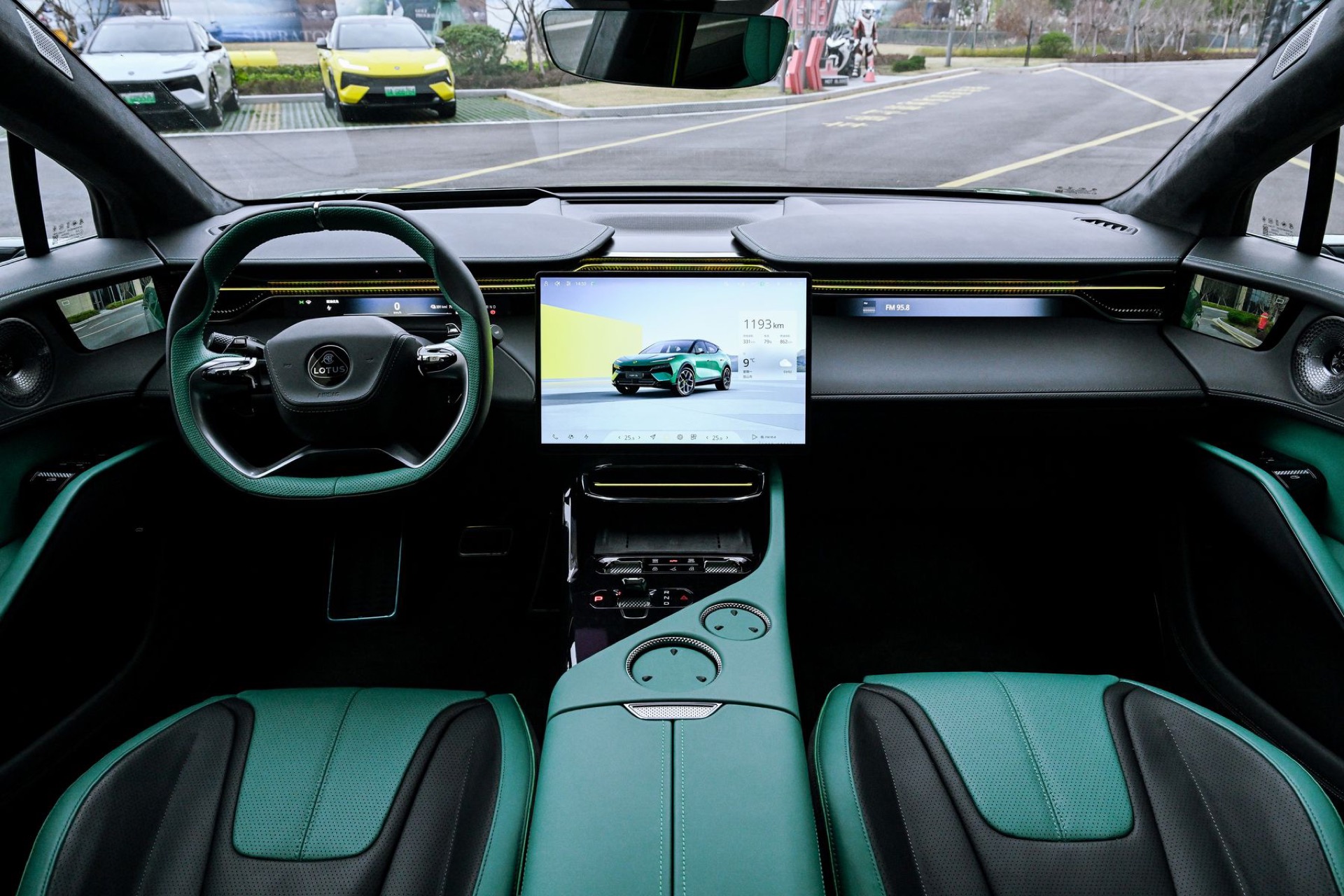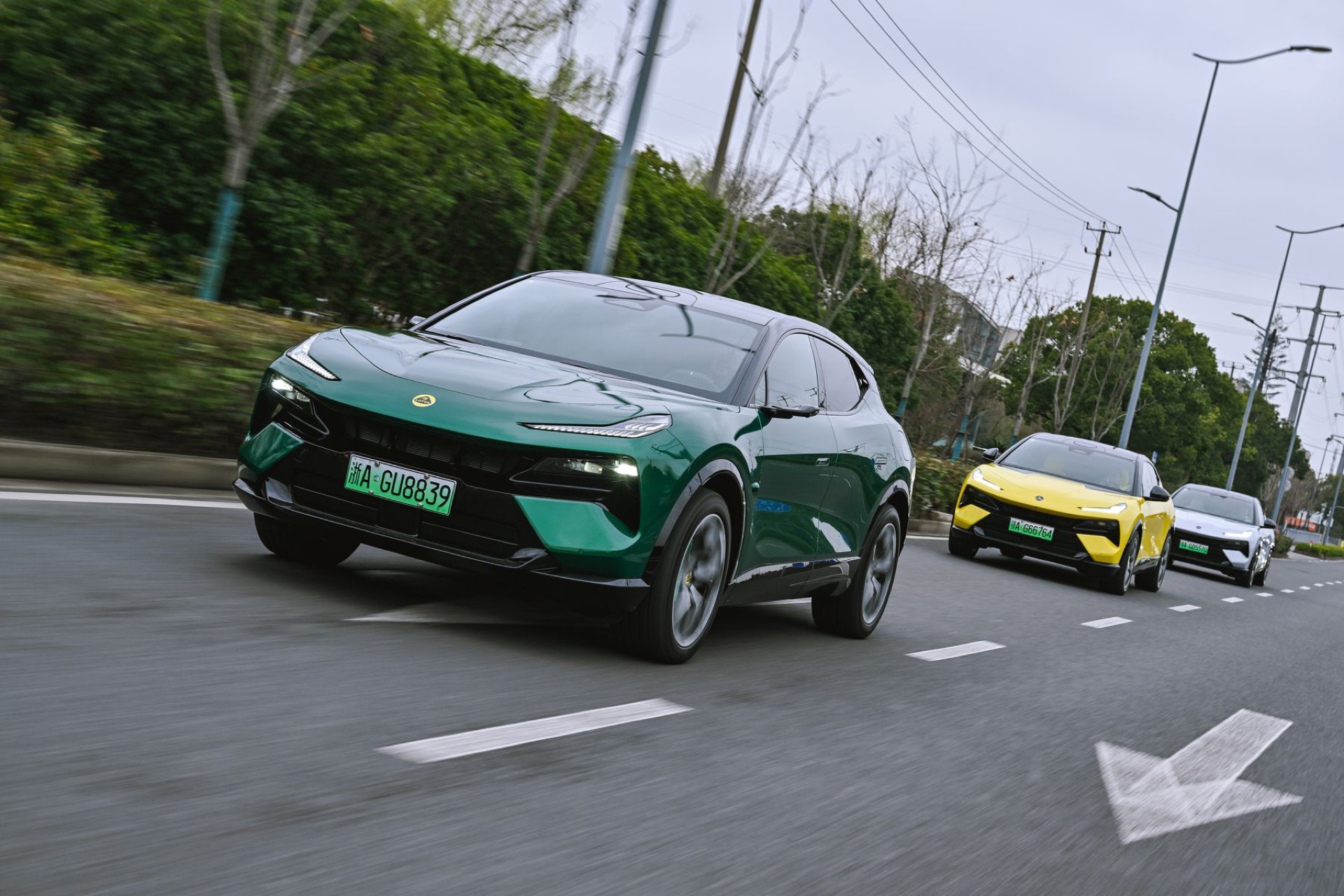
With the Eletre X, Lotus presents an unusual mix of plug-in hybrid, electric vehicle and range extender concept. We drove the new rival Porsche Cayenne PHEV.
Lotus was once the brand that reduced weight instead of disguising it. Company founder Colin Chapman preached lightweight construction like a religion: “Simplify, then add lightness.” The electric SUV Eletre has already significantly expanded this philosophy. Now the plug-in hybrid Eletre X is transforming the former Lotus mantra into a technological statement. Instead of radical weight reduction, the focus is on aerodynamic solutions and sophisticated technology. Everything packed in a vehicle weighing an impressive 2,625 kilograms. With numbers like that, Chapman might have raised an eyebrow before taking a closer look.
Once he did this, the tech enthusiast might have been impressed. The Eletre This ensures that the Eletre X Hybrid maintains strong performance even when the battery is low. With just ten percent charge, it still accelerates from zero to 100 km/h in 3.5 seconds.
The system is complex, but the results are impressive. The combined power reaches 700 kW (952 hp) with a torque of 935 Nm. The total range is given as 1,258 kilometers, of which up to 350 kilometers are electric driving according to the WLTC cycle. A 52 liter fuel tank ensures that the electrified SUV can continue driving even when the battery is empty.
Range anxiety therefore becomes largely irrelevant. The 900-volt electrical architecture allows charging at up to 430 kW, allowing the battery to be charged from 20 to 80 percent in just nine minutes. This means that the often promised fast charging stop is finally becoming a reality. The performance data is just as impressive. The plug-in hybrid reaches 100 km/h in 3.3 seconds and has a top speed of 230 km/h.
“The Eletre “The Eletre X is an SUV on steroids.” Energy consumption is 21.6 kWh per 100 kilometers using 6.1 liters of fuel.
The drive train shows how all components contribute to propulsion. The two-liter turbo gasoline engine supplied by Aurobay and Horse Powertrain operates on the Atkinson cycle with a thermal efficiency of 46 percent. If necessary, it can drive the front wheels directly between 85 km/h and 230 km/h. The engine speed remains modest: around 2,000 rpm at 100 km/h and around 4,600 rpm at top speed. The engine is coupled to a single-speed transmission and primarily contributes to efficiency. In most situations, the Eletre
When accelerating, the all-wheel drive sends around 45 percent of the power to the front axle and 55 percent to the rear axle. When the accelerator pedal is lowered, the rear axle has priority. Drivers can choose between three operating modes: all-electric, EV Pro, where electric driving takes priority, and Hybrid, where the system automatically selects the most efficient strategy. For most drivers, the latter may be the preferred “set it and forget it” option.

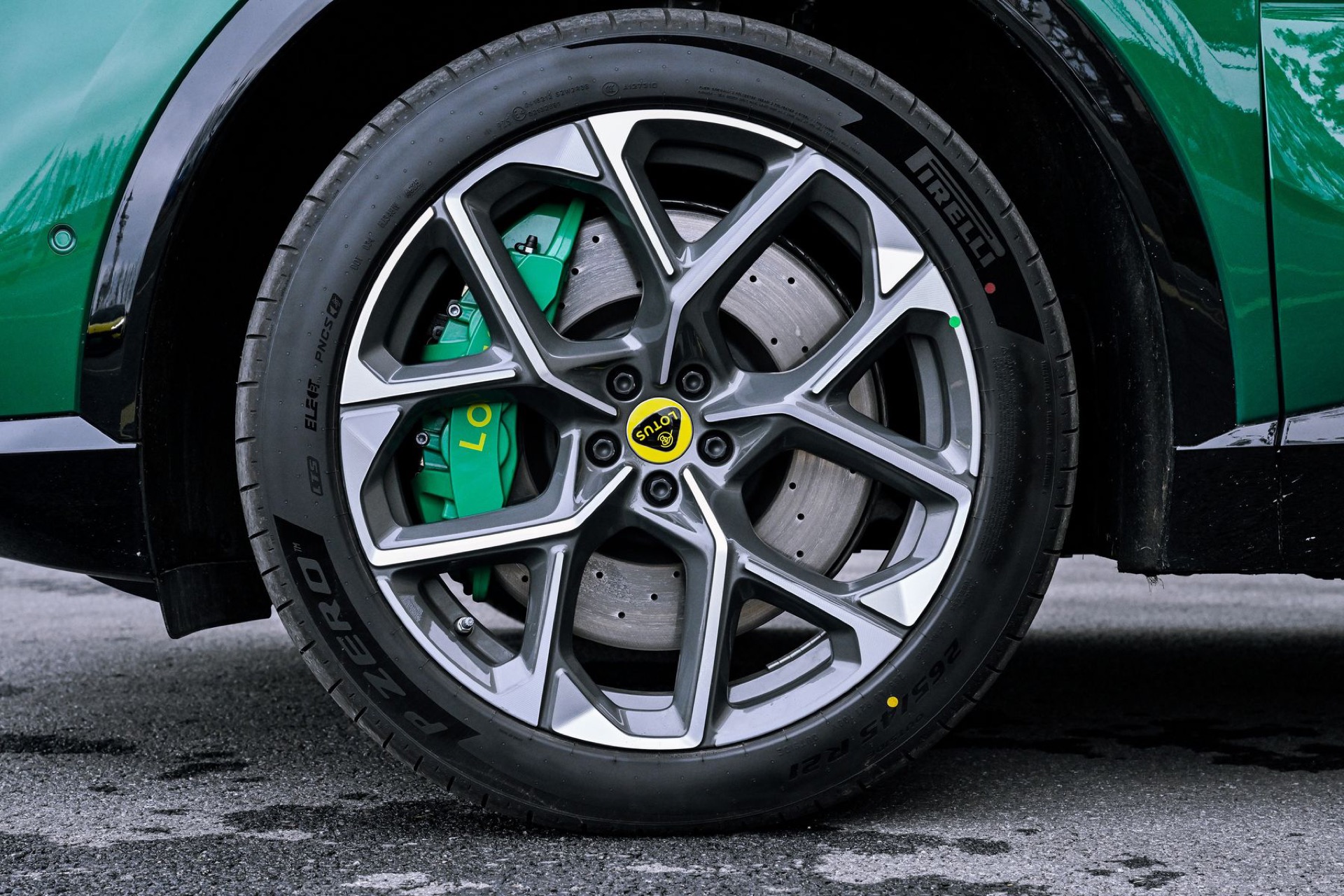
The Eletre The greater freedom of the rear axle means controlled drifts are possible at the push of a button. The steering is precise, but additional feedback would be welcome. An electronically controlled roll stabilizer, which operates on a 48-volt network, minimizes body roll in fast corners. Adaptive dampers and the two-chamber air suspension effectively balance comfort and sportiness and absorb even rough surfaces on the test track. There are five height settings available, ranging from plus 50 millimeters to minus 25 millimeters. Braking power comes from a Brembo system.
However, the interaction between the combustion engine and electric motors could not be fully evaluated during the test drive because we only drove in electric mode.
Aerodynamic details ensure stability at higher speeds. The roof spoiler generates up to 120 kilograms of downforce, while air curtains on the C-pillar and channels behind the rear wheels reduce turbulence and ensure a consistent airflow. At this point, even Colin Chapman, pioneer of aerodynamic thinking, might have appreciated the engineering behind the SUV.
In China, the price of the Lotus Eletre X is slightly lower than the fully electric version. If Lotus follows the same strategy in Europe, prices in Germany should start at around 95,000 euros.