
In 2016, BMW built the “Vision 100” concept that offered us an insight into the upcoming things. The “Vision 100”, which was built to celebrate BMWS 100th anniversary, explored BMW’s vision to drive in a changing world. It was a way for the future in which driving could still be a passion in a time when self -driving cars would be common. BMW emphasized the principles of electrification, digitization and circularity with the “Vision 100”.
Electrification, digitization and circularity defined

While electrification should be self -explanatory, digitization includes vehicle control, the user interface and, above all, the user experience. Circularity can be described as a conscious attempt, as far as possible, rethink, reduce, recycle and reuse materials and resources. BMW then set up further concepts to demonstrate these principles that paved the way for the “Vision New Class”. While the electrification was the focus of all concepts, the BMW I Vision Circular demonstrated the circularity principle, while the I Vision Dee demonstrated digitization, especially from the user’s point of view.
The BMW Foundation is the basis for the origin of the company and the pride of its engineers and workforce. What happens in a purely electrical world, how can BMW react and remain relevant for its past? And how translates ‘joy in driving’ in a world full of self -driving vehicles? The key, BMW believes, will be in experience, not only in technology. In this article, technical features are examined – at a high level, but BMW wants to define a driving experience – an emotional experience, and are not afraid that the act of driving will still be a large part of the experience of the BMW ‘new class’.
From i3 to Clar: The platform -learning curve

BMW learned valuable lessons from the production of the i3, including the development and manufacture of electric vehicles. In addition, they received valuable insights into the advantages of electric vehicles and their restrictions. In the 2010s, BMW then made the decision to produce ice, hybrid and all electrical vehicles in the Clar architecture. In view of the uncertain future of the market for purely electric vehicles, this made sense and that the technology of electric vehicles still developed.
Performance electric cars, however, revealed the restrictions on the existing auto -control technology. This was observed when it was opened far from 5 miles per hour at a BMW i4 M50. It was entertaining, but not quite as refined as it should be. The torque pulls on the steering wheel, similar to the Saab 9-3-Viggen that is used. The immediate torque of the electric motor, in contrast to the transition cultivation of a gas engine, presses the limits of the control software of the vehicle. A new approach to vehicle control was required for all electrical vehicles, especially if they were intended as performance cars.
The solution of Tesla for fully electric driving is the benchmark and its system-on-chip (SoC) is used in its electrical and fully self-driving vehicles. The SOC implements a real -time operating system (RTOS) that uses a neuronal processing unit (NPU) and a graphical processing unit (GPU) and often a redundant couple of central processing units (CPU) as well as a high bandwidth bus and common storage regions between the processors. The CPUs are used to control the vehicle, the NPU rates the sensor data of the vehicle, and the GPU can be used to support the perception tasks and also present data to the driver and passengers.
Introduction of the heart of joy: BMWS Custom Vehicle Brain

This is exactly what BMW’s “heart of joy” will do. The ‘heart of joy’ is a dense integrated system on a chip that uses a higher bandwrit data bus architecture than the current architecture, which is ten times as high as throughput. It is the bandwidth of the bus – how many information bits it can wear – and the bus length that determines how quickly the vehicle can react to input.
BMW will use an individual internal RTOS that uses the skills of the control unit of “Heart of Joy”. It is optimized to reduce the latency and interrupted it in practically immediate immediately. There is also any possible energy saving and gains further efficiency when an off -taxer was able to offer RTOs. BMWS RTOS awaken the “heart of joy” to life.
While the “heart of joy” affects driving dynamics, three other high -band width processors deal with automated driving. Infotainment; and climate, lighting and vehicle access. The ‘heart of joy’ will synchronize drive train, brakes, steering and energy recovery with the processing scale and the bandwidth to safely tame the torque tiger.

The ‘heart of joy’ has shown its ability to treat high-quality electric vehicles with BMW’s Vision Driving Experience (VDX), which offers a look at the future M-All electric vehicles. The “Heart of Joy” system manages the over 13,000 LB-FT torque, which is seamlessly available on the VDX wheels.
In order to manage the various electrical subsystems in the car, BMW divides the ‘new class’ into four electrical zones, front, middle, rear and roof. BMW uses intelligent efuse to monitor tension, electricity and/or temperature for devices that are in a zone and are able to communicate in them embedded firmware to communicate via a data bus that is specific for the zone. Warnings are then sent to the “heart of joy”. The efusse offer better protection for critical circuits and reduce the weight. You use field effect transistors to interrupt the power supply to a faulty module instead of slow sacrificial failure of a traditional fuse or bulky relay. The power supply is delivered to vehicle modules such as lights, radio, heating controls from a common power bus and then by an efuse; This is an area in which the weight reduction of the vehicle cabling occurs.
The power of 800 volts: lighter, faster, more efficient
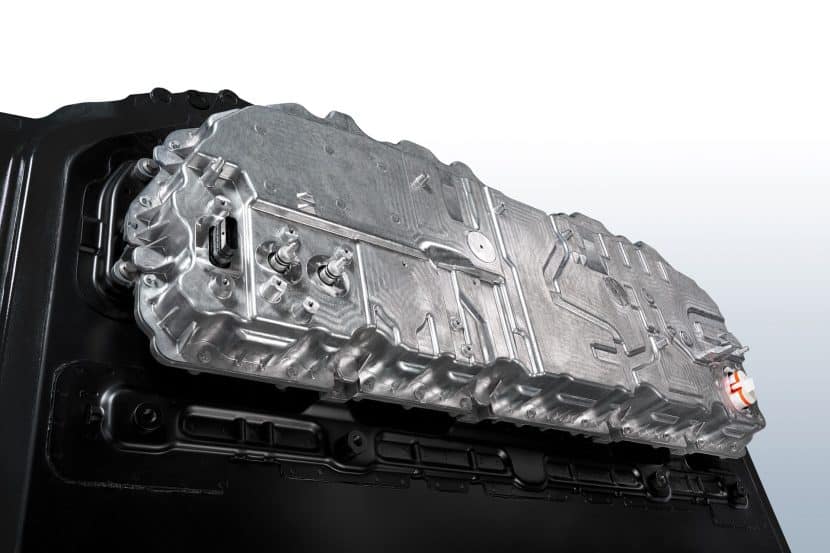
BMW will also use an electrical architecture of 800 volts for the drive train. This offers a number of advantages such as the ability to use higher performance engines, reduce cooling requirements, load faster charging and reduce weight. Higher voltage means that less electricity is required to generate electricity, which enables a reduction in the wire diameter and then weight.
The latest electrification generation of BMW – Gen6 – will use electrically stimulated synchronous engines (EESM) for RWD and on the rear axle of AWD vehicles. For potential FWD and AWD, the cars at the front will use asynchronous engines (ASM). Energy losses are reduced by 40%, weight by 10%and the production costs are reduced by 20%compared to Gen5 tech. Here the “circularity” principle is in action. This increases the area and reduces loading times. In a future M model, the engines can offer a driving experience from mild to wild, with the potential for over 1,300 hp.

BMW also uses cylindrical battery disorders in the gene6 electrification. In contrast to the current prismatic battery cells, they can be used without separate containers. This reduces the weight and can achieve space savings. The new batteries have a larger energy density of over 20%than the current generation of batteries. This leads to an expanded area. The loading time is shortened with the 800 -V architecture. The batteries use recycled lithium, cobalt and nickel. The costs for the production of the new batteries are then up to 50% less than the old batteries. The shape of the cylindrical batteries delivers superior thermal management compared to prismatic cells. This reduces the risk of a “thermal outlier” compared to batteries of the previous generation.
This new gene6 architecture is of course controlled by the “heart of joy” and promises the outstanding vehicle dynamics. The driver’s input for steering, braking and acceleration will feel crisp in view of the bandwidth. The driver sees information that is displayed on a panoramic head head-up display that is projected on the basis of the windshield. It will be customizable and should be as intuitive as possible. The idea is to use technology to help the driver instead of resisting the driver. The panorama display corresponds to the slogan of BMW, “eyes on the street, hands on the bike”.
Designed design: Retro -Cues with a futuristic edge

The styling of the ‘new class’ is a return to her roots for BMW. It should be an emotional jerk for the familiar and comfortable. The bikes are exceptionally well done. Motion shots of the car show useful styling and BMW to maintain the “five spokes” look during the static maintenance of the appearance. The headlights/cooler grille and taillights of the eyesight are breathtaking – the 3D effect is good from almost every angle. Although it does not need a radiator grille, it is good that it is there that the equivalent Tesla front fascia is boring without a radiator grille. The integration of the rear spoiler into the back lamps is wise. The upper accent line on the sides of the car, which delivers a horizontal reference front to the rear, seems to be part of the window – it will be interesting to see how it goes into production.
The inclusion of the Hofmeister Knick in the door plate was very smart. You are really impressed by the angle of design, sharp folds and muscle wheel boxes. If you look at the design and drawing of the memory of small limousine designs of the past, it seems that Italian influences like Paul Braqs E12 are present. Regardless of this, this could be a classic.
From the concept of “Vision 100” to the “New Class”, BMW has shown what the future of driving will be. Here is the next 100 years.
