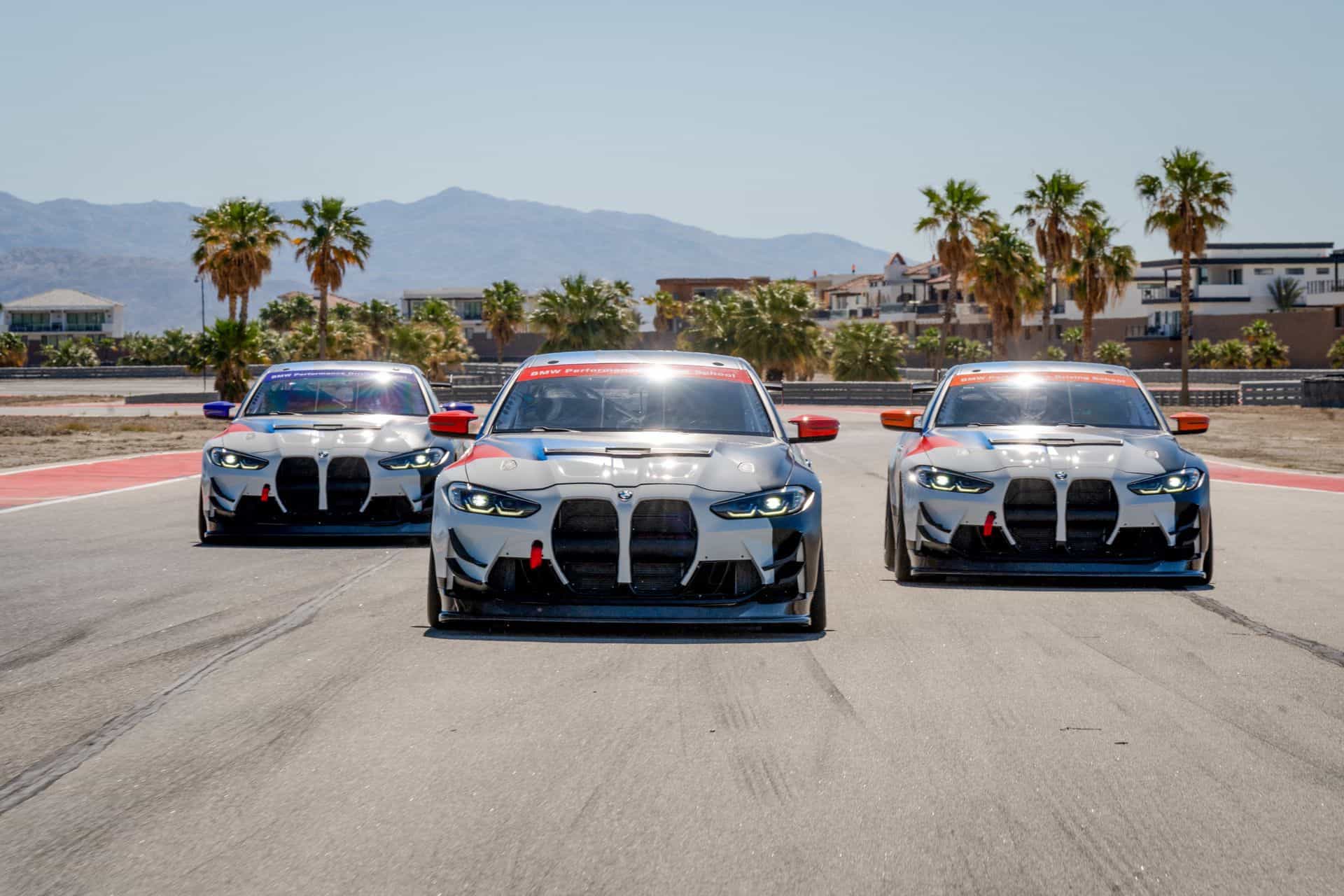
Today, BMW’s customer sports program is well-known and respected – one could certainly describe it as the touchstone of the brand. But that wasn’t always the case. BMW Motorsport has been building customer racing cars since 1972, but most were not suitable for North America due to varying regulations. Rules and restrictions often differ greatly from those in Europe. For years, US private companies had to convert street cars into race cars because BMW NA did not have the infrastructure to support mass-produced race cars. But racers in the U.S. weren’t tied to the homebrew approach forever. In 2013, things changed drastically.
Official BMW race cars found their way to the United States when long-time BMW racer Will Turner imported two used Z4 GT3s, prompting BMW NA to support them. Turner wasn’t really someone BMW could ignore; Turner Motorsport had already won six professional championships. Most impressively, these victories were achieved from the cockpit of road cars converted for racing, rather than vehicles with any kind of factory backing or support. BMW was aware of the risk – after all, they were “just” two full-size racing cars – and led the company to develop the beginnings of what would become a support structure for customer racing. The car’s success in the 2014 GTD class further motivated the effort. Turner didn’t stop there; Used Z4s were apparently just the price of admission. The real attraction was the M6 GT3. Incredibly, Turner had the first and second cars built, paying €379,000 each for them in 2016.
The M235i Racing sets the pace and paves the way forward
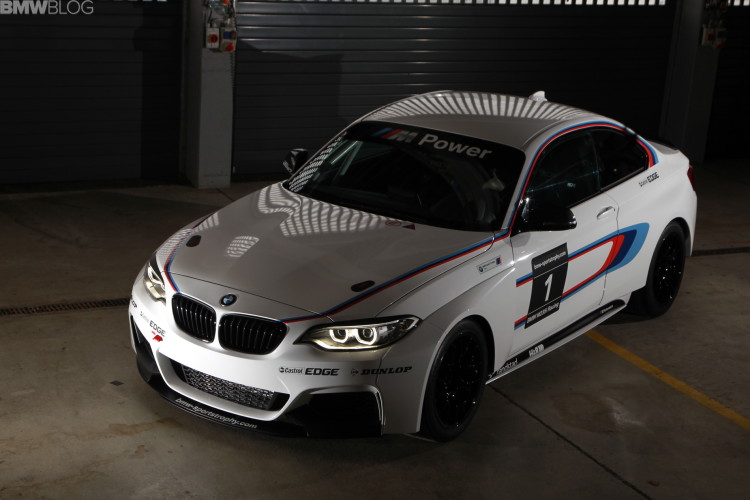
At the same time, BMW Motorsport developed the entry-level M235i Racing model. It was intended as an affordable, turnkey race car. Interest grew in the US, particularly from performance-oriented BMW dealers, ten of whom expressed their support and interest in the product. BMW NA worked to obtain EPA approval and adapt the car for Pirelli World Challenge competition in 2016. The M235i Racing took gold, while Classic BMW’s Toby Grahovec only failed to finish on the podium twice in the 12-race series.
The M235i Racing quickly proved reliable, competitive and transformative – leading to widespread acceptance and opening up new challenges, such as adapting European racing cars to hotter, higher altitude American circuits. Perhaps most importantly, it was truly affordable: in 2016, the price was $65,854. The success of the M235i program helped BMW globalize its customer racing development and influenced the design of the M4 GT4, which was deliberately built on a US platform for easier support. Strong demand followed, with many teams switching from the M235i to the M4 GT4 and eventually the new G82-based M4 GT3, introduced in 2022.
Today, BMW NA’s customer racing ecosystem includes entry-level GT3, GT4 and M2 racing models that compete in IMSA, GTD and other series. Supported by dedicated technical staff and 16 motorsport centers, customer racing now plays an important marketing role – and strengthens BMW’s performance identity, as the factory program focuses on hybrid prototypes. According to BMW leadership, customer teams driving BMW inline-six GT vehicles convey a uniquely authentic brand message in a field dominated by V8 engines. What began as a stopgap for determined privateers has grown into a thriving, world-class ecosystem. Customer racing arguably defines BMW’s racing identity – in North America and beyond.
Source: BMW USA
