
As financial experts like to say, it’s better to have multiple sources of income than to rely on a single source of income. BMW’s expertise goes beyond selling cars, as the company also operates as an engine supplier. Take Land Rover, for example, which uses Bavaria’s V8 in three models: the Defender, the Range Rover and the Range Rover Sport. Ineos Automotive also sources inline-six gasoline and diesel engines from BMW for the Grenadier off-road SUV and its Quartermaster pickup sibling.
The collaboration with Morgan precedes BMW’s contracts with Land Rover and Ineos. The British sports car brand partnered with BMW in 2000 for the “M62” powered Aero 8 Series 1. This 14-member ensemble includes the debut model and almost all subsequent Morgans that were equipped with a BMW drive. The “N62” is represented by the Aero 8 Series 2 and Series 3 as well as the AeroMax and Plus 8 GTR.
But Morgan’s collaboration with BMW goes beyond the V8 models. There is also the smaller in-line six-cylinder “B58” that powers the Plus Six, and the beautiful Midsummer designed by Pininfarina. In addition, the Plus Four reduced the engine recipe again to a four-cylinder “B48”.
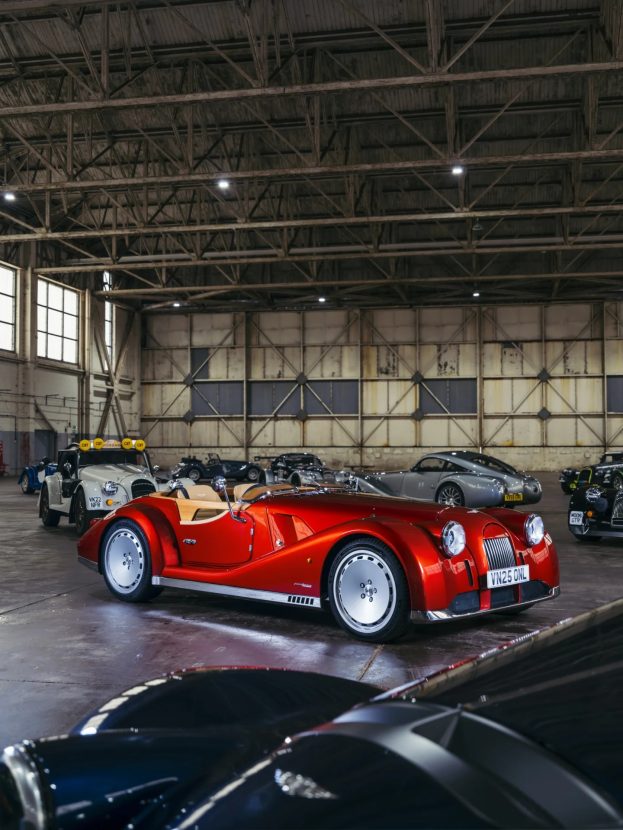
Morgan has been using exclusively BMW engines for its four-wheeled vehicles since 2020. The latest product to emerge from the collaboration is the Supersport, which was launched earlier this year with the “B58”. As evidenced by the 2004 Aero 8 LMGT Le Mans and a 2020 Plus Four race car, the partnership goes beyond street-legal models.
In total, BMW has built almost 5,000 engines for various Morgan models over the last 25 years. The “B48” and “B58” powertrains manufactured at the Steyr plant in Austria for BMW and Morgan models also power the Toyota Supra, but not for long. Production of the sports coupe will be discontinued in the coming months.
Here’s a tidbit that even die-hard BMW enthusiasts may have missed: The “B48” engine spawned a lesser-known “B46” derivative for the US market Plus Four. The difference between the two is that the four-cylinder 2.0-liter engine meets Special Purpose Motor Vehicles (SPMV) regulations in states that adhere to emissions standards set by the California Air Resources Board (CARB).
Photos: Morgan
